Londoners Return to Offices
JPMorgan Chase & Co, one of the leaders in investment banking, changed its previous approach to remote work and temporarily withdrew the requirement for a full return to offices for employees in London.
The reason for this decision, as an anonymous source quoted by the agency Bloomberg said, was a wave of record-breaking heat that hit Europe last month.
According to available information, the drop in attendance in London offices belonging to the bank turned out to be smaller than expected and amounted to 15%.
Nevertheless, the return occurred at a difficult time, when Londoners were dealing with school closures and disruptions in public transport.
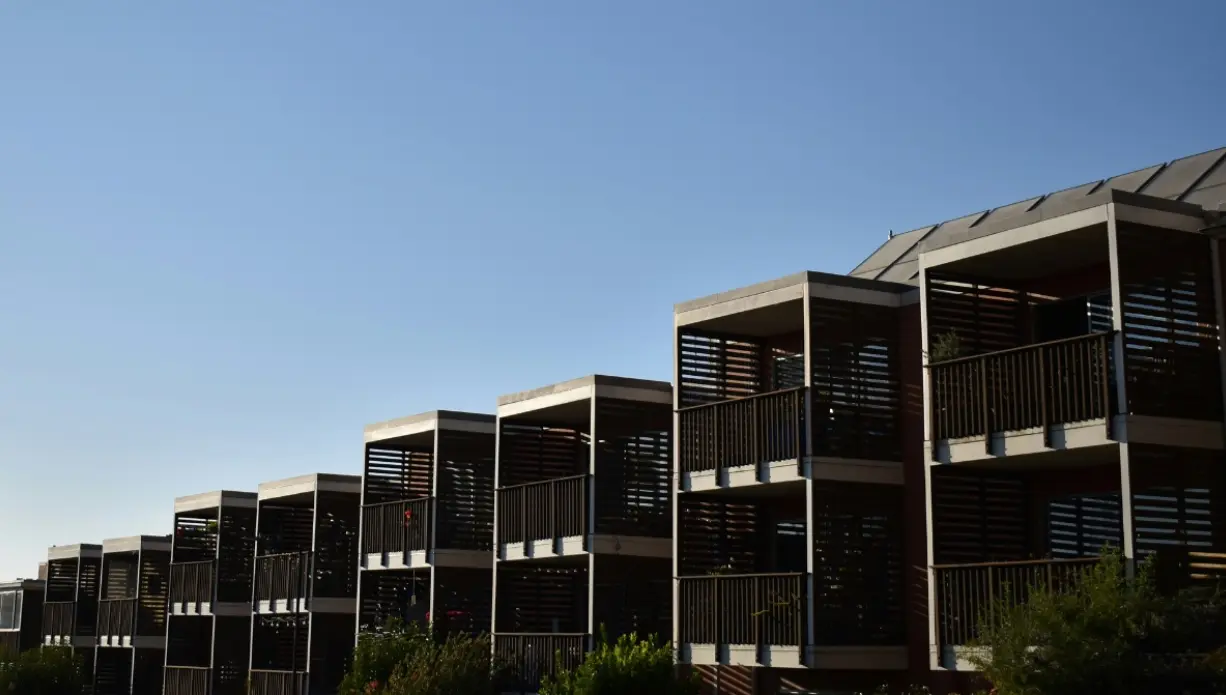
Importantly, most private homes in the United Kingdom are not equipped with air conditioning, and apartments built in the last two decades, as Bloomberg emphasizes, are becoming “traps”.
In comparison, in the United Kingdom air conditioning is found in only about 7% of households, while another 8% have cheaper and less efficient portable units.
Meanwhile, in the state of New York about 90% of households use a certain type of cooling installation.
“For residents and businesses to cope well during heatwaves, the entire city infrastructure would need modernization,” said Frances Brown, head of the employment sector at Cundall.
The perspective of possible transformations in office work in the future, which may be forced by climate change, also draws attention.
“This example shows how rising temperatures affect professions that are usually not associated with the physical effects of extreme heat,” Bloomberg reported.
“It has long been known that farmers, construction workers and other employees whose work requires being outdoors need proper protection in an increasingly warmer world,” we read.
Journalists, citing the latest report from ING Group NV, emphasize that as new temperature records are broken, the risk of economic disruptions in various sectors rises.
A spokesperson for JPMorgan, who employs about 13,000 employees in offices in Canary Wharf and Victoria Embankment in London, declined to comment when asked by Bloomberg.
Read also: Keir Starmer resigned. The United Kingdom loses its prime minister
See also: Polish wages in the UK under pressure? Expert: “It became inevitable.” Political shock will affect the pound rate
“Current difficulties will only deepen,” experts warn
Following JPMorgan Chase & Co, the corporation Citigroup also followed suit, although its employees had already had greater freedom in choosing the place of work.
In Paris, where last month the temperature exceeded 40°C, banks relaxed dress code rules and introduced on-site childcare options after schools closed due to extreme heat.
Among the corporations that introduced greater flexibility, one can also name Societe Generale SA, BNP Paribas SA and Credit Agricole SA.
Meanwhile in Frankfurt, employees of Deutsche Bank AG opposed the board's decision, which limited access to efficient cooling installations after one of the renovations.
The company, however, allowed remote work for employees whose positions did not require office presence.
“Current difficulties will only deepen, because in ten years heatwaves will reach temperatures above 40°C,” said Sarah Kapnick, head of JPMorgan’s climate advisory and former chief scientist at the U.S. National Oceanic and Atmospheric Administration (NOAA).
“This trend will continue,” she added.
Read also: Break in the British labour market. Companies are preparing for mass layoffs
See also: Break in the real estate market. “The year 2026 looks good for buying a home”
Source: Bloomberg.