At the same time, March monthly data were mixed: industrial production slowed to 5.7% YoY in March from 6.3% in January‑February, but remained relatively strong thanks to high‑tech industries, while the pace of retail sales fell to 1.7% YoY in March from 2.8% in January‑February, indicating that consumption remains weakened after the extended Lunar New Year effect. Similarly, investments slowed to 1.7% YoY in March from 1.8% in January‑February due to a decline in real estate investment activity.
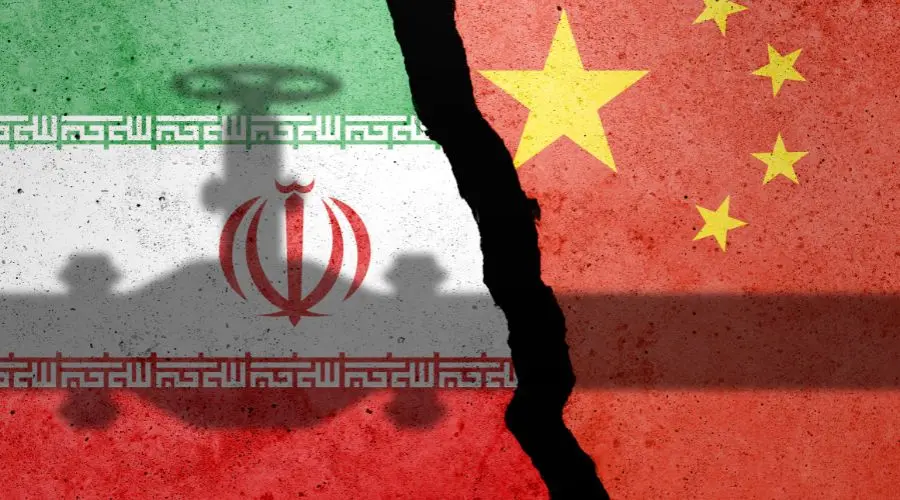
Notably, exports weakened sharply to 2.5% YoY from 21.8% in January‑February, while imports rose to 27.8% YoY from 13.8%, suggesting early signs of deteriorating external demand and higher energy and transport costs. As a result, these data indicate that China’s economy remains on a relatively solid growth path, but prospects for the next quarters carry clear downside risk linked to the war in Iran.
Last week the NBP released balance‑of‑payments data for February, showing a current‑account deficit of €990 m versus a surplus of €1 053 m in January, accompanied by a deterioration of the merchandise trade balance to –€1 025 m from €254 m a month earlier.
The deterioration was mainly due to faster growth in imports than exports – according to the NBP, the value of exported goods rose in February by 1.9% YoY versus a 2.6% decline in January, while imports increased by 3.3% YoY after a 6.3% decline in January, largely driven by higher imports of investment goods and transport means, including passenger cars.

Poland’s CPI inflation rose to 3.0% YoY in March from 2.1% in February, aligning with our expectations and market consensus (see MAKROpuls 15.04.2026). The biggest driver of inflation acceleration was the rise in fuel price dynamics to 8.6% YoY from –7.8%, a consequence of the sharp increase in oil prices following the escalation of the Middle East conflict. Core inflation, excluding food and energy, rose to 2.7% YoY in March from 2.5% in February, indicating a persistent moderate pre‑inflationary trend. We maintain the view that inflation will remain in an upward trend in the coming months and reach a local peak of about 4.1% YoY in December.

EUR/PLN falls to around 4.23‑4.24, while EUR/USD stays near 1.18
In the past week, market sentiment remained relatively good, though still largely dependent on incoming information from the Middle East. At the start of the week, investors remained cautious after the failed weekend talks between the US and Iran and the US blockade of Iranian ports, but the market reaction was limited. In subsequent days, sentiment improved thanks to the resumption of negotiations, supporting market gains, a weaker dollar, and strengthening regional currencies.
As a result, the EUR/PLN rate fell to around 4.23‑4.24, and EUR/USD stayed near 1.18. In the domestic market, we first noted a decline in treasury bond yields and IRS rates, supported by improved global sentiment and a drop in oil prices to around $95 per barrel.
On Friday, we observed further improvement in sentiment after Iran declared that the Strait of Hormuz remains open for commercial shipping during the ceasefire – Brent oil fell by about $90 per barrel, and the dollar weakened noticeably.
In the coming week, the main factor shaping financial markets will remain the development of the conflict around Iran, with the weekend’s market starting point slightly worse than Friday’s close: Tehran announced that no date has been set for the next round of talks with the US, tightened control over the Strait of Hormuz again, some ships received transit bans, and two ships reported shelling, increasing the risk of a renewed risk aversion and oil price rebounds.
Beyond geopolitics, investors will mainly monitor US retail sales, preliminary PMI, and the testimony of Fed candidate Kevin Warsh, but for the zloty and domestic debt market, the key will remain whether US‑Iran tensions start to rise again and increase the risk premium.