Waiting for the USA
Today is the final FED meeting under the leadership of Jerome Powell. At the beginning of the year, people were wondering not so much whether rate cuts would happen, but how large they would be before the end of his term.
It now seems that from its end to the first cut there will still be 1.5 years to wait. Today's meeting and the press conference are therefore a formality. Forward contracts on the interest rate are therefore at a standstill.
Earlier, however, around 4:00 p.m., the Senate Banking Committee gathers to vote on Jerome Powell’s successor – Kevin Warsh.
The market has been slightly strengthening the dollar since morning, but this is more related to risk aversion than to current events in the USA. They are important, of course, but their results seem obvious, so they should not affect the markets.
Fear Returns to the Markets
We are again witnessing rising tensions between Iran and the USA.
Both countries theoretically enforce their blockades, but individual units still pass through. These are not only tankers, but in recent days a superyacht of one of the Russian oligarchs has also been seized.
It is still below 10% of what it was before the war.
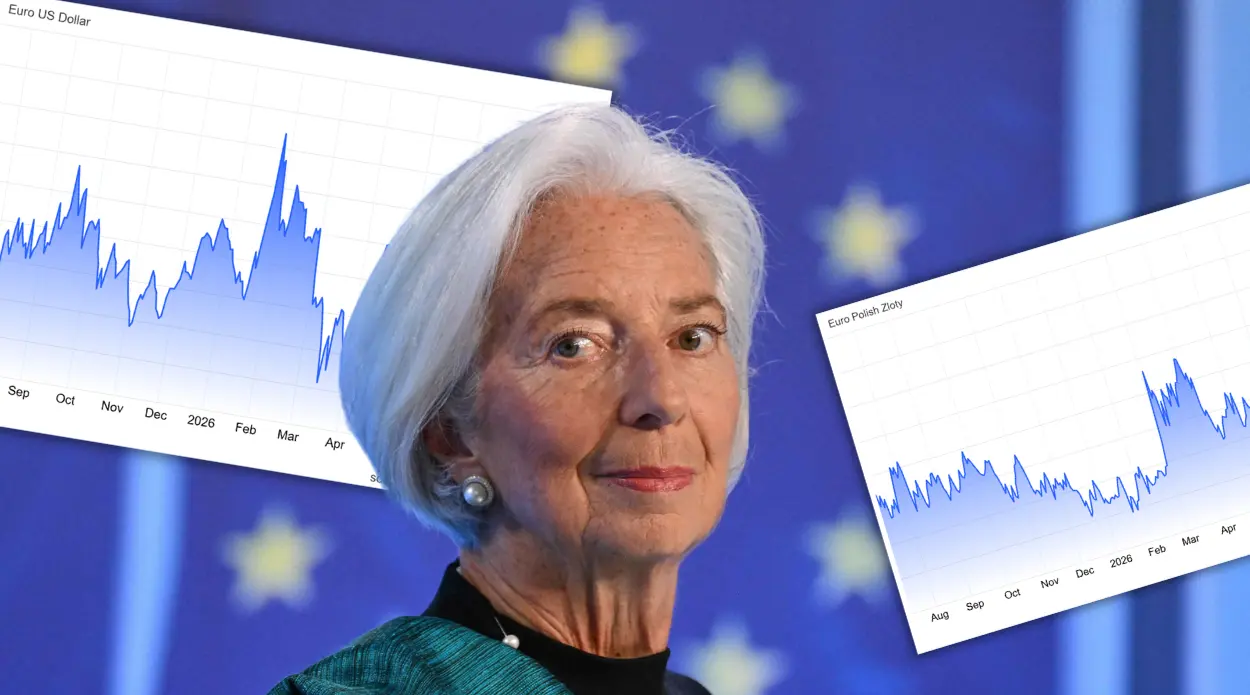
As a result, since the beginning of the week we have observed a rise in oil prices. They are not crazy, but for now it rises by about 2 USD a day, which is still a rapid increase. The U.S. dollar also strengthens, which is treated as a safe haven. With its strength we also witness the weakness of the Polish zloty.
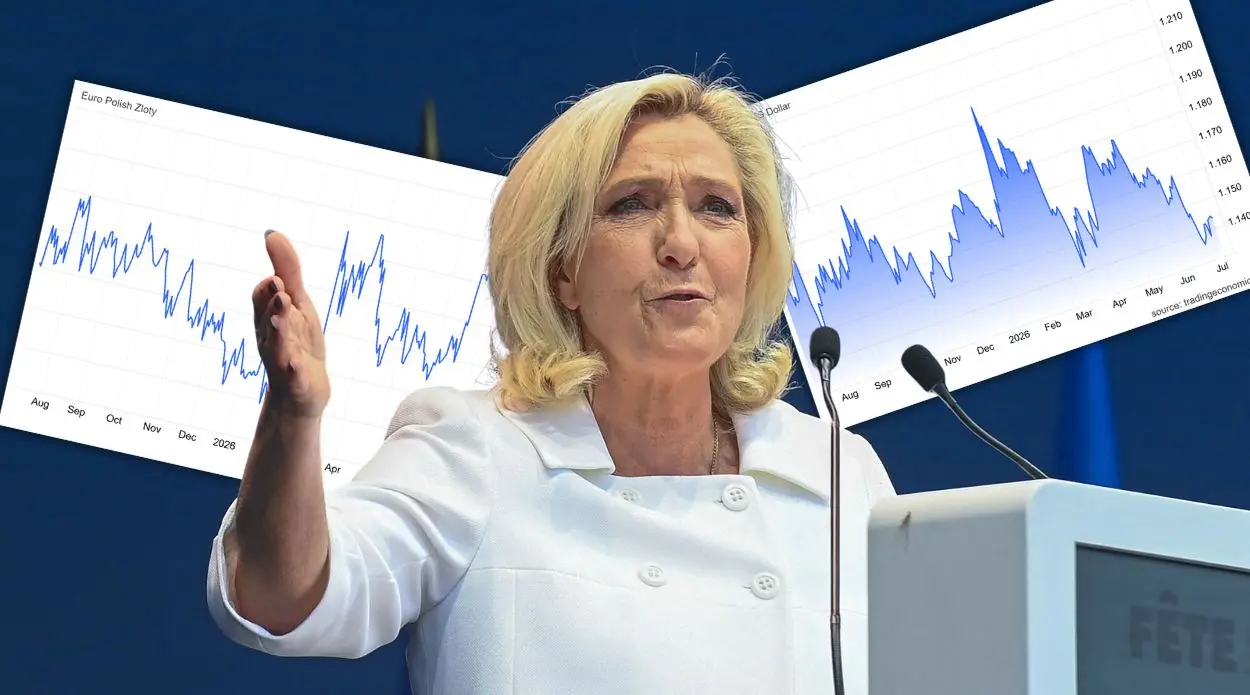
Our currency is losing value and the euro now costs over 4.25 zloty.
Hungarians Do Not Change Rates
In March inflation in Hungary rose, but only to 1.8%. It is therefore still at a very acceptable level. One must remember that this indicator is not very market-based. It results from margin limits and manual price control.
In Hungary there is a list of 30 basic products that have a margin limit of at most 10%. This is not a market value.
In addition, administrative energy prices should be added. As a result, at the moment of lifting restrictions, the inflation parameter will probably jump sharply upward.
This is, however, a problem of the new government. The fact that interest rates are at 6.25% is not something that should surprise us.
It is now impossible to lower rates based on a manipulated reading. After the central bank’s decision, the forint strengthened against the euro, showing that some investors were indeed afraid of cuts.
Today’s macroeconomic calendar lacks important readings.