Schrödinger’s Strait, i.e. how open the Strait of Hormuz really is
The agreement between the US and Iran was signed almost a week ago – on Wednesday, June 17. It was not a peace treaty, but still an ambitious document that aimed to open the Strait of Hormuz for commercial shipping. Since then we have received very mixed signals about whether this route has actually been opened.
The US Armed Forces Command (CENTCOM) maintains that it was indeed opened, and that on Saturday, June 20, 55 commercial vessels crossed the strait, including tankers carrying 17 million barrels of oil. However, on the same day the Islamic Revolutionary Guard Corps (i.e., Iran) declared that the Strait of Hormuz is closed and warned shipowners against attempting to cross it.
We decided to investigate which side is correct and what can be said about the prospects for fossil fuel prices this year based on this. Here are the conclusions we reached.
- First: traffic in the Strait of Hormuz has resumed to some extent and is the highest since February 2026. Independent analytical centers confirm this. According to Lloyd’s List Intelligence, at least five Iranian tankers and three Saudi supertankers crossed the strait last week. Their total capacity may reach a low dozen million barrels of oil. This traffic began to resume in early June, even before the US-Iran agreement. Thus, diplomatic talks and the actual situation in the Strait of Hormuz are developing along somewhat separate tracks.
- Second: this traffic has not returned to pre-war levels. Even the most optimistic estimates – those presented by CENTCOM: 55 ships in a day – represent a return to roughly half the traffic to and from the Persian Gulf. Before the war the average daily number of ships passing through the Strait of Hormuz was about 100. Analyses by independent centers, e.g., Kpler, suggest that traffic has returned more to 1/3 than to half. The four largest shipowners in the world, including Maersk and Hapag-Lloyd, still avoid shipping in the Persian Gulf region, including the Red Sea.
- Third: insurance costs for shipping through the Strait of Hormuz remain at war‑time levels. Although they have fallen from the peak set in April, they are still eight times higher than before the outbreak of war. These rates generally rise quickly and fall gradually, meaning they will remain elevated for several months. This means that during this period shipping in the Persian Gulf region will be carried out mainly by smaller shipowners willing to take on greater risk, often using older tankers. This suggests that transport through the Strait of Hormuz
- Insurance cost for tankers in the Persian Gulf region

- Fourth: new shipping routes have emerged in the Persian Gulf. Before the war there was one transport route through the Strait of Hormuz. Currently there are two: one along the Iranian coast and strictly controlled by that country. The second runs along the Omani coast – controlled by the US Navy, which provides convoy escort for civilian shipping. When Iran talks about closing the Strait of Hormuz, it refers to closing its own controlled route, not the entire shipping. This is not a permanent solution. The US-Iran agreement assumes that the United States will withdraw its forces from the Strait of Hormuz and that transport will be jointly managed by Oman and Iran. The provisional nature of the current arrangement suggests that in the coming weeks we may expect escalations, higher costs, and lower throughput of trade to and from the Persian Gulf.
- Fifth: a rapid decline of fossil fuels to pre‑war levels is unlikely. Although most Persian Gulf countries are ready to quickly increase oil and natural gas production, even to levels higher than pre‑war (the UAE have left OPEC for this purpose), transport capacity for these resources remains limited. Shipping routes are provisional and have reduced throughput, transport insurance remains expensive for a long time, and the largest shipowners still avoid the region. The situation in the strait itself is also vulnerable to disruptions from a potential escalation between the US and Iran. Therefore we do not expect crude prices to fall to around $60 per barrel of Brent or gas to 33 EUR/MWh by the end of this summer.
EURPLN with a target of 4.30
The dollar is at annual highs, US short‑term Treasury yields are setting new highs, and the market is in a state of hesitation. All of this is interconnected. Warsh gave markets the green light to price tightening and its effects, so they are doing it. The process is not entirely harmonious, and investors realize that the Fed may miscalibrate the dose of anti‑inflationary “medicine”, which will have negative side effects. For now, however, we are far from that.
The market expects interest rates to be raised twice: in September and early next year, and that this will be a temporary tightening of monetary policy, after which rates will trend back to the current level. Will 50 basis points be enough? We don’t know, but it is worth remembering that inflation has anchored at about 1 percentage point above the Fed target (so it is a chronic rather than acute problem, unlike 2022), and 2026 is specific due to the transitional stimulus of the economy with various available tools. In 2027 monetary policy may shift to more restrictive paths and rates may not need to rise much further. All of this is highly speculative.
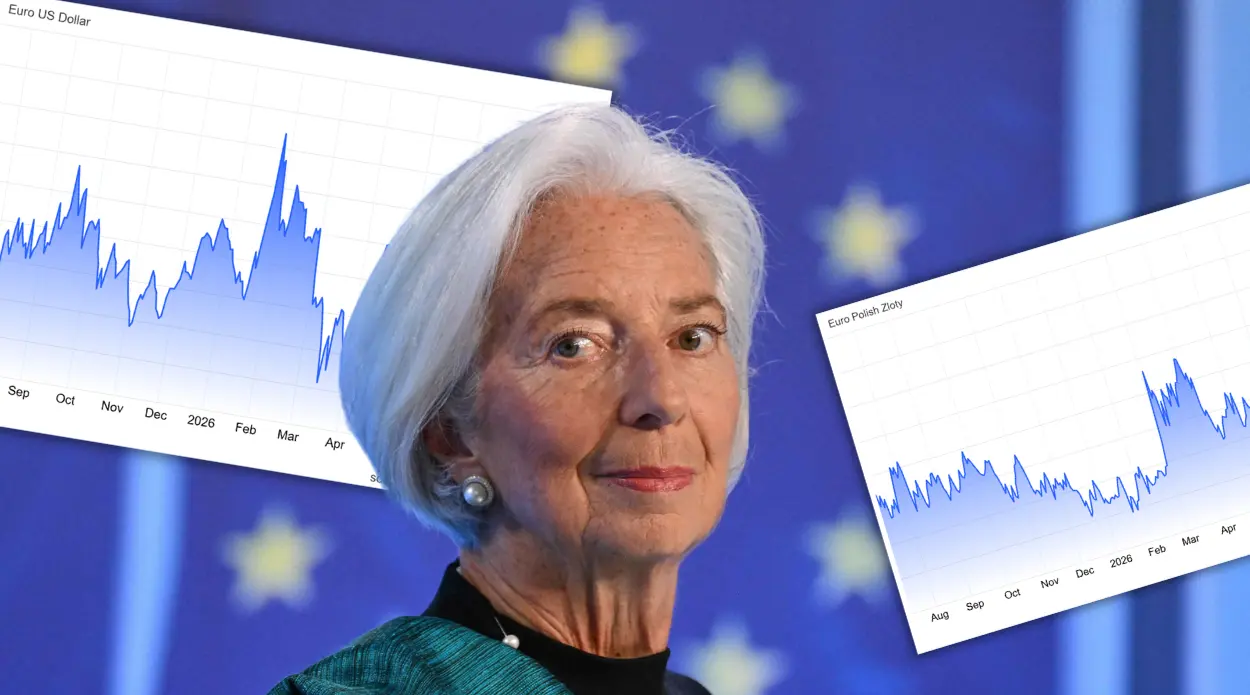
For now the market will look for an appropriate scale of tightening guided by incoming data as a roadmap. Today’s data package (PMI) will have some significance, but the reaction will have both a Euro‑centric and an America‑centric aspect. The first – if European PMIs disappoint – will strengthen the dollar with a weak euro. So far the euro has rather restrained the dollar’s appreciation, the US currency is, unlike the dollar indices below their March highs versus the euro.
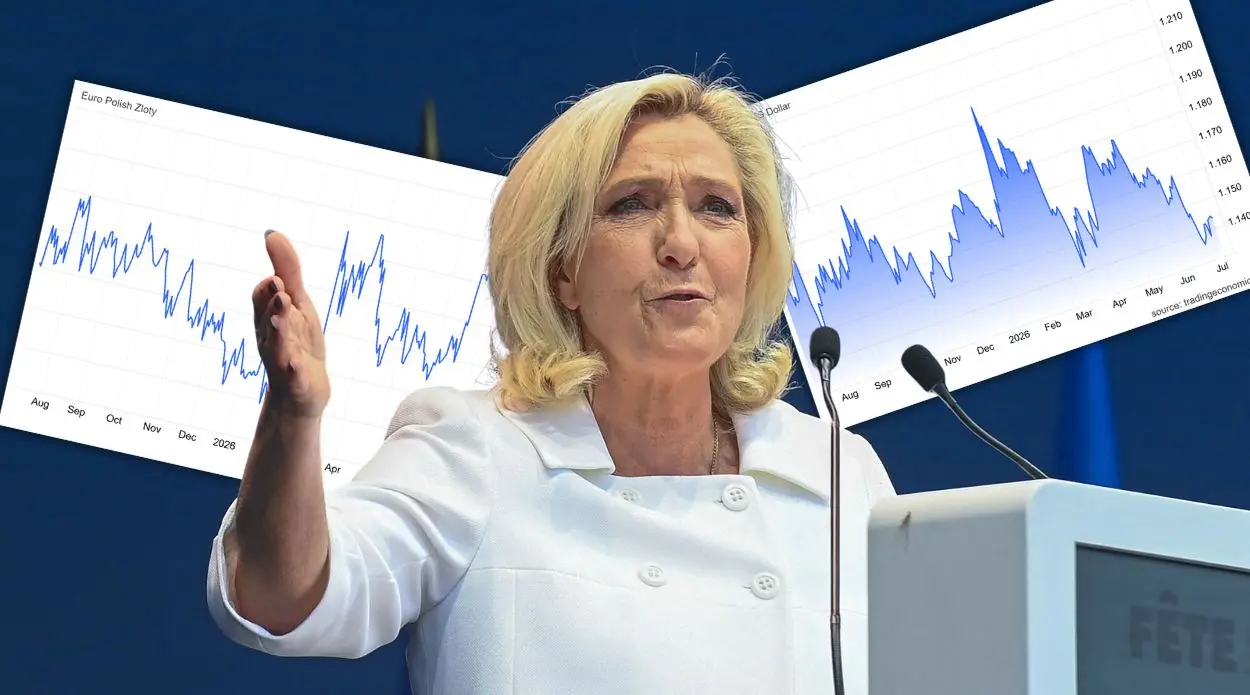
Emerging markets dislike a strong dollar and higher financing costs in that currency, hence the sell‑off of local assets. Worse, the zloty currently has a high beta relative to the EM basket, meaning that in recent days/weeks it has weakened more than the broad EM basket. This translates into rises in EUR‑PLN, which this morning reached 4.28 and is at its weakest since the beginning of April.
Next stop for this currency pair is 4.30.
While the fate of the Polish currency has turned, the interest rate market is doing quite well. Yesterday SPW yields fell slightly, despite unfavorable trends in the base markets (especially the US market). The SPW market is also doing well considering the return of supply (auctions last week and this week). Perhaps this is also due to the fact that in Europe market rates are falling, both absolutely and relative to US rates. Today we wait for signals from the base markets (PMI).