Oil price rise, bond yield increase + weakening of the PLN exchange rate
It should be noted that the agreement has not yet been finalized, and therefore it still needs to be signed by President D. Trump and confirmed by the Iranian side.
The key disputed points remain Iranian enriched uranium stocks, the status of the Strait of Hormuz, and the scale of sanctions removal. The possible ceasefire and opening of the Strait of Hormuz in the near future have already been largely discounted by the market, which is reflected in a sharp decline in oil prices and a reduction in treasury bond yields.
It should be noted that the risk of a negotiation failure, escalation, and a setback during the agreement remains significant, and its materialization would most likely lead to a renewed rise in oil prices, an increase in bond yields, and a weakening of the zloty.
This week’s RPP meeting and decision on interest rates
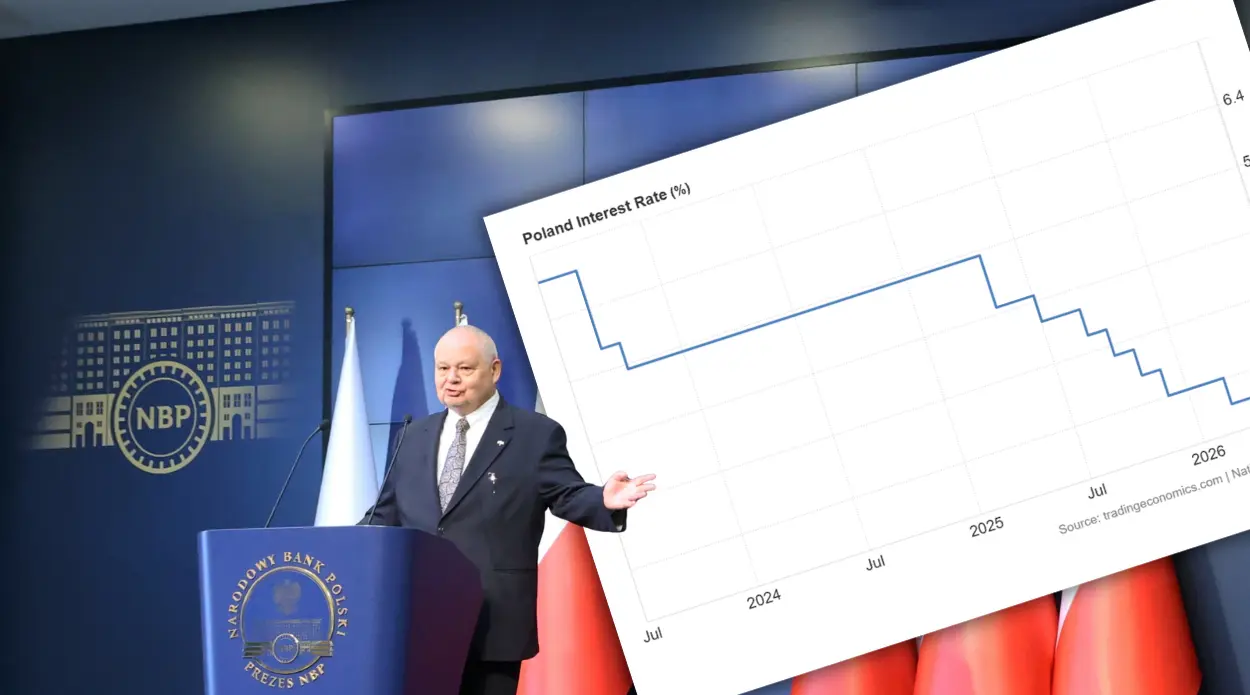
This week the Monetary Policy Council will hold a meeting and the president of the NBP will hold a press conference. We expect the RPP to keep interest rates unchanged, with the reference rate at 3.75%.
This decision would be consistent with the statements of council members after the May meeting, which indicated that the "wait and see" mode would be maintained due to increased uncertainty related to the Middle East conflict and its impact on energy commodity prices.
After the May meeting, A. Glapiński stated that the probability of the NBP lowering interest rates is very small, while an increase is possible but does not necessarily have to occur.
P. Litwiniuk expressed a similar view, signalling that if inflation expectations become unanchored, the RPP will be ready to raise rates, while noting that discussions about a hike will only be possible after the July inflation projection is published. L. Kotecki assessed that the most likely scenario is to keep the reference rate unchanged, a view also shared by M. Zarzecki.
Both emphasized the risk of rate hikes in the second half of the year if inflation rises significantly. The significantly lower inflation in May (see below) further reduces the probability of a rate increase in 2026.
In our assessment, the NBP president will maintain a cautious tone at the conference, emphasizing that further decisions depend on incoming data. This message should be neutral for the zloty and Polish bond yields.
Today we will learn the full GDP data for Poland in Q1 2026
We expect GDP dynamics to align with preliminary estimates and reach 3.4% year‑over‑year in Q1 2026 versus 3.8% in Q4 2025. We believe the main cause of the slowdown was the harsh winter, which limited activity in sectors such as industry and construction.
The most important element of the publication will be the decomposition of GDP growth into its main components. Of particular interest will be investment dynamics. The data published so far indicate that in Q1 of this year, the investment dynamics of firms employing at least 50 people remained at a moderately high level (see below), and thus the current uncertainty regarding investment overall is mainly related to public investments and small and medium‑sized enterprises.
On Tuesday we will learn about HICP inflation in the euro area in May, which we believe rose to 3.2% year‑over‑year from 3.0% in April, mainly due to the acceleration of service price growth. We expect core inflation to have risen to 2.5% year‑over‑year in May versus 2.2% in April, due to the low‑base effect, calendar effects, and the rise in aviation fuel prices, which in turn drive airline ticket prices higher.
May will therefore be the third month in a row in which goods and services prices rise at a rate exceeding the ECB inflation target (2.0%). We expect that due to the indirect impact of higher commodity prices on final goods prices, core inflation will not return to the target at least until the end of 2027. We believe that the strength of the second‑round effects will initially be limited, becoming fully noticeable only in Q4 of this year and the first half of 2027.
On Friday, U.S. labor market data for May will be released
We expect non‑farm employment growth to have fallen to 80k month‑over‑month in May versus 115k in April, with the unemployment rate remaining stable at 4.3%. This set of data would indicate a stabilisation of the labour market, which, combined with rising inflationary pressure (see below), would support a scenario of keeping Fed rates unchanged in the near term.