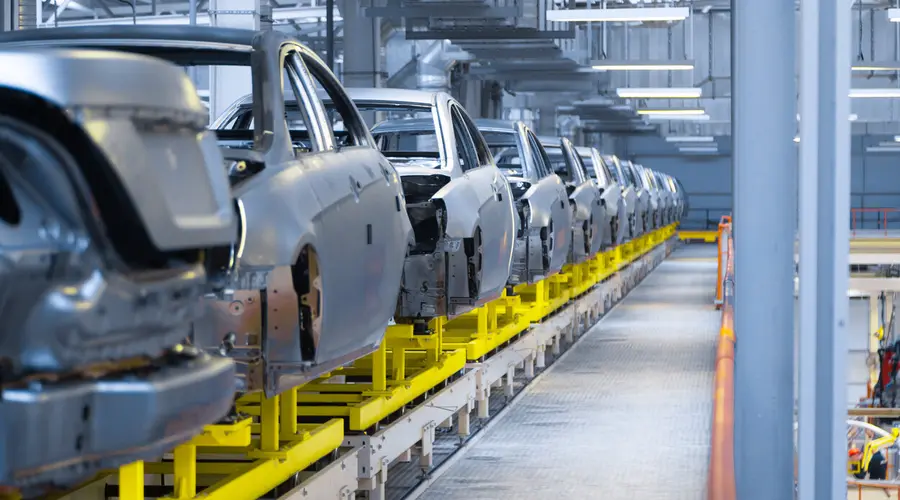
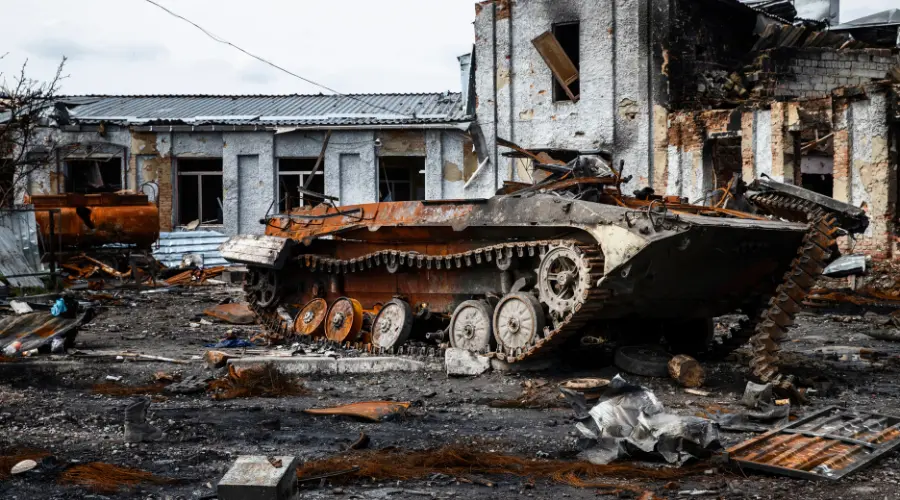
We have repeatedly reported on Volkswagen’s troubles on FXMAG. We also wrote about attempts to rescue the company. As it turns out, the steps taken so far have not yielded the expected results. While production costs were reduced – according to Reuters – by one‑fifth, the change is not enough. The problem is the market, which is becoming increasingly competitive for the German carmaker. This is evident from the profits Volkswagen achieved in the first quarter of 2026: €1.564 billion, more than 28% less than the same period a year earlier, when profits were €2.186 billion.
Black clouds over Volkswagen
The fact that the situation in the German conglomerate is difficult, or even fatal, stems from a study conducted within the company. According to German “Manager Magazin”, 6 of 9 board members considered the company to be in a “threatening its existence” state. The remaining three said the situation was “tense”. Importantly, no one said the company was stable, which is an alarming signal that things are really bad at Volkswagen.
The survey, which involved board members of the German automotive group, was carried out anonymously by an external firm. The results were presented to the Supervisory Board. The survey was meant to justify the need for further restructuring. This seems inevitable. And importantly, the process began some time ago, resulting in the loss of several thousand jobs. Volkswagen is preparing further layoffs. By the end of 2026, another 19,000 employees will be let go. By 2030, over 28,000 people. Some factories may be closed, including plants in Emden, Zwickau, Hanover, and Audi’s Neckarsulm factory.
Can Germany keep up with the competition?
The German conglomerate’s problem intensified when automotive from China began playing an increasingly larger role in Europe. After all, cars from the Middle Kingdom are becoming more popular on the Old Continent. They are significantly cheaper than those produced in Germany, yet they do not lag behind and sometimes even surpass the German group in terms of equipment.
The situation may soon become even more difficult for Volkswagen Group cars. All because a large Chinese carmaker entered the German market. That’s Chery, which is starting to establish itself among our western neighbors.
The manufacturer of Omoda and Jaecco has been gaining experience convincing European customers over the past years, gradually appearing in more Old Continent countries. Many consumers associate Chinese cars with cheap alternatives to European automotive. The carmaker from Wuhu, China, wants to enter Germany competing with domestic brands not only on price but above all on build quality and the technology used in Omoda and Jaecco cars.
“Currently we, the Chinese, lead the global automotive industry, with an advantage in electric drives, from hybrids to battery cars, and also in technologies enabling autonomous driving. The best proof is our success with Chery. In Europe, where our cars have been available since April 2024, we have already sold 180,000 cars,” said Zhu Shaodong, manager responsible for the European market, in an interview with Business Insider’s German branch.
As the representative of the Chinese company emphasized, this result was achieved despite the fact that Chery cars were not yet available in all countries, including Germany.
Mercosur agreement a lifeline for Volkswagen?
The chance to improve Volkswagen’s condition could be opening new markets, which the Mercosur agreement is supposed to provide. Since the European Commission, chaired by Ursula von der Leyen, began finalising the agreement, voices have emerged that it is primarily a fight to improve Germany’s economic situation. This is especially true for the automotive industry, which is the main branch of German industry.
“Not only Germany. I don’t like the statement that the European Union does everything only for Germany. Although I agree that our western neighbours, who are among the dominant car producers, will certainly benefit. France and Italy will also benefit,” notes economist Dr. Arkadiusz Chudzik from the Józef Gołuchowski Applied Sciences Academy in Ostrowiec Świętokrzyski.
As the expert points out, automotive is the main branch of the economy that will benefit from the Mercosur agreement, so his suggestion that the European Commission, by signing the document, wants to help German automotive escape a deep trough seems justified.
“Looking at all this, I fear that the EU’s intentions for the Mercosur agreement are different from what was officially said. I fear that improving the situation in the automotive industry in Germany, France, or Italy means giving up agriculture. It mainly concerns small agricultural producers who operate in countries like Poland. In France, there are huge farms that, despite competition from South America, will manage in the market. The problem will concern small farms, where it will be even harder to further reduce the margin, which is already at a level that is not always profitable.” – says Dr. Arkadiusz Chudzik.
The expert added that Germany, France, or the Netherlands have large shares in Ukrainian farms, where production is much cheaper.
“This allows, using so‑called economies of scale, to achieve satisfactory income with high turnover. Polish farms that have 100 or even 200 hectares cannot very well compete with those companies abroad due to production costs in our country.” – adds Dr. Arkadiusz Chudzik.
See also: German automotive in a bind? Chinese begin expansion among our western neighbors