Bloody bath of jobs
The latest data from the Office for National Statistics (ONS) shocked London. The drop in full‑time employees by 100,000 in April demolished the economists’ consensus, who naively expected a modest tightening of the labour market by 10,000 jobs. This powerful blow follows a March decline of 28,000 jobs. The main culprit turned out to be the retail sector, hit by dramatic energy price rises. ONS cautiously reminds that data may be revised due to the start of the fiscal year, but the trend cannot be so easily dusted.
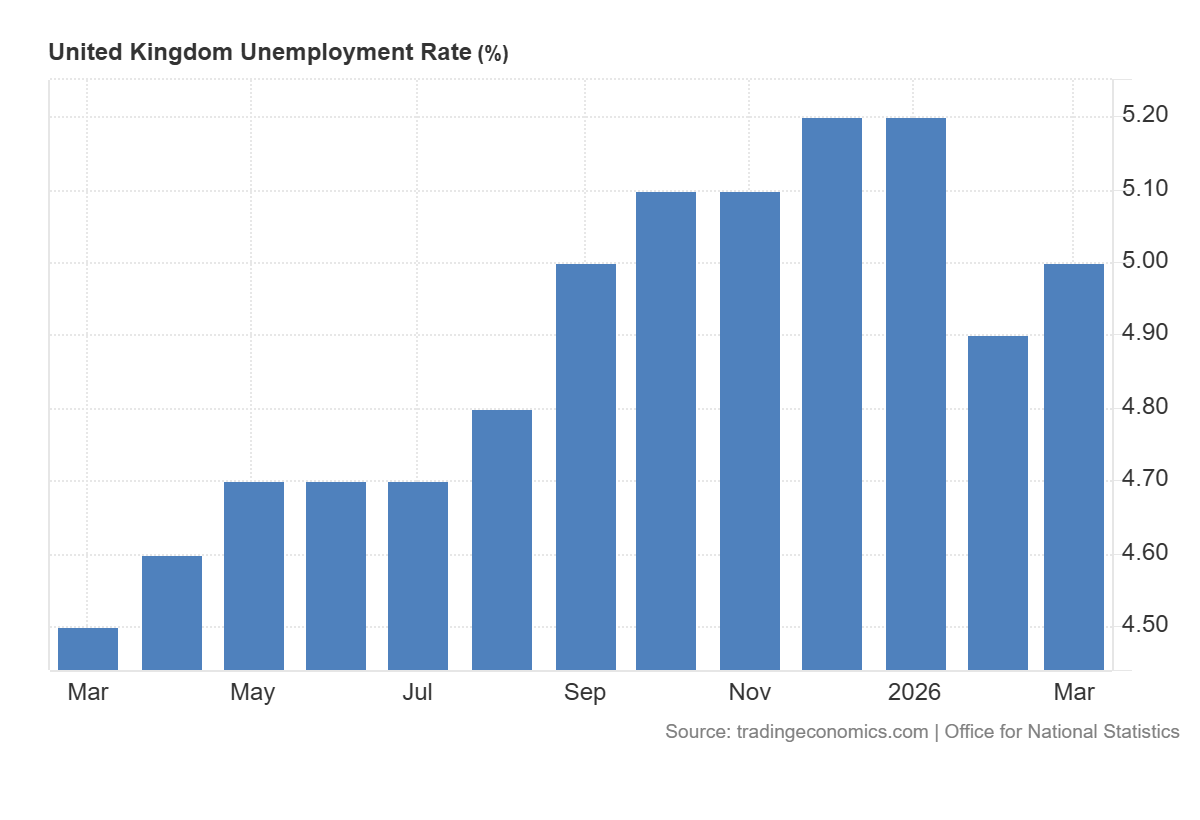
Unemployment rose for three months to March to 5% from 4.9% in the period up to February, and the March figure rose to 5.5% – the highest since 2015. In just one quarter, over 140,000 jobs disappeared. For trading algorithms in the City, this signals that labour demand is cooling faster than expected. The number of vacancies fell by 28,000 to 705,000 – the lowest since 2021. The awakening in the reality of the Middle East war painfully verifies investors’ previous optimism.
Chart. Unemployment in the British Isles.
Source: Trading Economics
See also: Will the UK lose its prime minister? Keir Starmer under fire. The pound’s course is falling!
Starmer under pressure, taxes, minimum wage and a political upheaval
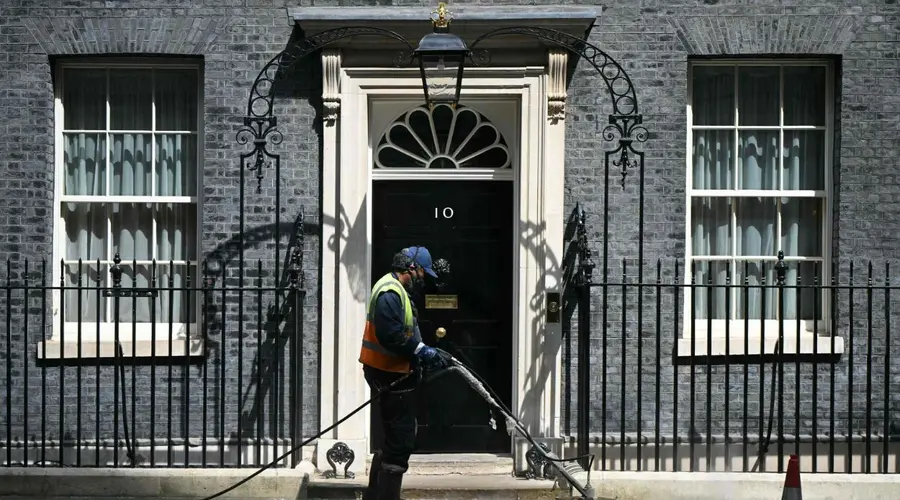
For this economic chaos investors blame not only the rockets over the Persian Gulf and the blockade of the Strait of Hormuz, but also Downing Street. The Labour Party government of Keir Starmer has collected hefty bills from employers, directly linking staff cuts to last year’s wage tax increase and the rise in the minimum wage. For Starmer this is a reputational disaster at the worst possible moment. After painful defeats in the May local elections, the prime minister faces a revolt within his own ranks, already resulting in a series of resignations in the government.
Moreover, on the horizon is Andy Burnham, mayor of Greater Manchester and the clear favourite to replace Starmer. Burnham is running in by‑elections that could pave his return to Parliament and open the way to a leadership contest.
As Sanjay Raja, the chief economist at Deutsche Bank for the UK market, astutely notes, geopolitical uncertainty has just been reinforced by national political chaos. Pat McFadden, the Minister for Work and Pensions, admits outright that the shadow of the Middle East conflict has eclipsed the labour market, and economists are massively cutting growth forecasts for 2026.
Chart. Employment in the British Isles.

Source: Bloomberg
See also: The UK in financial distress. What’s happening keeps investors up at night
The Bank of England is tightening and the market is calculating
Before the report was released, the market trembled at the hawkish stance of the Bank of England, triggered by the inflationary pressure of the war with Iran. Now traders have quickly pulled back their swords and cut bets on rate hikes, pricing the tightening of monetary policy to the end of the year at only 57 basis points. The pound reacted to the labour market news with relative calm, hovering around 0.8683 per EUR.
Workers lose bargaining power, and households are squeezed by inflation, which (despite a forecasted temporary drop to 3%) will rebound by year‑end due to rising gas and electricity. This will certainly translate into already high social unrest, and the tragically looking situation of young people (unemployment in this group jumped to 16.2%) could lead to intensified protests. Stagflation is again eyeing London, and financial markets must rewrite their scenarios.
See also: Promising forecasts for the Polish economy. In 5 years we could match the UK
Source: Bloomberg