Strongest job growth in services (leisure, hospitality)
Non-agricultural employment rose by 172,000, compared to a revised upward increase of 179,000 in April, significantly above market consensus (85,000), and March and April data were jointly raised by 93,000.
The strongest employment gains were recorded in leisure and hospitality, health care, and local government, while employment in the information sector continued to decline, likely due to layoffs in tech firms. The unemployment rate remained at 4.3% as in April, and the labor force participation rate stabilized at 61.8%.
Labor market remains resilient to war’s negative effects
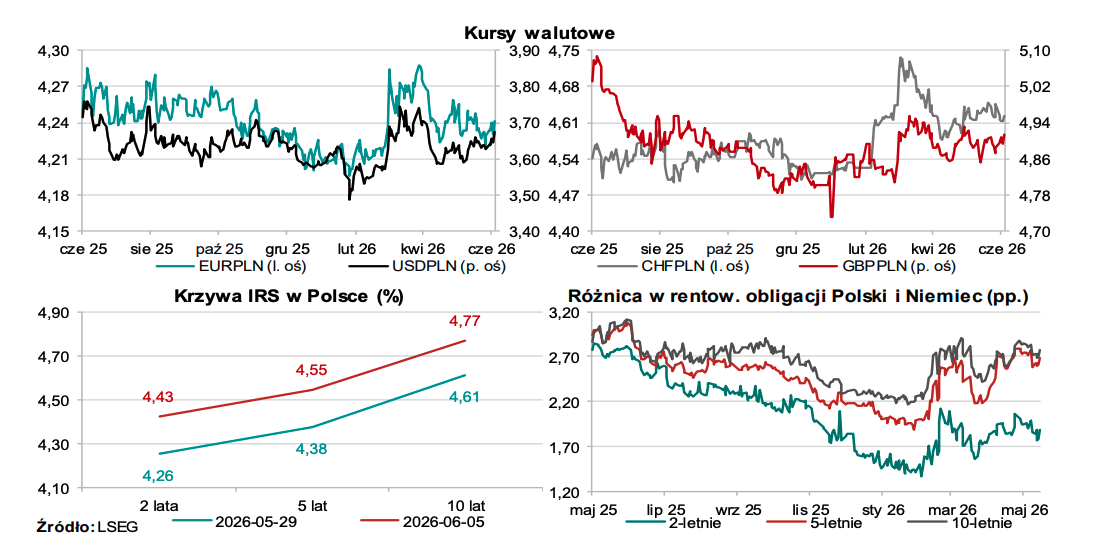
Data indicate that the labor market remains resilient to the negative effects of the Middle East war. In response to the data release, the dollar strengthened significantly against the euro, and U.S. Treasury yields and market expectations for Fed rate hikes this year increased. While our baseline scenario remains rate stabilization in the U.S. until the end of 2026, we see rising risk of hikes if the labor market remains strong and inflation stays elevated.
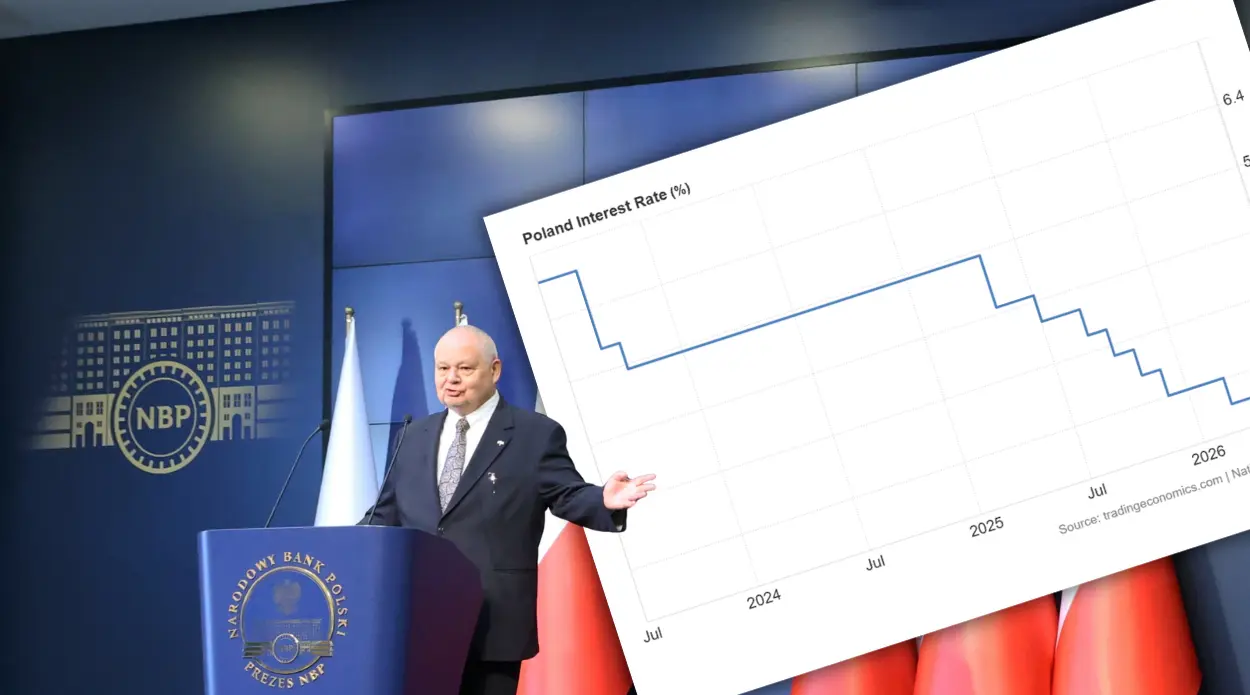
Last week the Monetary Policy Council – in line with our forecast and market expectations – left the NBP rates unchanged, keeping the reference rate at 3.75%, as in the previous meeting. In its statement, the Council emphasized that due to the tense geopolitical situation, global activity and inflation outlooks have worsened and remain uncertain.
The MPC again highlighted that the main inflation risk factors remain fiscal policy shape, fuel price regulations, changes in economic activity dynamics, and further wage development.
At the post‑meeting conference, NBP Governor A. Glapiński stressed that rates are “appropriately high” and there is no reason to discuss changes. He also added that lower-than‑expected May inflation can be seen as a signal of reduced likelihood of rate hikes, and that a tightening discussion might only arise with sustained oil and fuel price rises and the end of government intervention in the fuel market.
In our view, the MPC statement and NBP Governor’s remarks strongly support our scenario of NBP rate stabilization until the end of 2027, and the lower-than‑expected May inflation reading (see MAKROmap 01.06.2026) reduces the risk of a one‑off “signal” rate hike in the second half of the year.
GDP data for Poland Q1
Last week Statistics Poland released final Q1 GDP data for Poland, showing economic growth slowed to 3.5% YoY from 4.1% in Q4 2025, slightly above the preliminary estimate (3.4%). After seasonally adjusting, GDP rose 0.6% QoQ versus 1.0% in Q4.
The main growth driver remained consumption (3.3% YoY versus 4.3%), while the biggest surprise was a clear slowdown in investment (2.4% YoY versus 6.6%), likely due to the negative impact of a harsh winter on infrastructure projects. The data do not fundamentally change our scenario of moderately fast growth in subsequent quarters, though the Middle East conflict remains a significant downside risk.
Stabilization of market sentiment