In recent weeks, analysts in London and Frankfurt have turned their attention to the Strait of Hormuz, the key artery linking the Persian Gulf to the rest of the world. It is here that 20% of global crude oil flows.
The Strait of Hormuz, a geopolitical choke‑point on the fuel map
According to Natalia Losada, senior oil products analyst at Energy Aspects, serious problems could begin at the end of June. Even if diplomacy between the US and Iran were to bring a sudden breakthrough, logistics does not recognize the concept of immediacy.
Read also: Will fuel run out soon? Cheap flights are a thing of the past. Lufthansa will pay a steep price for continued operations.
Rebuilding ports and refineries and returning to normal operations will take months, and the aviation industry needs aviation fuel now and immediately.
Traditional routes from the Middle East have practically ceased to exist, and alternative exporters, despite increased pace, cannot fully fill the gap created by wartime actions.
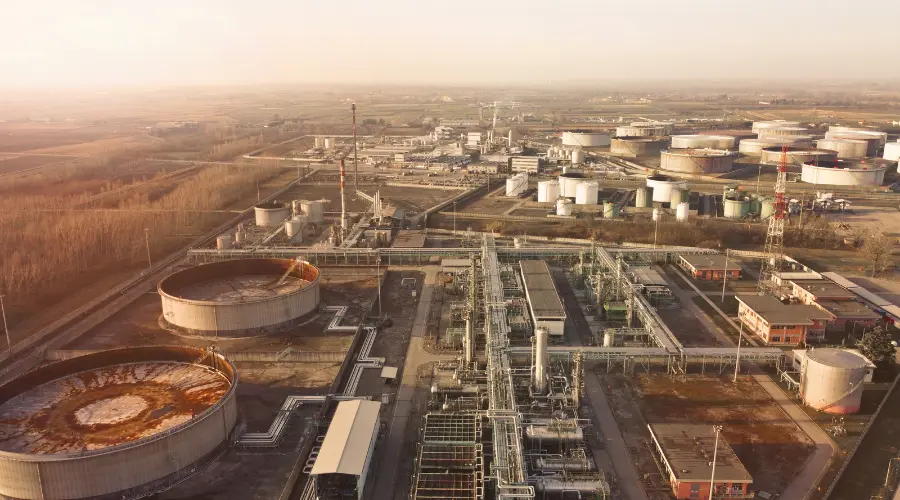
Even today, the situation in European transhipment hubs such as Amsterdam‑Rotterdam‑Antwerp (ARA) looks dramatic. Crude stocks in independent warehouses have fallen to the lowest level of the season in over a decade.
Energy Aspects forecasts that with a continuing blockade, the deficit in the next quarter will rise to 330,000 barrels per day. This is a straight path to a dangerous finale; total reserves in Europe could drop to over 60 million barrels by the end of June.
The problem is that reserve barrels are not in one place and are dispersed. Governments will not allow reserves to fall to zero for national security reasons.
The International Energy Agency (IEA) warns that if Europe does not secure at least half of the lost Middle Eastern supplies, reserves will fall below the critical threshold of 23 days of forecasted demand.
Exceeding this barrier means physical shortages at selected airports, mass flight cancellations, and a sharp rise in ticket prices that will effectively deter passengers from traveling.
Chart. Global aviation fuel exports
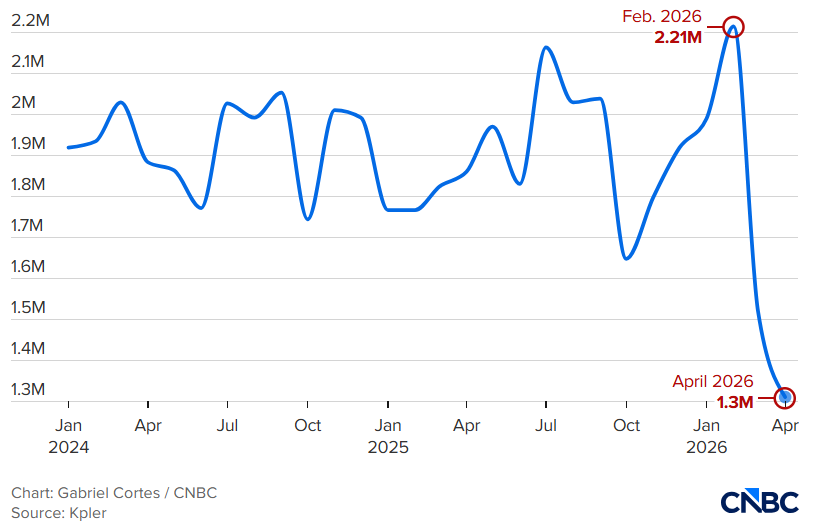
Source: CNBC.
See also: Will fuel run out soon? A well‑known bank warns – stocks have fallen to the lowest level in almost a decade
Tax drip‑downs and the rescue plan
The European Union is already preparing a plan for the darkest scenario. The agenda includes both optimizing fuel distribution and cutting energy taxes to somewhat ease the price shock. Still, it is merely dusting over a bleak reality.
If barrels physically do not reach terminals, no tax relief will make Airbus or Boeing lift off the ground.
For the average passenger in 2026, aviation fuel priced in USD will become a more important indicator than currency rates at exchange offices. Everyone planning this year’s holidays should prepare for a scenario where the chosen carrier is forced to optimize its network.
This is a polite and corporate way of informing the customer that their flight will not take place. The aviation industry has entered survival mode, and who will fly this year will be decided by geopolitics and the fuel stock level in Rotterdam. It is worth noting that the aviation giant Lufthansa has already cut 20,000 short‑haul flights, saving 40,000 tonnes of aviation fuel with this decision.
See also: Will fuel prices in Poland rise, will there be shortages at stations? Expert: “It will not be a one‑off sudden move that will affect drivers.”
Sources: CNBC.