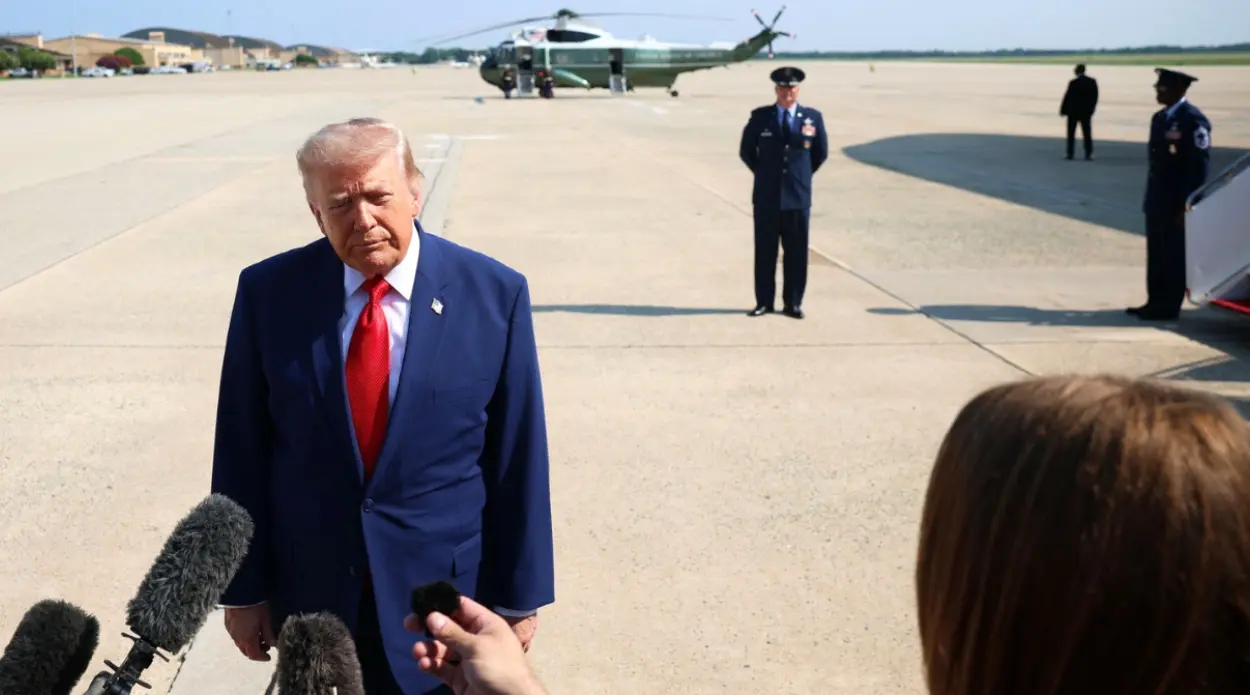
At the latest press conference, the US president gave a "good face" to the rather tense situation, while the US administration now seeks to withdraw from a conflict that could plunge Republicans into the November midterm elections. So, will there be a return to serious attacks on Iran? Not now, at least. In the background of the Iranian thread we soon have the US‑China summit (May 14‑15), which Donald Trump will want to present as his "success." Consequently, he should not "annoy" Xi Jinping – Iran is a sphere of influence for China.
The markets are pleased with this turn of events, although even with another TACO, strategically the situation hardly changes – the Strait of Hormuz remains closed, and the USA maintains its blockade against movement to Iranian ports. The war remains "frozen," and hopes for a peace agreement are slim – despite what Donald Trump claims. It is not unlikely that the Iranian issue will be discussed with the Chinese, but in their interest paradoxically peace is not quick – Xi knows well that this conflict steadily weakens the USA’s international position.
On Wednesday morning the dollar pulls back on the broad market, generally indicating a return of risk appetite – somewhat unexpectedly? Oil is pulling back – the WTI futures contract fell below $100, and the technical situation may change dramatically shortly – the concept of a triple peak over the last weeks. New peaks were reached on Wall Street indices – the tech sector remains in a good position (AMD delivered great results yesterday).
In the FX space, attention is drawn to another intervention in the yen market – USDJPY briefly fell to 155. It appears that local decision‑makers are fulfilling their "promise" of disrupting speculators during the so‑called Golden Week – a period with interspersed holidays – which is just ending. However, it is difficult to assess how much the recent actions will truly affect the yen trend, which will largely depend on the global situation. Thus, when thinking about prospects for the Japanese currency, we should look more at oil market relations or expectations regarding BOJ and FED moves. In the latter case, Kevin Warsh’s “dove” narrative would undoubtedly be useful, though it may still be “wishful.”
In today’s calendar on the board ADP data from the USA at 14:15, and speeches by Musalem and Goolsbee from the FED. Behind us is the publication of the final PMI index for services in the eurozone for April, which confirmed a decline compared to March (50.2 points), but less deep than expected at the beginning (47.6 points).
EURUSD – the dollar loses after Axios agency speculates about a quick peace agreement
According to the Axios agency citing sources, the USA is intensively working on points that would serve as arguments for ending the conflict and creating a framework for further detailed negotiations. The document is allegedly unilateral, which may indicate a broad generalization of the topic… and the risk of endless negotiations over details later – although theoretically it is about 30 days. Nevertheless, this confirms the scenario in which the Trump administration wants to exit this war at all costs.
For the markets, two things matter – within 48 hours Iran must respond to these proposals – this could indicate a willingness to reach a "deal" even before the Trump‑Xi summit on May 14‑15. In the Strait of Hormuz issue, it is to be "gradually" unlocked over monthly negotiations – which is only indirectly good news.

Daily EURUSD chart
The markets, however, interpret Axios reports as a signal for de‑escalation. The dollar clearly loses on the broad market – on EURUSD a white bullish candle is visible, increasing the probability of testing the peak area from mid‑April at 1.1850.