Peace with Iran will strengthen the zloty
Although the details of the agreement have not been announced, information about its achievement is moving toward reducing global risk aversion, falling oil prices, and lowering inflation expectations.
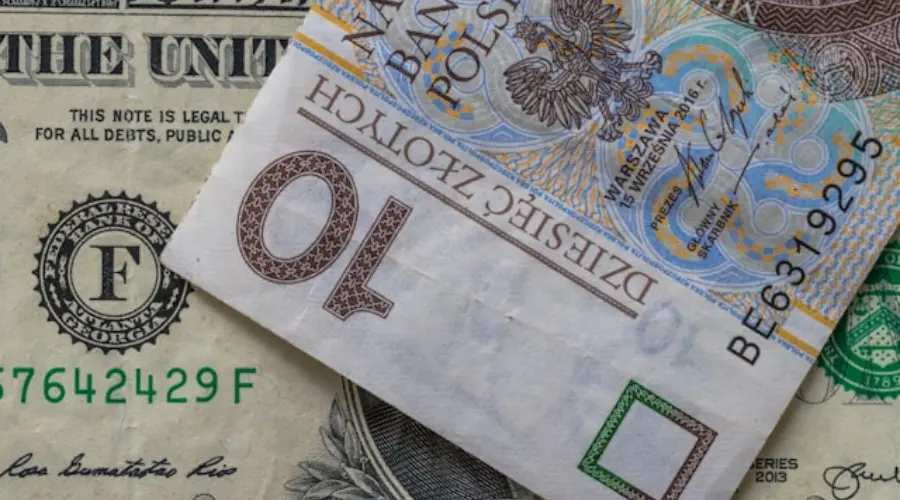
Consequently, the conclusion of the agreement is a positive factor for the zloty and bond prices. Reports of an upcoming agreement have already been largely discounted by the market, and investors’ reaction to the signing will most likely be moderate. Additional information about a possible resolution of the conflict may be provided by the G7 summit starting today in Geneva. The most important event of the week in the US will be the Wednesday FOMC meeting.
The Kevin Warsh era at the Fed begins
We expect the Fed to keep the target range for the federal funds rate unchanged at 3.50 – 3.75 %, meaning rates would remain unchanged for the fourth consecutive time after a total of 75 basis points cuts at the end of 2025. Such a decision would align with market expectations. It will also be the first meeting under the new Fed chair Kevin Warsh, who has held the position for the past eight years that Jerome Powell occupied. CPI inflation overall has clearly risen in recent months due to energy prices (see below), but core price pressure remains much more limited and, in our view, does not justify a rapid tightening of monetary policy.
In our view, the Fed will focus on the potential effects of the second round and the risk of unanchoring long‑term inflation expectations. We expect the post‑meeting statement to drop any hints of a willingness to ease policy, although the Fed will most likely not explicitly signal a possibility of tightening. Although Warsh has largely presented a dovish stance in recent statements, we believe that during the conference, where he should present the FOMC assessment, he will have to take a more hawkish position, which will support his credibility within the Open Market Committee.
In our view, the Fed’s new macroeconomic projections will be more hawkish. The median expected interest rate level by FOMC members will likely shift higher, meaning rates would remain unchanged until the end of 2026.
Forecast: Fed rates unchanged
However, we expect many individual forecasts to assume an increase (or increases) this year. We continue to expect the Fed to keep rates unchanged until the end of 2026, with the last cut occurring only in Q2 2027. Today we will see the final data on May inflation in Poland. We believe it will confirm the preliminary estimate from GUS, which states that CPI inflation fell to 3.1 % YoY compared to 3.2 % in April. At the same time, we forecast core inflation rose to 3.1 % YoY from 3.0 % in April, indicating a slow rise in price pressure. We expect inflation to continue falling in the coming months and reach a local minimum in July, after which it will return to an upward trend. Thus, the annual CPI inflation in Poland will fall to 2.8 % YoY in 2026, then rise to 3.8 % in 2027.
On Friday, May industrial production data for Poland will be released
We expect industrial production growth to have increased in May to 3.5 % YoY from 3.1 % in April. In our view, the acceleration of annual production growth was mainly due to a rebound after a sharp month‑to‑month decline in April. Our forecast is significantly above market consensus (2.5 %) and its realization will support the zloty and increase the profitability of Polish bonds.
This week, US May data will be released
We expect retail sales to have risen in May by 0.6 % MoM from 0.5 % in April. The increase in sales was mainly driven by higher car sales and rising fuel prices. At the same time, we forecast that retail sales excluding cars and fuels rose by 0.3 % MoM from 0.5 % in April, indicating a slower pace of consumer spending growth. We believe that industrial production increased in May by 0.4 % MoM compared to 0.7 % in April, and manufacturing production rose by 0.2 % MoM in May compared to 0.6 % in April, indicating continued resilience of the sector to heightened uncertainty and logistical disruptions related to the Middle East conflict.
On Tuesday, Chinese May data will be released
We expect industrial production growth to have risen to 4.3 % YoY from 4.1 % in April, while retail sales growth slowed to –0.5 % YoY in May from 0.2 % in April, which would be the first negative result since December 2022. Growth in AI and new technology sectors remained an important factor supporting industrial production, mitigating the negative impact of energy shocks and trade disruptions. The benefits from this revival only partially filtered into other sectors of the economy, which was insufficient to break the persistent weakness of Chinese domestic demand.
We believe that investment dynamics in urban agglomerations fell from –1.6 % YoY in April to –2.8 % in May. Investments in processing and high‑technology services continue to grow, but this growth is insufficient to break the broad decline in investment demand associated with heightened uncertainty. The decline in investment is also driven by a smaller scale of fiscal support than last year, especially from local authorities.