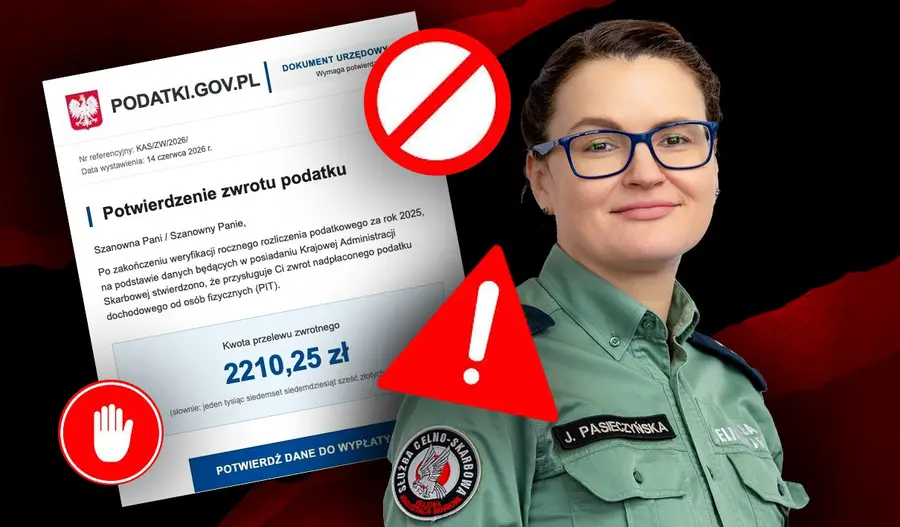
Today early in the morning, one of our email addresses received a mail that seemed to suggest that the tax office wanted to refund us a tax. The message was sent from [email protected], which immediately raised suspicion that something was wrong with it, even though the content of the message could give the impression that it was sent from the Tax Office.
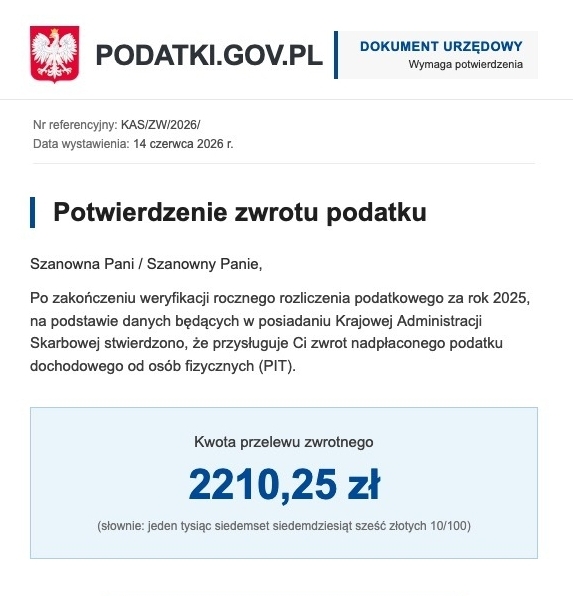
The email content included information that one should as soon as possible update the data, which is necessary to recover the tax. The overpayment was to be 2210.25 PLN. The blue “bars” encouraged clicking, and then handing over the data that the criminals wanted to seize.
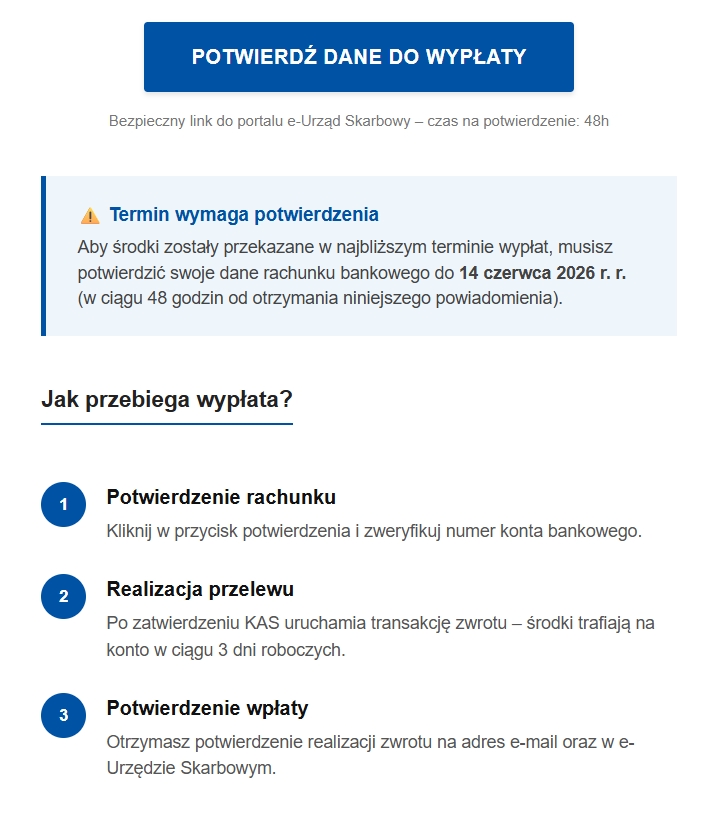
Even the footer of the message suggested that it was sent by the National Tax Administration.

And here is the catch. It all merely mimics a government site, but it is not actually one. Criminals send these messages to many emails, partly to selected people and institutions, and partly to completely random addresses obtained from some source. All with the hope that someone will not maintain proper vigilance, will hand over data, and perhaps later money as well.
The National Tax Administration urges caution
After receiving the message we contacted the National Tax Administration. Not to check if they were the senders – it was obvious it was a scam – but to determine whether it was an isolated case or part of a larger organized operation. Unfortunately, it turned out to be the latter.
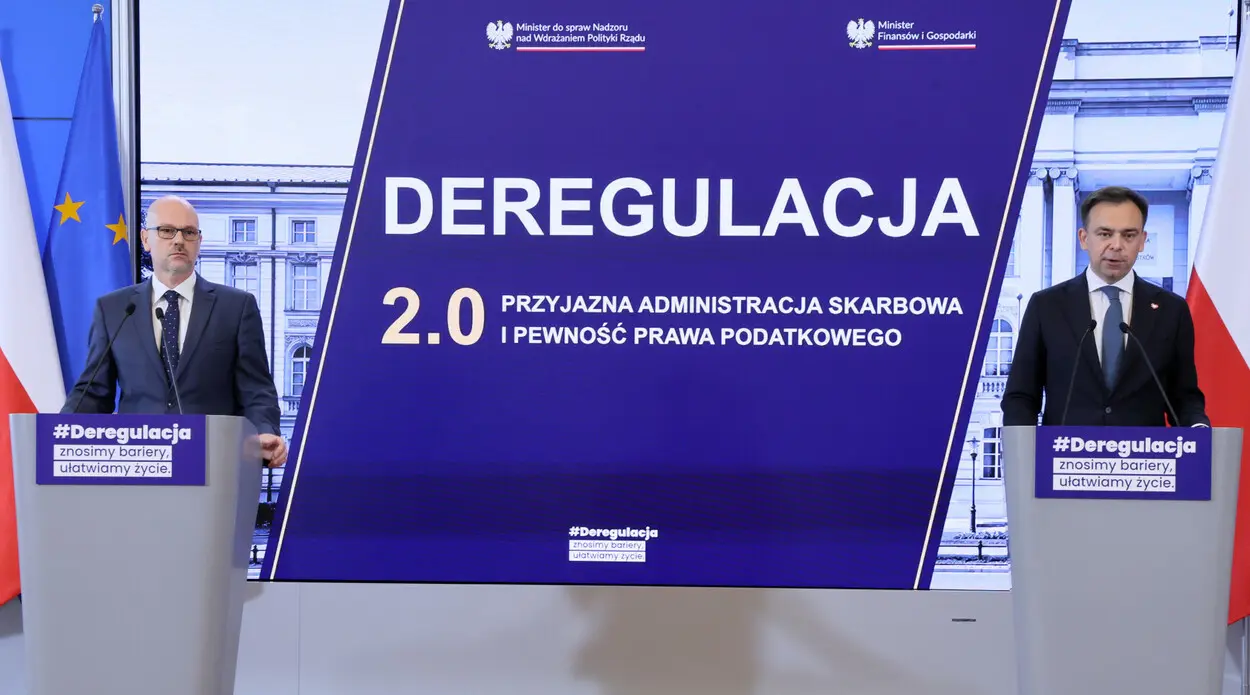
"The National Tax Administration warns of another wave of phishing scams. Criminals impersonate KAS and send fake emails and SMS informing about a supposed refund of overpaid PIT tax" – says spokesperson Justyna Pasieczyńska of the Head of the National Tax Administration.
The representative described the process criminals use. She detailed the content of the email that reached our newsroom.
"In the message fraudsters inform about the urgent need to confirm bank account details, often setting a short deadline for this action. The goal of such actions is to extort personal data, banking information, or financial resources" – stresses Justyna Pasieczyńska.
The KAS representative reminds that The National Tax Administration does not send emails or SMS asking for confirmation of a bank account number or other data necessary for receiving a tax refund.
"We urge you to exercise special caution. Do not click suspicious links, open attachments, or provide any data to third parties." – reminds Justyna Pasieczyńska, spokesperson for the Head of the National Tax Administration.
As she adds, if the received message raises doubts, it is worth verifying the information by logging into the e-Tax Office, where up-to-date data on tax settlements and refunds are available, or contacting the tax office.
Scammers try various ways to extort data
Only in the last month we have described several cases where scammers tried to extort data and money, attempting to lull their potential victims into complacency. One method was the “Booking” scam. By impersonating the popular booking platform, criminals also try to extort data or even money. There were many such cases where we warned our readers to stay alert. We described, among others, ways to extort a “BLIK” code, or attempts to obtain data from a “courier”.
The truth is that daily, many messages arrive in each of our inboxes. It is important that you do not click reflexively on everything. Always read the subject and the content first, check the sender, and only then, after a moment of reflection, decide what to do with such a message. The same applies to SMS or phone calls. We never know who our interlocutor is and whether their actions are not under “criminal threads”.
See also: Scam on “Booking”. The popular platform became a tool for data and money extortion