Today’s economic calendar does not include any significant data releases. Today there will be talks by about 40 countries led by France and the United Kingdom on easing the Strait of Hormuz, diplomatic and legal solutions, and the possibility of launching an international mission to escort commercial vessels.
The revision of GDP data raised the 2024 result to 3.2% from 3.0%, while the total 2025 result remained unchanged (3.6%), although the estimate for the fourth quarter was slightly raised by 0.1 percentage points to 4.1% y/y. The upward revision was mainly due to higher investment estimates – according to GUS, investment rose by 0.4% in 2024 and by 4.4% in 2025 (previously estimated at -0.9% and 4.3%). In addition to investment, inventories contributed to higher growth, while net exports were revised down in most periods, deepening its negative impact on GDP. These changes do not significantly affect our current economic growth forecasts. More in our Economic Commentary.
Forecast of further inflation increases
In March the main core inflation indicator, i.e. CPI excluding food, fuels and energy, returned to 2.7% y/y – recorded from November to January – after falling to 2.5% y/y in February. The reading was consistent with our calculations based on detailed CPI data published yesterday. In m/m terms, core CPI inflation rose by 0.5%, which is a relatively strong increase for March (higher was recorded for this month only in three of the 26 years for which data are available).
In our view core inflation will probably rise above 3.0% y/y later in the year, as the impulse from higher energy commodity prices spreads through the economy under conditions of solid domestic demand. Other core inflation measures also rose in March: CPI excluding administered prices jumped to 2.7% y/y from 1.6% y/y in February (the highest since July 2025), CPI excluding the most volatile components rose to 3.0% y/y from 2.3% y/y, and the trimmed 15‑percent average fell to 2.9% y/y from 2.2% y/y earlier.
Is there any talk of rate cuts?
Henryk Wnorowski of RPP said in an interview with PAP that at this moment there is no justification for considering a return to cuts. According to him, RPP will determine the further direction of actions in July based on the development of the situation and whether inflation remains moderate. He believes CPI dynamics will not exceed the acceptable deviation from the target by July, i.e. above 3.5% y/y.
According to final data, HICP inflation in the euro area rose in March to 2.6% y/y from 1.9% y/y in February, i.e. 0.1 percentage points stronger than the preliminary estimate. The estimate of March core inflation remained unchanged at 2.3% y/y, compared to 2.4% y/y in February.
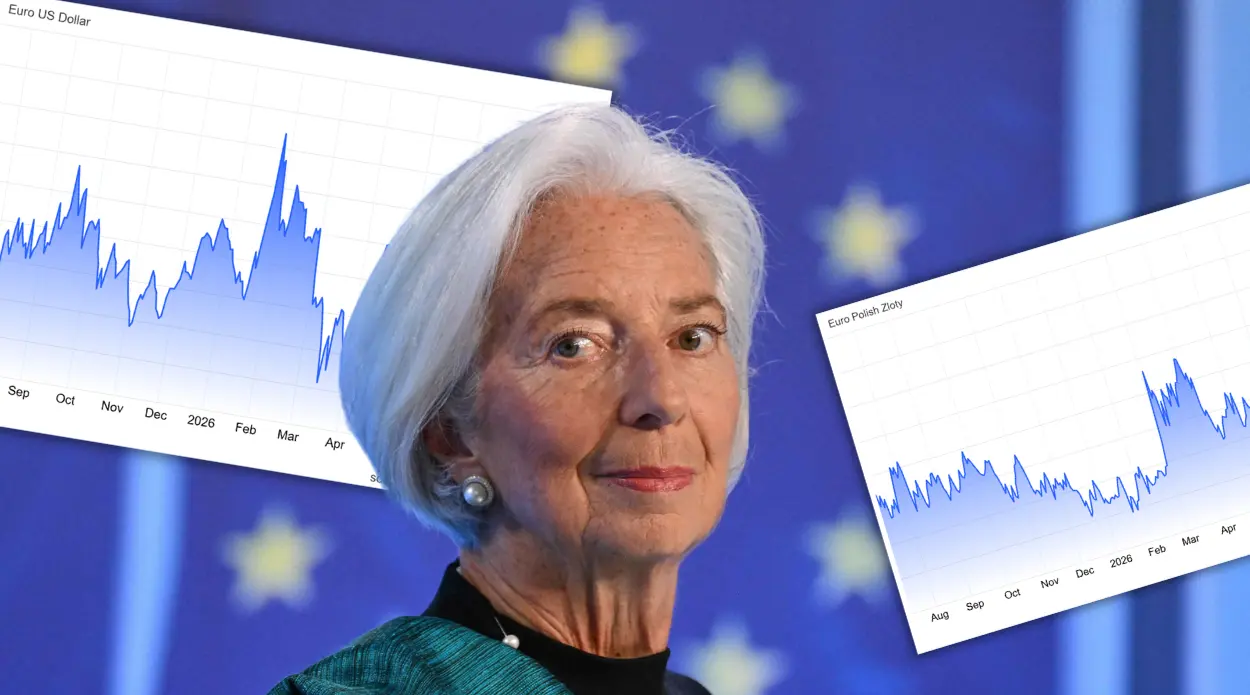
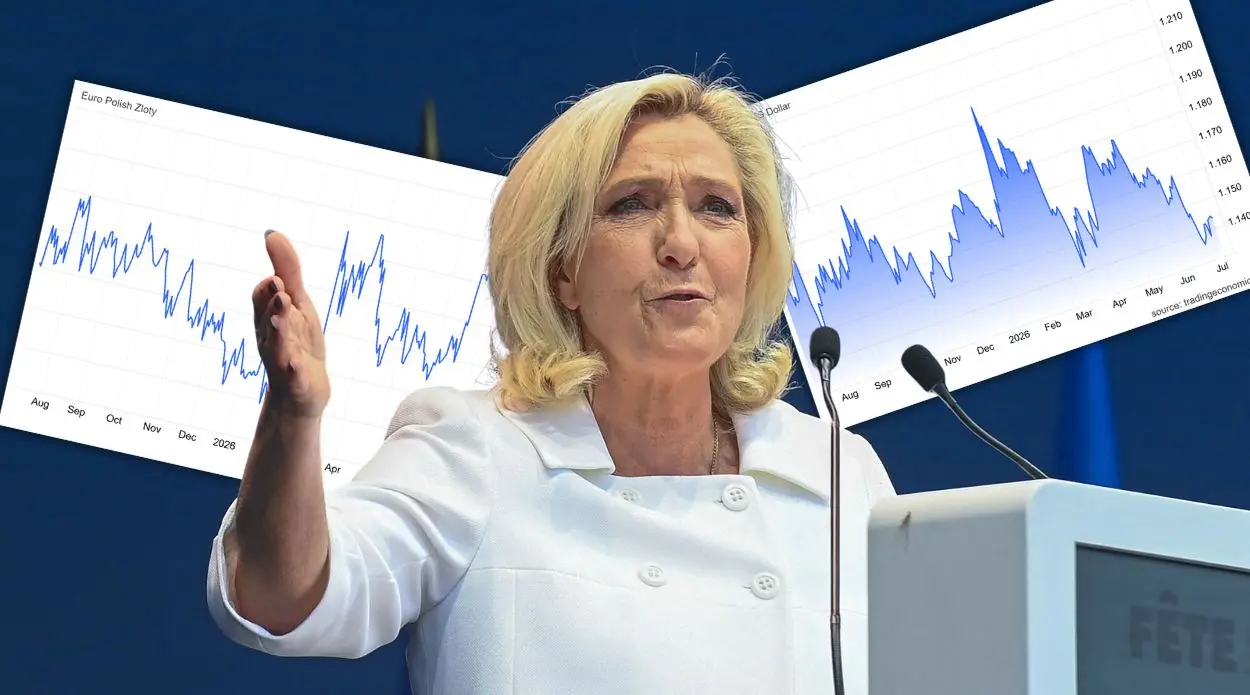
Euro EUR/PLN rate rose to 4.24
The Polish zloty broke the trend of gradual appreciation against the euro observed in recent days, and the EUR/PLN rate rose by about 0.2%, from 4.23 to 4.24 – the level from mid‑morning. The EUR/HUF rate also saw a modest rise, about 0.4% to 364.6 – a movement disproportionately smaller than the strengthening that occurred over the week (last Friday EUR/HUF was around 377).
The EUR/CZK rate also changed little yesterday. The dollar recorded a parallel slight appreciation against the euro, which translated into a decline in the EUR/USD rate of about 0.2%, to 1.177.
The market had already gained optimism in recent days about the situation in the Middle East, so yesterday’s agreement of the Israel‑Lebanon ceasefire and Donald Trump’s suggestion that further USA‑Iran talks could take place even this weekend did not trigger significant movements in asset and currency prices, and Brent oil rose yesterday by about $3 to $98.5 per barrel.
German bond yields fell
On Thursday changes in the domestic debt market were relatively small. The largest change was recorded by two‑year bond yields, which fell by about 4 basis points. Five‑ and ten‑year bond yields rose by 2 basis points and fell by 1 basis point respectively.
Changes in domestic IRS and FRA rates did not exceed +/- 1 basis point. Small movements were also observed in the base markets. German bond yields fell by about 2 basis points across the entire curve, and U.S. bond yields recorded only negligible changes.