Data from across the ocean
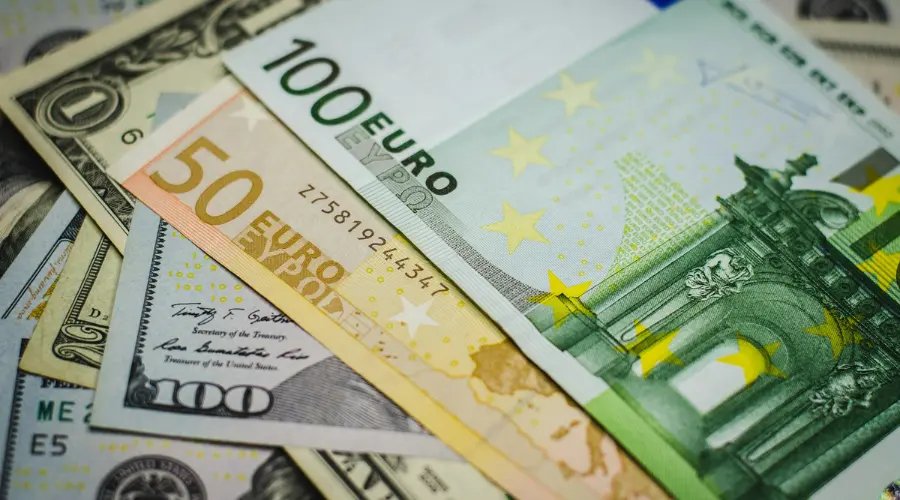
Yesterday we learned three important readings from the USA. The first were better-than-expected GDP data. Of course annualized, because Americans love that specific method.
It shows what the whole year would look like if it were as good as the last quarter. We don’t know how the US economy changed over the year, but we learn how it could look under certain assumptions. The result was better than expected, so overall it was good. Both income and spending also beat forecasts, rising 0.7% in May.
For markets, spending is obviously more important. Sales are more important than stable fundamentals. Better order data also came. Since we have three good readings, why was the dollar down yesterday? Over the last week and a half the US dollar gained 2.5 cents against the euro. After such a strong strengthening one can expect sooner or later a correction. As a result, investors who do not believe in a continuation of the move and are realizing profits proved more important for the dollar than those readings.
Labor market situation in Australia
Yesterday we learned data from the Australian labor market. The unemployment rate, as expected, fell from 4.5% to 4.4%. The most noteworthy is the change in employment, which turned out to be not the expected 30,000 people but 40.3 thousand. This shows that the local labor market, after a weaker moment, again presents good data. The Australian dollar took in these readings quite calmly, the rise was relatively small.
However, it is worth remembering that the vacations in Australia that some dream of have recently become more expensive again. Even last year we observed the lowest levels since the 2008 crisis, when the Australian dollar cost 2.35 PLN. Today it is already 2.60 PLN.
Warning shots in the Strait of Hormuz
Theoretically the Strait of Hormuz is fully navigable. Theoretically, because Iran still requires ships to have "consultations". Considering that there are still sea mines in the area, such a consultation does not sound like just an attempt to extort money from the regime. Many ships still try to cross the area with transponders turned off. As a result of such actions, several units recently turned back and warning shots were fired.
Among these incidents an unidentified projectile also appeared, hitting a ship near the coast of Oman. The market, not knowing what will happen next, reacted cautiously. Caution in the event of escalation in the Middle East means buying oil. It therefore should not be surprising that the price of a barrel of this commodity jumped a few dollars. Today, however, with the lack of development of the situation, it is slowly falling down.
Today in the macroeconomic calendar there are no important readings.