The psychological barrier was broken
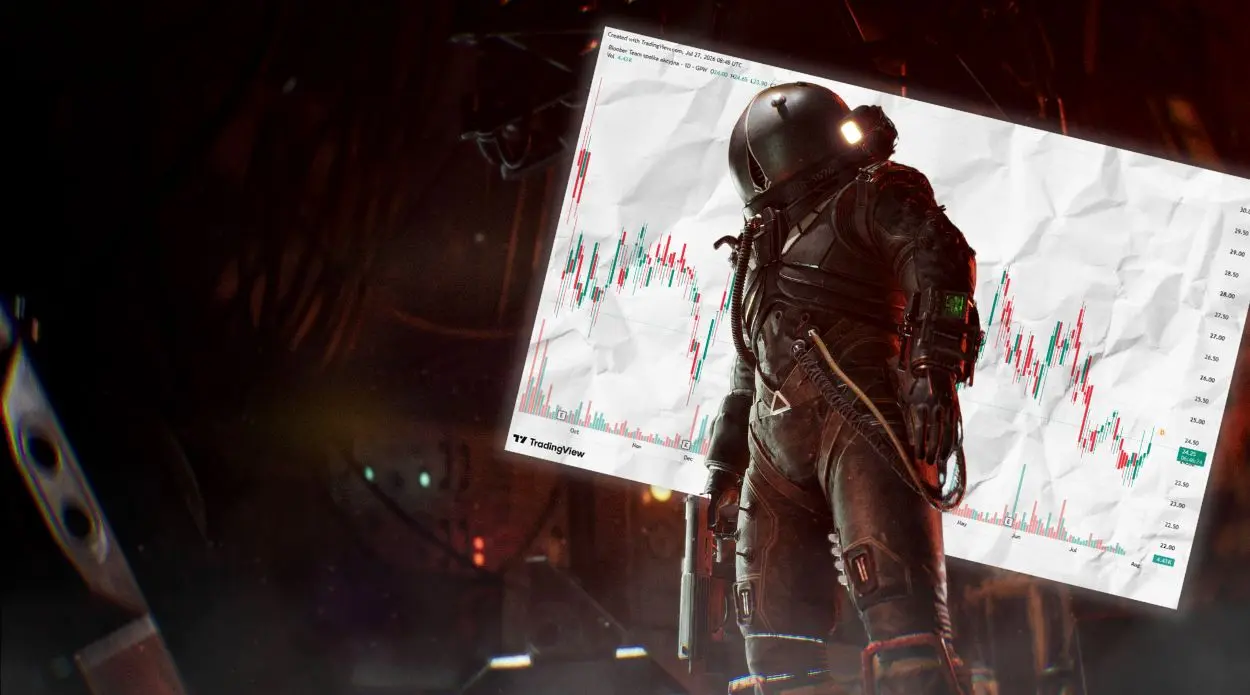
The most important event of the month was the drop in gold price below $4,000 per ounce. The level itself had primarily psychological significance – for the past months investors treated it as a key support level.
Earlier in the year gold was setting historical records, approaching $5,600 per ounce. The June correction therefore marked a clear shift in sentiment and prompted some market participants to realize gains after an exceptionally strong bull run.
At the same time it should be noted that the fall below $4,000 did not trigger a panic sell‑off in the physical market. For some long‑term investors lower prices became an opportunity to increase exposure to precious metals, limiting the scale of further discounting.
Changing expectations about the Fed dominated the market
The main factor behind the June correction was not geopolitics itself, but a shift in expectations regarding U.S. monetary policy.
Sharp signals from the Federal Reserve caused the market to assume that high interest rates would be maintained for longer. As a result the dollar strengthened, U.S. Treasury yields rose, and some capital flowed out of gold‑investing funds.
This reminded investors of the mechanism that has long been one of the most important factors influencing precious metal prices – higher rates increase the attractiveness of income‑generating assets, while simultaneously reducing demand for gold, which does not generate current interest income.
ETF funds in reverse, central banks buying
In June starkly different approaches to bullion valuation emerged depending on the investor profile. Commodity exchange data and capital inflow statistics showed massive position closures by ETF funds, from which only in recent months billions of dollars have flowed out. These outflows from exchange‑traded funds were the main brake on spot prices.
The situation was completely different in the physical transaction segment. Net purchases by the official sector reach historically high levels, stabilising the market.
Wall Street is cautious about expectations
The June correction prompted the largest financial institutions to revise their gold market forecasts. The most resonant echo was Goldman Sachs’ decision to cut its end‑of‑year gold price forecast to $4,900 per ounce. Although this represents a more cautious approach than a few months ago, the bank still assumes levels higher than current prices.
Other financial institutions followed a similar direction, indicating that short‑term pressure related to monetary policy may persist longer than previously assumed.
What July might bring?
The coming weeks will answer whether the June correction was merely a natural stage after an exceptionally strong bull run, or the beginning of a longer period of market weakness.
The biggest attention from investors will be drawn to:
- Further Federal Reserve announcements and U.S. inflation data,
- Dollar behaviour and bond yields,
- Inflows or outflows of capital from gold‑based ETF funds,
- Further central bank activity in the physical bullion market.
If monetary policy pressure weakens, the metal may gradually recover some losses. If the market continues to expect high rates, volatility will likely remain elevated.
Expert commentary by Łukasz Wydra, Cashify Gold analyst
“The current correction in the gold market does not stem from a deterioration of demand fundamentals, but from a change in the structure of capital flows. For the first time in a long time the market behaves inconsistently between the financial and physical segments.” – says Łukasz Wydra, Cashify Gold analyst.
“The drop below $4,000 per ounce was mainly generated by ETF funds and speculative investors who reacted to the change in expectations about U.S. monetary policy and rising Treasury yields. At the same time there is no sign of a similar weakening of strategic demand.” – notes Wydra.
“The key point is that central banks remain active on the buying side, and the physical market shows no signs of capitulation. This maintains the split between the financial segment, which reacts to the cost of money, and the strategic segment, which operates on a long horizon.” – explains Wydra.
“In the short term volatility will still be driven by ETF flows. If they stop selling, the market will stabilise. If not – volatility will remain high.” – summarises the Cashify Gold analyst.