In Venezuela’s economic reality, the slowdown in price growth from 13.1% in March to 10,6% in April is a reason to celebrate.
New data from Venezuela. It’s better, but not best
Venezuela’s Central Bank (BCV) has just released the latest data, but it’s worth looking at the broader picture, because in the cumulative view, since the beginning of 2026, inflation has already reached 90%.
Read also: Suspicious transactions in the oil market. The insiders earned billions of dollars. “A frightening example of market manipulation”
This means that the purchasing power of the local currency is melting at an extreme rate. If we convert these values to an annual index, we get a result of about 611,86%.
It is still a level that makes any budgeting in the local currency feel like pouring water into a sieve. Economists, analysts and investors view these results with a mix of admiration for the society’s resilience and horror at the scale of capital erosion.
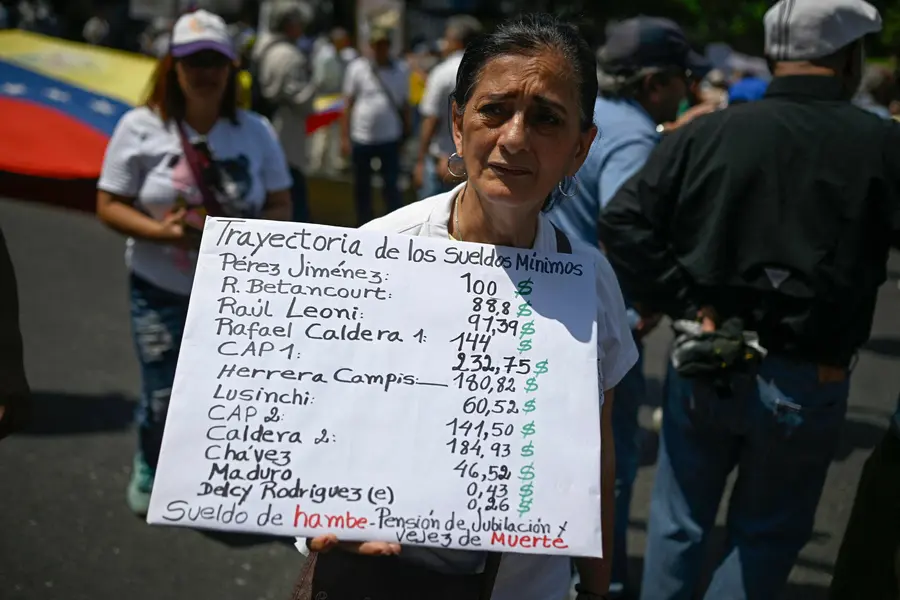
This situation did not appear suddenly, and subsequent Venezuelan governments (Nicolás Maduro, formerly Chávez) systematically “worked” on the country’s tragic economic situation.
See also: Oil prices began to fall. Venezuela will comply with US conditions – Trump says
Will the IMF change Venezuela’s situation for the better?
The most interesting move on the political‑economic chessboard is not the inflation figures themselves, but the resumption of relations between Venezuela and the International Monetary Fund.
It is supposed to be a game changer that will open Caracas to a path to international liquidity in USD.
The Venezuelan government, which is currently operating without the formal president Nicolás Maduro, who was taken to the US in January, is not wasting time and has appointed its representative and governor at the IMF Calixto Ortega, who currently serves as the deputy president for economic affairs.
This is a high‑priority nomination. Ortega is to be the face of a new and stable Venezuela, capable of talking to Western capital without ideological grinding of teeth. For the market it signals that the country, ruled for decades by socialist dictators, desperately needs help in the form of external financing and the removal of some restrictions that currently suffocate the local industry, the technology sector and the economy itself.
It is worth noting that Venezuela’s economic situation has been so bad for years that in recent years even 7,7 to 7,9 million citizens of this country have emigrated.
The ones who remained cope in various ways, from earning virtual gold from the game MMO World of Warcraft, to receiving transfers in Bitcoin or USDT from relatives who emigrated abroad.
The average Venezuelan’s situation is very difficult, so a return to the IMF could mean that the government no longer sees another way out of this stalemate, given that since January they feel the breathing of the American army on their necks, which was able to abduct President Maduro literally at night from his bed.
Although theoretically Venezuela is a country rich in oil reserves and should be the second Saudi Arabia, incompetent governments have drained natural resources for years and have not developed the economy, relying entirely on oil.
For developed countries, Venezuela can be a tangible warning of what happens when inflation clearly escapes control.
Read also: Has the rally ended? Gold and silver prices may strongly disappoint investors
See also: Dollar rate before the “nervous and dynamic” move, euro waiting to fall? Expert issued a forecast for USD/PLN and EUR/USD
Source: Reuters.