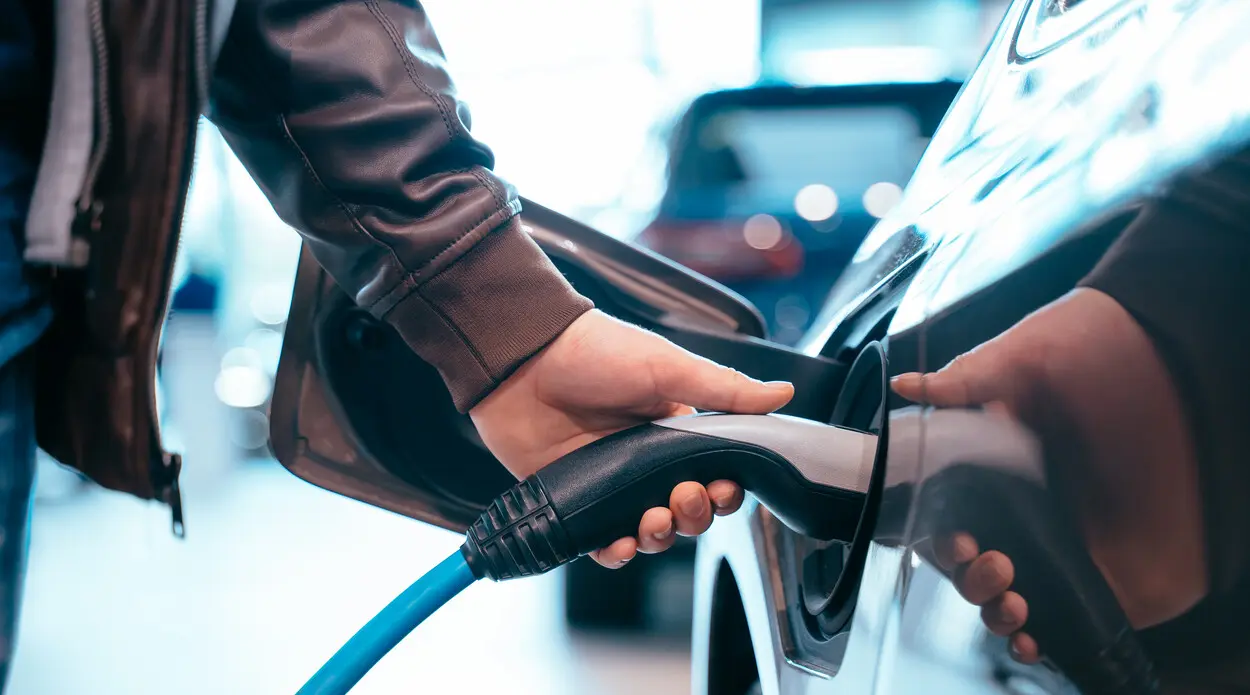
A precedent that can be used in future similar cases arose in Germany, where a customer entered a legal dispute with a dealer selling electric cars, who wanted to return the car because, as he claimed, its range was almost half lower than what the seller had declared. The dealer refused to accept the car, so the case went to court – the “Auto Świat” reported.
The dealer had to accept the car
The case concerned a Peugeot e-2008 GT. According to the manufacturer, the car should travel between 332 and 341 kilometres on a single charge. The measurement was carried out according to the WLTP standard. The seller also declared a similar value, citing the manufacturer’s estimates. The owner claimed that the car can only travel half the declared distance. Importantly, this was supposed to happen under favourable conditions, i.e. during city driving, where frequent braking could recover a lot of energy.
Because the dealer did not agree to take the car back, the owner took the case to the District Court in Wuppertal, Germany. The court-appointed expert proved that the client was right, even though his measurements showed a much better result than the owner’s words suggested. In fact, during verification, which took place under the WLTP standard (and not during normal street traffic), it turned out that the car can travel a maximum of 281 kilometres on a single charge, i.e. 18% less than the manufacturer’s data indicated. Moreover, the expert concluded that the drop in range in this particular case could be about 2.5% per year.
The court, after reviewing the case, decided that the dealer must accept the car from the client and refund him. Ultimately, the refund amounted to €33.8 k instead of €39 k, which he paid for it. The difference is due to the loss of the car’s value because of its use.
Will a wave of lawsuits start?
The case we described is not the only one where the actual and declared range of an electric car differ significantly. The ruling could serve as a kind of precedent that future dissatisfied owners of “electric cars” will cite. It is worth mentioning that the case handled by the court in Wuppertal is not the only one of its kind. Legal disputes over differences between real and declared range are increasingly ending up in court. They involve various brands and models. According to “Auto Świat”, they often involve the Opel Corsa-e and Porsche Taycan.
In such cases, the outcome cannot be certain. The court takes into account many factors that affect energy consumption during driving. One of them is the conditions under which the driving takes place. Research shows that range can drop in winter when temperatures are much lower, and the driver uses many energy‑intensive features such as interior heating, windows, mirrors, or seats. This can reduce the car’s range by several percent.
See also: Poles are moving away from electric cars? A clear decline in interest in electric vehicles