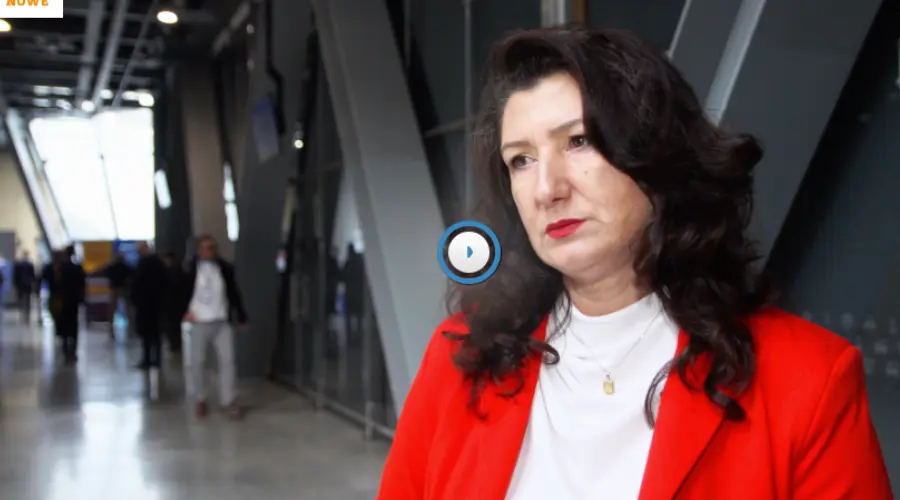


– The amendment to the Public Procurement Law is fully devoted to the appeals area and also partly to the controls carried out by the President of the Public Procurement Office. Today we face a huge challenge in the number of appeals filed with the National Appeal Chamber. The system has already become inefficient. We observe that their large number does not significantly affect the quality of subsequent proceedings. Therefore, after analysing the allegations, we tried to propose changes – says Agnieszka Olszewska, President of the Public Procurement Office, in an interview with Newseria agency
Every year the number of appeals filed with the President of the National Appeal Chamber significantly increases. In 2019 there were 2,695, in 2022 3,537, in 2023 3,963, in 2024 5,060, and in 2025 – 5,986. From 2021 to 2025 there was therefore an increase of about 60 %. This is what the Public Procurement Office’s analysis shows.
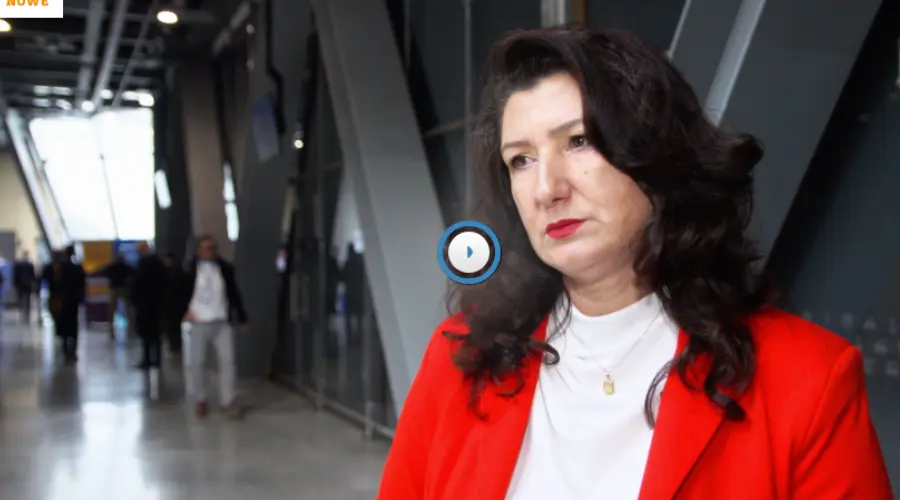
– The challenges faced by the design or supervisory industry are long‑lasting procedures in the National Appeal Chamber, where we anxiously wait for the selection of the next contractors with whom we can sign a design contract or start supervising the implementation of the investment. We see that these procedures drag on and cause part of the funds that the country will spend on the rail to be at risk – explains Renata Mordak, President of Egis Poland.
The average time to forward appeals to the President of the NAC increased from about 4.4 days to about 15 days in 2025. At the same time the percentage of cases resolved within 15 days fell sharply – from about 78 % in 2023 to about 32 % in 2024 and about 11 % in 2025.
– We propose changes that were consulted with the market. We hope they will lead to fewer appeals. We also propose raising the entry fees. Our proposal for the basic thresholds that currently exist is to adjust the amount of these entries, but also to introduce new thresholds above which the entry fee will increase significantly – emphasizes Agnieszka Olszewska.
Since 2010, despite inflation, the amount of entry fees for an appeal has remained unchanged. For supplies and services below the EU thresholds – 7.5 k zł, equal to or above the EU thresholds – 15 k zł. For construction works below the EU thresholds – 10 k zł, and equal to or above the EU thresholds – 20 k zł.
– We currently propose to introduce a threshold of 15 million € for supplies and services of construction works, where the entry would be up to 60 k zł, and the threshold for the largest investments – 30 million €, where an entry of up to 150 k zł would be introduced – explains the UZP President. – But this is not yet the final proposal. We listen to the voices of all stakeholders, market participants and based on this we will possibly adjust the regulations to the actual needs of the public procurement system – adds.
The justification for the changes to the law states that the problem requiring legislative action is also the issue of divergence in the NAC’s case law. They lead to an increase in appeals, but can also discourage contractors from bidding for public contracts.
– We also propose changes that will aim to standardise case law in disputes, in proceedings for awarding a public contract. One proposal is to adopt a resolution by the assembly of members of the National Appeal Chamber, in case a divergence in case law arises – explains Agnieszka Olszewska.
The draft law foresees adding a new regulation that will allow the NAC to resolve divergences arising in its case law by a resolution of the general assembly of the chamber. It is intended to have only an internal character and serve to standardise the chamber’s case law.
– The draft also includes a number of other improvements. These include explanations from the President of the Public Procurement Office. We want, in addition to legal opinions, interpretations, guidelines that are already issued, a new form of explaining legal provisions, which can be issued on request by controlling institutions or by the President of the Public Procurement Office when they deem it necessary – emphasizes the UZP President. – Our goal is that contracting authorities who comply with such explanations will not suffer negative consequences when they are applied. All these changes aim to make public procurement law and processes predictable – adds.
She stresses that there is a diversity of appeals filed, and the changes are not intended to eliminate these legitimate ones.
– I believe that if the line of case law of the National Appeal Chamber is known and predictable, then appellants, knowing it, will enforce their rights and the appeals will be as justified as possible and will influence the improvement of the quality of processes, as well as the execution of public contracts – notes Agnieszka Olszewska.
Analysis of the NAC’s case law in recent years shows that the trend of increasing appeals, more related to formal issues than to the substance of the contracting authority’s proper conduct in selecting the most advantageous offer, persists.
– I hope there will also be fewer withdrawn appeals, which unfortunately consume our resources for handling appeal processes. Today this is also a high percentage, when appeals are withdrawn at the last possible moment just before the hearing. It blocks our hearing rooms. For this reason we also proposed in the amendment to switch to purely remote hearings – explains the President of the Public Procurement Office.
Plans are underway to introduce solutions that support more efficient scheduling of remote hearing dates by limiting the possibility of in‑person participation in hearings designated as remote.
– The changes concerning the National Appeal Chamber are necessary. However, I do not think that the changes planned in this way will bring a very large effect. I agree that many appeals are filed only “for the sake of argument”, but we also observe many that are accepted by the NAC, where offers from the second, third or fourth place are selected – explains Renata Mordak. – This means that in offers from the first places there were errors or the price could have been extremely low, or contractors may have hidden some information, which also means that the contracting authority does not have access to full information to assess these offers unequivocally. Only the NAC evaluates them – adds.
The expert believes that the proposed solutions will not significantly accelerate the operation of the public procurement system.
– In offers there are still errors that contracting authorities do not catch. Only competition does that, and then a tool like an appeal to the NAC absolutely should exist. Also contracting authorities too rarely use their right, that is, rejecting an offer if it contains an extremely low estimate – says the President of Egis Poland.