What are drone inspections of infrastructure?
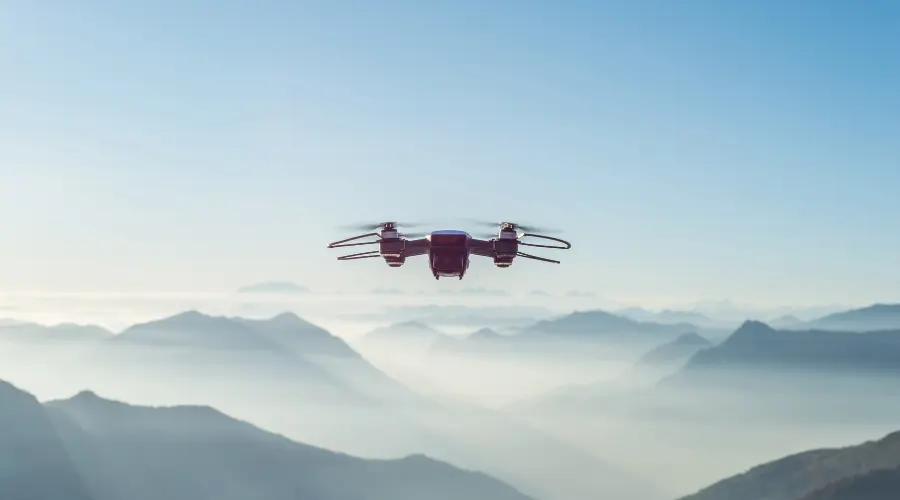
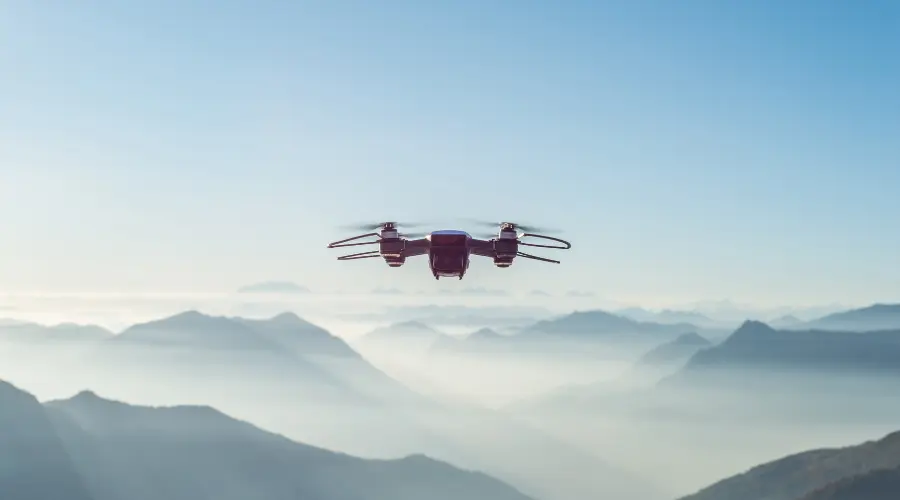
Drone inspections are a process of remote monitoring and assessment of the technical condition of building, industrial, and linear structures using unmanned aerial vehicles (UAVs). Drones equipped with high‑quality optical sensors, thermal cameras, and LiDAR scanners provide precise data on the condition of structures without the need for direct human involvement in hazardous locations.
Modern drone inspections form the foundation of contemporary Asset Management. With them, managers can generate orthophotomaps, 3D models, and defectoscopy reports that are far more accurate than notes taken by an inspector on a ladder or scaffold. This technology combines the mobility of aviation with the precision of advanced image analytics.
Why do companies abandon traditional methods in favor of UAVs?
The main driver of change in Polish industry is cost and operational efficiency. Traditional methods require engaging industrial climbers, building expensive scaffolds, or renting cherry pickers. Each element raises the cost estimate and extends the time the asset is out of operation.
The table below presents a direct comparison of traditional methods with drone‑performed inspections:
|
Feature
|
Traditional method
|
Drone inspection
|
|---|
|
Unit cost
|
High (heavy equipment, high‑altitude crews)
|
Low (one operator or two‑person team)
|
|
Completion time
|
Days or weeks
|
Hours
|
|
Occupational safety
|
High risk of falling from height
|
Minimal risk (operator stays on ground)
|
|
Data accuracy
|
Subjective (notes, hand‑held photos)
|
Objective (high resolution, geolocation)
|
|
Asset downtime
|
Often requires full shutdown
|
Asset can operate under load
|
Deploying unmanned technology avoids so‑called lost‑benefit costs. For example, inspecting a wind turbine with a drone does not require long‑term immobilization, which on a wind farm scale translates into thousands of euros saved in energy production.
Key industries using drones in Poland
The UAV sector in Poland is growing rapidly, and professional services support almost every branch of the economy. Experts from SkySnap point out that the greatest demand comes from sectors where infrastructure is dispersed or hard to access.
- Energy and renewables: Monitoring high‑voltage lines, inspecting photovoltaic farms with thermal imaging, and checking wind turbine blades.
- Construction and surveying: Creating point clouds, calculating earthwork volumes, and supervising progress on large construction sites.
- Railways and transport: Inspecting track conditions, bridges, viaducts, and monitoring rail ballast.
- Telecommunications: Inventorizing mast equipment and verifying antenna azimuths.
- Building assets: Inspecting industrial and commercial buildings—assessing the technical condition of façades, flat roofs, and heavy production and storage halls.
- Heavy industry and mining: Inspecting the interiors of tanks, boilers, and factory chimneys.
It is worth noting that SkySnap carries out projects in all mentioned sectors—from working with PKP PLK to auditing large photovoltaic farms. Such a wide range of activities confirms that UAV technology has moved from novelty to standard in technical asset management.
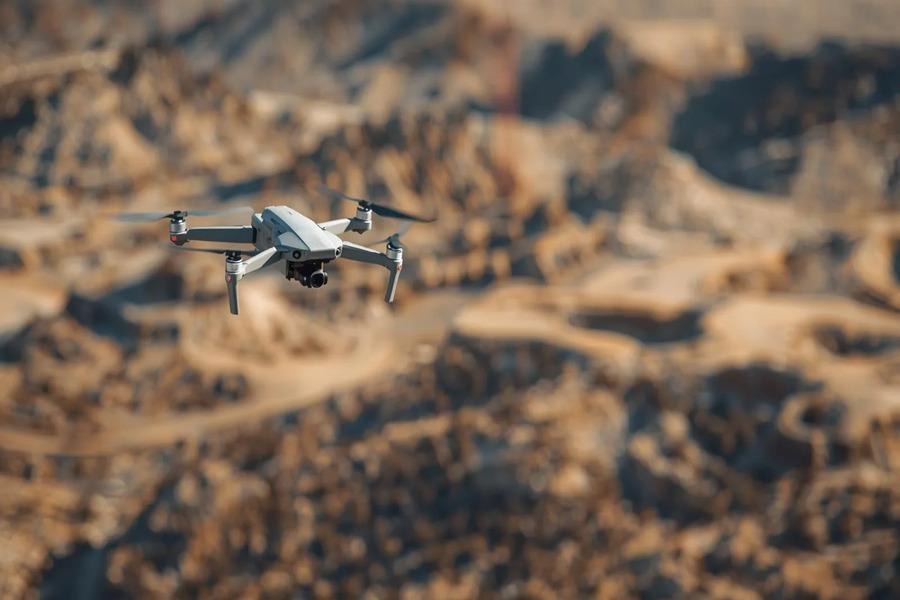
Drone inspections of industrial and commercial buildings
Production halls, logistics warehouses, shopping centres, and office towers appear solid at first glance but hide significant technical risks. Large flat roof areas, façades covered with thousands of square metres of metal or glass, and massive steel structures are areas where traditional control is not only expensive but often physically impossible without specialised equipment.
A drone equipped with a thermal camera can scan an entire roof span in a few hours, indicating areas of insulation dampness or roof leaks. In office buildings and retail premises, this information allows precise repairs—without replacing the entire surface. This directly translates into savings for the owner or property manager.
What can be assessed by drone in an industrial or commercial building?
- Flat roof condition—cracks, bulges, water pooling spots.
- Façade thermography—identifying thermal bridges, leaks, and heat escape zones.
- Curtain wall and glass façade inspection—searching for micro‑cracks, silicone damage, or panel delamination.
- Ventilation and smoke hood control—verifying operation and mechanism condition.
- Monitoring progress of repair or construction work—3D documentation and photo reports for the investor.
From the perspective of insurers and building control authorities, regular drone documentation provides solid evidence when assessing damages or issuing occupancy decisions. Specialized
industrial and commercial building inspections carried out by professional drone companies allow property managers to adopt a proactive approach to maintenance—consistent with building and insurance regulations.
Data management: From photos to digital twin
Flying the drone is only the beginning. The real value lies in processing the acquired material. Hundreds of high‑resolution photos must be turned into engineer‑readable information. This is achieved with an advanced drone data management portal, which allows storing, analysing, and sharing inspection results in the cloud.
A Digital Twin is a virtual replica of a physical asset, created from drone data. With such a solution, infrastructure managers can:
- Remotely measure distances, areas, and angles.
- Compare the asset’s condition over time (degradation trend analysis).
- Annotate faults directly on the 3D model.
- Automatically generate technical reports for insurers or regulatory bodies.
Using a dedicated platform eliminates the problem of “swelling” hard drives and the difficulty of transferring large files between company branches. All data is available from a web browser, dramatically improving communication between contractor and client.
What long‑term financial benefits do drones bring?
Investing in professional UAV inspections pays off instantly through prevention. Detecting a small crack in a concrete bridge structure with a drone costs little. Repairing the same crack when it turns into a major structural defect after several years of neglect can cost millions of zlotys.
Using UAVs in annual technical reviews allows optimisation of repair planning. Instead of fixing parts that “look worn”, companies base decisions on hard metric and thermal data. This shift from a reactive strategy (repair when it breaks) to a proactive one (prevent failures) is key.
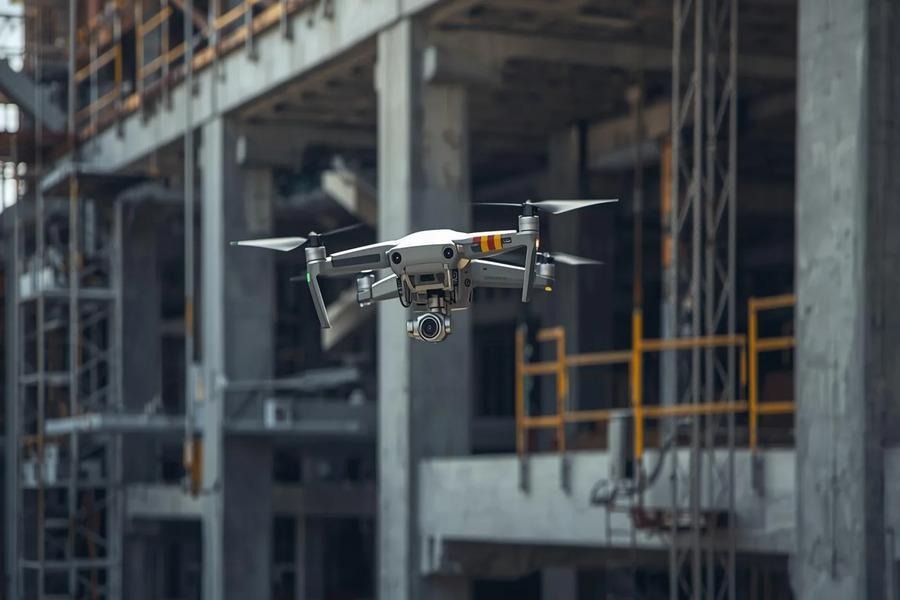
Safety and regulations in UAV operations
Conducting professional inspections in Poland requires strict compliance with EASA (European Union Aviation Safety Agency) regulations. Every operation, especially near critical infrastructure or in controlled airport spaces, must be reported and carried out by certified pilots.
When choosing a partner for inspections, pay attention to their licences, liability insurance, and experience in specific conditions (e.g., indoor flights or in the presence of strong electromagnetic fields). Professional entities ensure every mission is not only efficient but also safe for the environment and client property.
Conclusion
The era of traditional, dangerous, and expensive high‑altitude inspections is gradually fading. Polish infrastructure is becoming increasingly “intelligent”, and the tools offered by SkySnap allow Polish entrepreneurs to catch up with global Industry 4.0 trends.
Cost optimisation, speed of action, and unprecedented data precision are arguments that no modern manager can ignore—whether they manage a power plant, a factory, a shopping centre, or an office park.