The sector of modern financial services has already accustomed consumers to exceptional convenience.
Modern fintech, or perhaps a clever camouflage of costs?
As is widely known, convenience breeds laziness. Fast mobile apps, instant onboarding, and flexible limits are market standards that pump startup capital. Nevertheless, the line between technological optimization and aggressive legal circumvention is regularly tested by legal departments.
This time the President of UOKiK decided to carefully examine what lies behind the mask of popular credit solutions that theoretically should facilitate digital portfolio management. The office has launched an official investigation against Easy Payment and Fincard.
Easy Payment is a Bulgarian financial company successfully operating in our domestic market, providing credit cards under the brand Axi Card. Fincard, on the other hand, is behind products issued under the well-known brands Net Credit or Havlo. Both companies have built a strong market position by attracting consumers with a technologically smooth approval process.
The problem is that advanced transactional systems may have been used to cleverly mask traditional, costly debt mechanisms.
See also: The carrier conspiracy and network giant led to workplace pathology? UOKiK stepped in with a control.
A credit card is credit, not free points in a game
Many young users, raised on digital entertainment, microtransactions and loot boxes, treat the app limit like a game MMO point balance. Reality, however, is brutal – a credit card under Polish law is essentially nothing more than a classic consumer loan. The principle of operation remains unchanged – the consumer uses money “borrowed” by the financial institution and must return it without fail.
For this service the issuer has full right to charge capital interest, which constitutes its remuneration for using the money, and additional fees. Their maximum amount is defined by strict legal regulations, not by free-form algorithm juggling.
Interest depends directly on the amount of the used card limit and the exact period during which it is used. According to Polish law, capital interest cannot exceed a legally specified amount. The office suspects that in this case these sacred rules have been cleverly twisted.
See also: Dino shares at a 28% discount. UOKiK strikes the giant! Working conditions in the network under scrutiny.
Commissions like interest, i.e., forbidden algorithm tricks
The President of UOKiK’s allegations directly hit the foundations of the business models of both described fintechs. The case mainly concerns charging fees for a credit card as a percentage of the used credit limit and misleading consumers about the true cost of credit. Instead of a transparent price list, customers received a complicated mathematical equation.
- The method of charging fees for using credit cards employed by both entrepreneurs in practice meant that the more money the consumer borrowed, the higher not only the interest amount but also additional fees. Meanwhile, fees and commissions are supposed to have a fixed amount or be tied to a specific service. In this case they acted like loan interest, increasing the cost of credit beyond the legally allowed limit.
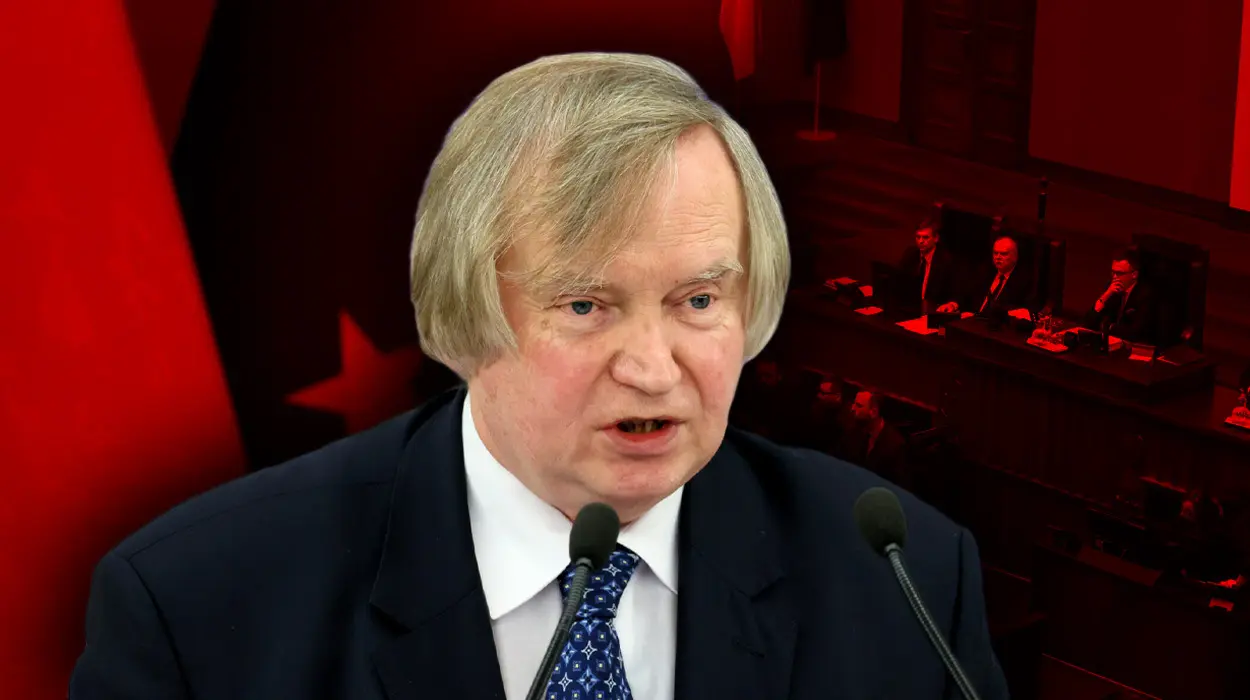
- says President of UOKiK Tomasz Chróstny.
For violating the collective interests of consumers, the President of UOKiK can impose on Easy Payment and Fincard powerful financial penalties reaching up to 10% of their total turnover. For each financial institution, such a blow means not only gigantic financial turbulence but also the necessity of an immediate product strategy overhaul from scratch.
See also: The carrier conspiracy and network giant led to workplace pathology? UOKiK stepped in with a control.
Source: UOKiK