

Among the factors that block the decision-making process, industry representatives cite, among others, its centralization, the complexity of organizational structures, as well as an excess of information to analyze or a lack of managerial competence.
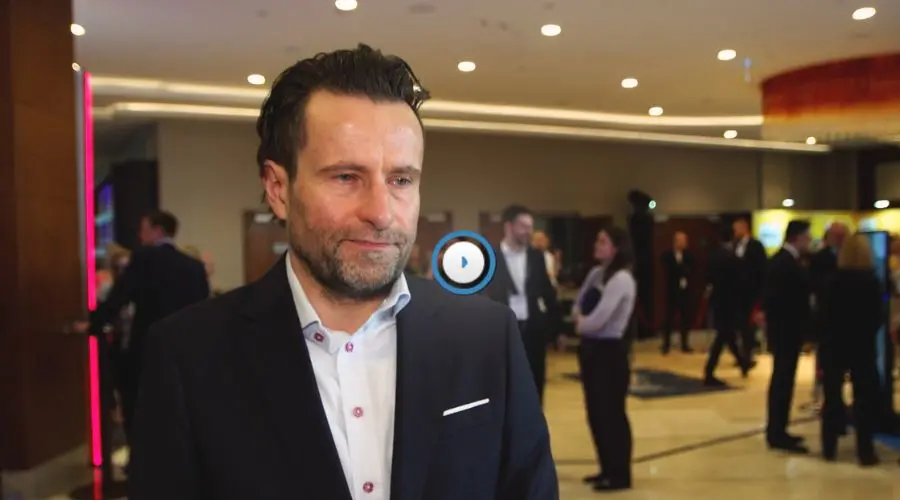
– Speed of decision-making can definitely be a competitive advantage. At Wedel we have three strategic principles. One of them is the mentioned speed and flexibility of action and decision-making. We have a huge amount of data in the market, the situation is also changing dynamically. The two factors negatively affect the speed of decision-making – speaks Newseria agency's Maciej Herman, managing director of Wedel. – Companies that find a way to still make good decisions quickly despite the difficult situation, the amount of data and the degree of volatility have a much greater chance of winning than their competitors.
The year 2025 was marked by the stabilization of consumer sentiment. According to YouGov Poland data, the Polish FMCG market shrank in volume by 1.8% year‑over‑year. At the same time its value increased by 5.3%, translating into an additional PLN 14.5 billion in value.
– Decisions in companies are made for many different reasons. On the commercial side we mainly rely on market data: how the consumer changes, what they pay attention to, what the consumer trends are. The client market, i.e. retail chains and wholesalers, is also equally important. All of this also constantly evolves, so you have to keep up with changing customer expectations – emphasizes Maciej Herman. – On the cost side we also have a lot of challenges. Production and logistics clash with raw material prices that fluctuate strongly. For example, cocoa has become several times more expensive in the last two years. There is also the area of costs related to energy or fuel prices. All of this requires constant decisions and a flexible approach.
According to Deloitte’s “Consumer Products Industry Outlook 2026” report, in conditions of economic and geopolitical uncertainty, flexibility becomes a necessity, more important than operational optimization. Greater competitiveness in such an environment will probably be achieved by more flexible organizations, capable of quickly adjusting their competencies and investments depending on the situation. Among the 300 senior executives surveyed from the largest global FMCG companies, all admitted that such adaptive changes are already taking place in their organizations.
– In FMCG companies decisions are blocked by an improper structuring of the decision-making process. In many companies they are centralized, and in the current situation, when there are so many variables, the decision-making process should be as decentralized as possible. We should have aware, mature managers in the organization who are empowered to make decisions quickly – says the managing director of Wedel.
Deloitte analysts emphasize that FMCG companies are aiming to simplify their structures to reduce organizational complexity and interdependence. 74% of surveyed managerial representatives pointed to this trend. Simplified structures increase transparency, facilitate task accounting and the identification of key data and technologies. They also influence more informed decision-making.
– Especially in large organizations responsibility is often blurred. For example, team goals are set that cause a group of people to be responsible for one project. It is easy to “hide” in it and not fully carry out tasks at the appropriate pace. Therefore goals should be, for example, individualized – notes Maciej Herman.
As he adds, the decision-making process can be accelerated through decentralization and strengthening managerial competencies. He also emphasizes the role of filling positions with the right people.
– A much bigger problem in the organization is an inefficient decision-making process, i.e. a lack of managerial competence to make decisions, or a lack of empowerment of managers in this area – says the managing director of Wedel. – It seems quite obvious, but a lot of managerial mistakes in companies are caused by the fact that the wrong people with the wrong competencies or the wrong attitude are assigned to the right positions. If we solve this, decision processes will occur more efficiently.
64% of respondents in Deloitte’s survey believe that artificial intelligence and automation will allow them to reduce management costs, reduce the number of levels, and improve decision-making in their organizations.
– In today’s reality, the bigger problem than lack of information is its excess. The difficulty for organizations is how to navigate the data jungle, identify which is key and which can be ignored – emphasizes Maciej Herman. – Technology of course has huge importance at the moment, also for decision processes. It supports it in terms of data processing or speed of delivery. They are a critical element of proper decisions.