Understanding a child’s world requires a specialist to have not only theoretical knowledge but also appropriate tools. When autism spectrum and emotional difficulties are suspected, two pillars play a key role: professional diagnosis based on international standards and therapy that uses the child’s natural language – play.
Autism spectrum diagnosis – why standards matter?
Investigating autism spectrum is a multidimensional process of assessing behaviors, communication, and social interactions, aimed at understanding the patient’s neurodevelopmental profile. A properly conducted diagnosis serves as a starting point for creating an effective therapeutic plan tailored to the child’s abilities and limitations.
Contemporary clinical psychology regards the ADOS-2 tool as the “gold standard” for autism diagnosis. It is a structured observation protocol that allows the specialist to assess characteristics typical of the spectrum in an objective and measurable way. If you are looking for a place that offers reliable assessment with this tool, consider checking the ados 2 warszawa offer, where the process takes place in an atmosphere of safety and professionalism.
Advantages of ADOS-2 assessment compared to traditional methods
Using standardized tools significantly reduces the risk of misinterpreting a child’s behavior. The table below shows the main differences between traditional observation and ADOS-2 assessment:
|
Feature
|
Traditional clinical observation
|
ADOS-2 protocol assessment
|
|
Objectivity
|
Depends on the researcher’s subjective experience.
|
High, thanks to scoring and strict criteria.
|
|
Structure
|
Often free‑form, may omit certain aspects.
|
Structured, covering all key areas.
|
|
Comparability
|
Hard to compare with other results.
|
Results are recognized by doctors worldwide.
|
|
Fit
|
Often universal for all ages.
|
Has modules tailored to age and speech level.
|
Play Therapy – the power of play in the therapeutic process

Play Therapy is a psychotherapeutic approach in which play serves as the main tool for communication and expression for the child. This method allows the youngest to work through difficult emotions, traumas, and behavioral problems in a way that is natural and safe for them, because children rarely can describe their inner states with words.
For a child, toys are like words, and play is language. Using the play therapy method, the therapist creates a space where the young patient can “re‑enact” their fears or conflicts. This gives the specialist insight into the child’s inner world, and the child learns new coping strategies on their own.
Who can benefit from play therapy?
Play Therapy is highly effective with children aged 3 to 12. It helps with many challenges, such as:
- Emotional problems: fears, phobias, low self‑esteem, or difficulty regulating anger.
- Life changes: parental divorce, death of a loved one, moving or school change.
- Social difficulties: problems forming peer relationships, social withdrawal.
- Traumatic experiences: violence, accidents, or hospitalization.
- Neurodevelopmental disorders: support for children with ADHD or autism spectrum.
How to combine diagnosis with therapy? The child’s support pathway
Effective help for a child is a process that resembles assembling a complex puzzle. Every element – from the first conversation with a parent, through diagnostic tests, to regular therapy sessions – must fit together. The first step is always understanding the cause of difficulties, which is made possible by professional diagnosis.
Statistics show that early intervention has a colossal impact on the future. According to data from the Centers for Disease Control and Prevention (CDC), a diagnosis made before age 4 allows the implementation of therapy that significantly improves the child’s adaptive and communication skills in school age.
When parents receive test results such as ADOS‑2, they gain not only a label for the child’s difficulties but also a user manual for their needs. Then the therapist steps in. If the diagnosis shows, for example, relational difficulties, Play Therapy becomes an ideal experimental field where the child learns interaction, empathy, and social rules in a safe environment.
The therapist’s role as a guide through the world of emotions
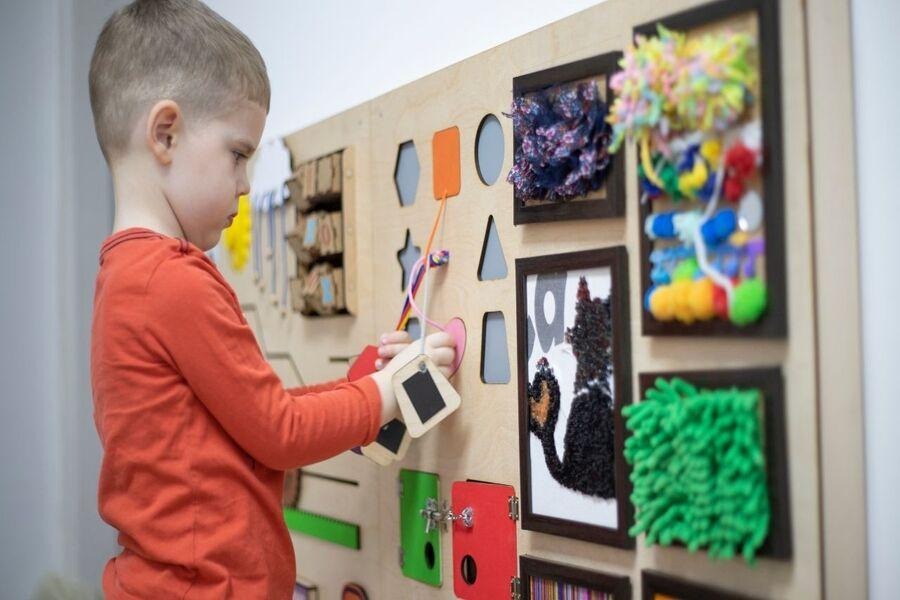
A good therapist is more than just a theory expert. They are someone who can drop to the floor level and accompany the child in their play, without judging, only supporting the discovery of their own resources. In the Play Therapy stream, especially in the child‑centered approach, the patient sets the direction of the session, and the therapist follows, reflecting their emotions.
Imagine a child building a tall tower with blocks, then suddenly demolishing it. Instead of asking “why did you do that?”, the therapist might say: “I see that the tower had to disappear. That was very energetic!”. Such a response builds the child’s sense of being understood and accepted, which is the foundation of lasting psychological change.
Why trust experts? E‑E‑A‑T in child psychology
Choosing a place where your child will receive help is one of the most important parental decisions. In psychology, the concept of E‑E‑A‑T (Experience, Expertise, Authoritativeness, Trustworthiness) is crucial. It means that a specialist should have not only diplomas but also practical experience and community trust.
Agnieszka Stefaniak‑Szołygi’s office is a place where these values are put first. Professional ADOS‑2 diagnostics and passion for Play Therapy ensure that every family receives support based on the latest scientific knowledge and great empathy. Remember that every penny and every hour invested in early development support pays off many times over in the child’s confidence and independence in adulthood.