The situation on the American market is puzzling: bulls have begun to ignore the informational chaos coming from the Middle East.
Has the war ended?
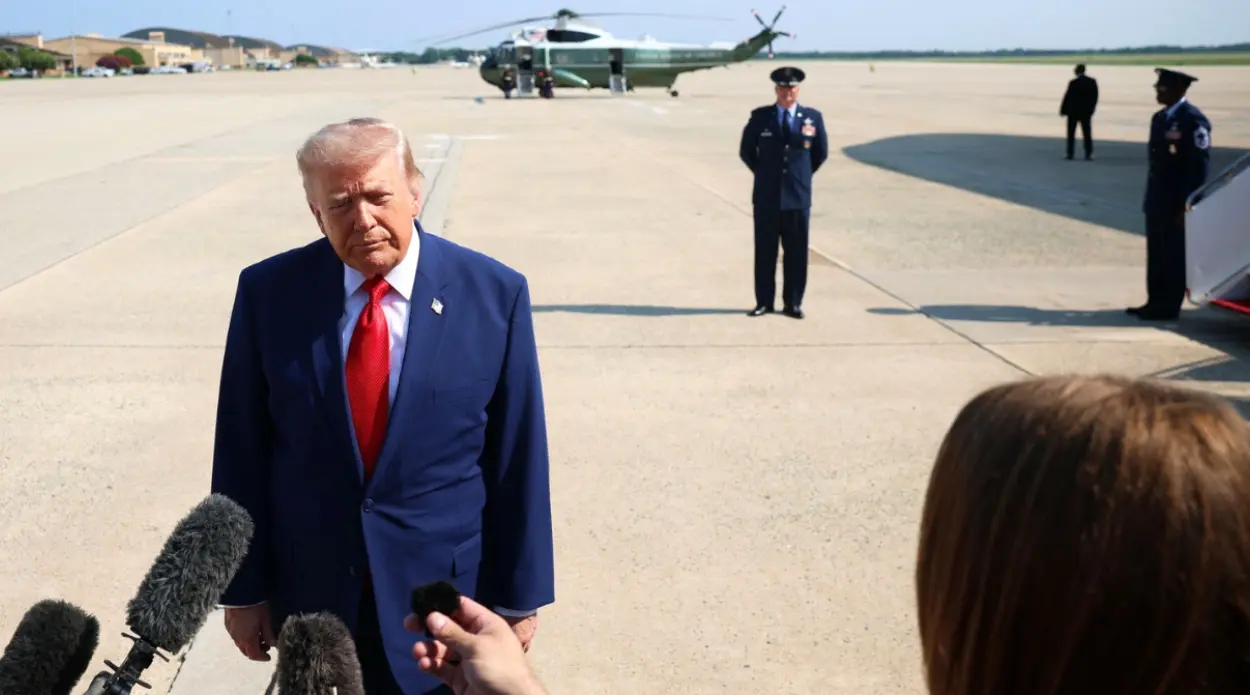
The situation in the Middle East is complicated. So far it is unclear whether further talks between Iran and the USA will soon begin. In the last several hours we learned that Tehran "has not made a decision" on whether it will participate in the next round of negotiations with the White House. At the same time, however, Donald Trump supposedly sent Steve Witkoff and Jared Kushner to Pakistan.
Later Iran declared that it would not start further negotiations with the USA and denied ever proposing to start talks.
Doubtful is that a full-scale war will flare up again in the region. This follows from data: during the conflict the USA used over 1,000 Tomahawk missiles and between 1,500 and 2,000 air defense missiles. To illustrate the scale of this phenomenon, it is enough to add that replenishing these resources could take the Pentagon six years.
However, there is a risk of military action by Israel itself. As Marek Rogalski, chief analyst of DM BOŚ, said, "Israeli media are presenting a narrative about the risk of restarting war with Iran already this weekend - the local defense minister implied that further targets have already been set."
"In the context of these unsettling reports, Donald Trump is trying to look good - a post appeared on social media suggesting that it is Iran, not the USA, that should rush into negotiations - although markets 'might know their own'. For now, the approach that does not allow a full risk‑off scenario still dominates," he added.
In his view, markets see "that the situation around Iran is effectively very stuck and regardless of Trump’s narrative or Iranian representatives, the trade route through the Strait of Hormuz will remain closed for several, or even a dozen good weeks", and this "will force a greater verification of the optimistic approach that seems to have dominated so far."
"It is not unlikely that Israel will decide to break the ceasefire between the USA and Iran, and it will be crucial how much these provocations will trigger an escalation at the start of next week. If nothing happens on Saturday and Sunday, we will see a brief relief rally and a surge in risky assets, along with a pullback of the dollar and oil," he summarized.
In fact, we saw the "relief" yesterday: the S&P500 recorded a new record. The shares of Intel rose by as much as 23.64% - to 82.57 USD (the largest one‑day gain since 1987). This is the fruit of better than expected forecasts for the second quarter.
The markets may already be pricing in a potential new FED policy: Kevin Warsh was questioned in Congress, which means that in May he could replace Jerome Powell at the central bank chair. He is seen as a supporter of rate cuts, which should stimulate the market.
See also: The Great Market Roller. Who is Trump letting make money?
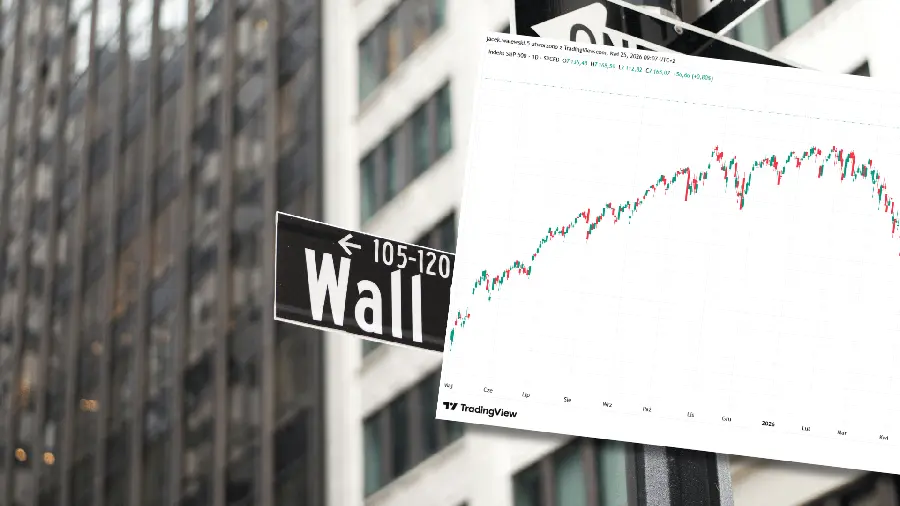
S&P 500 with a new record
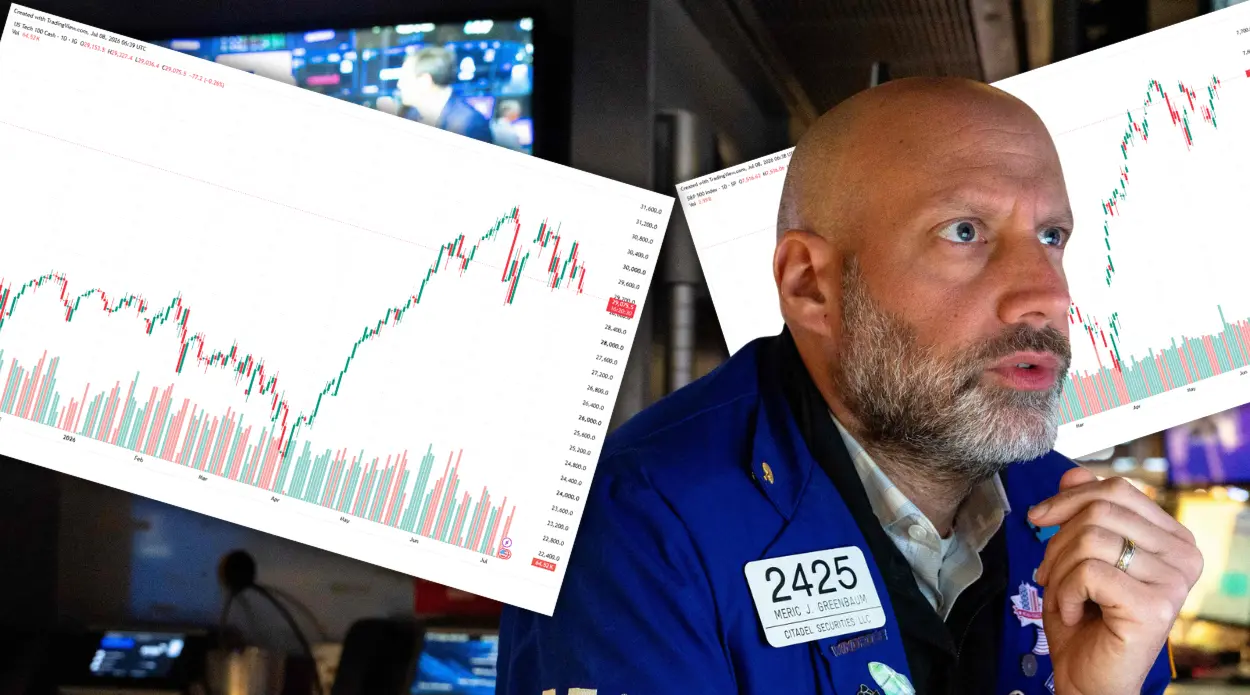
The S&P500 index finished the session at 7,165.07 points, an increase of 0.8%.
Chart. S&P500 index price

Source: TradingView
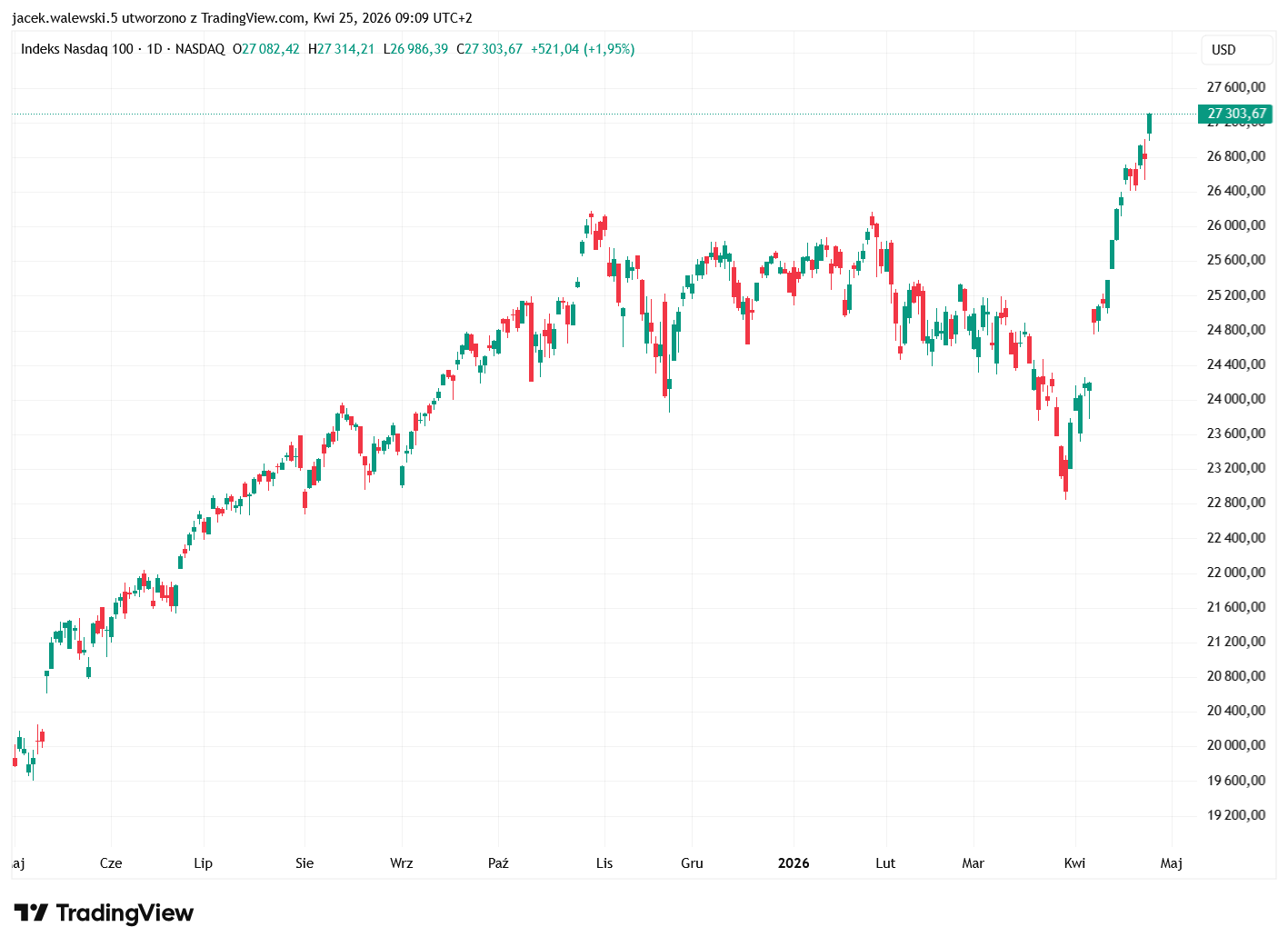
Nasdaq also rose - to 27,303.67 points, an increase of 1.95%.
Chart. Nasdaq index price
Source: TradingView
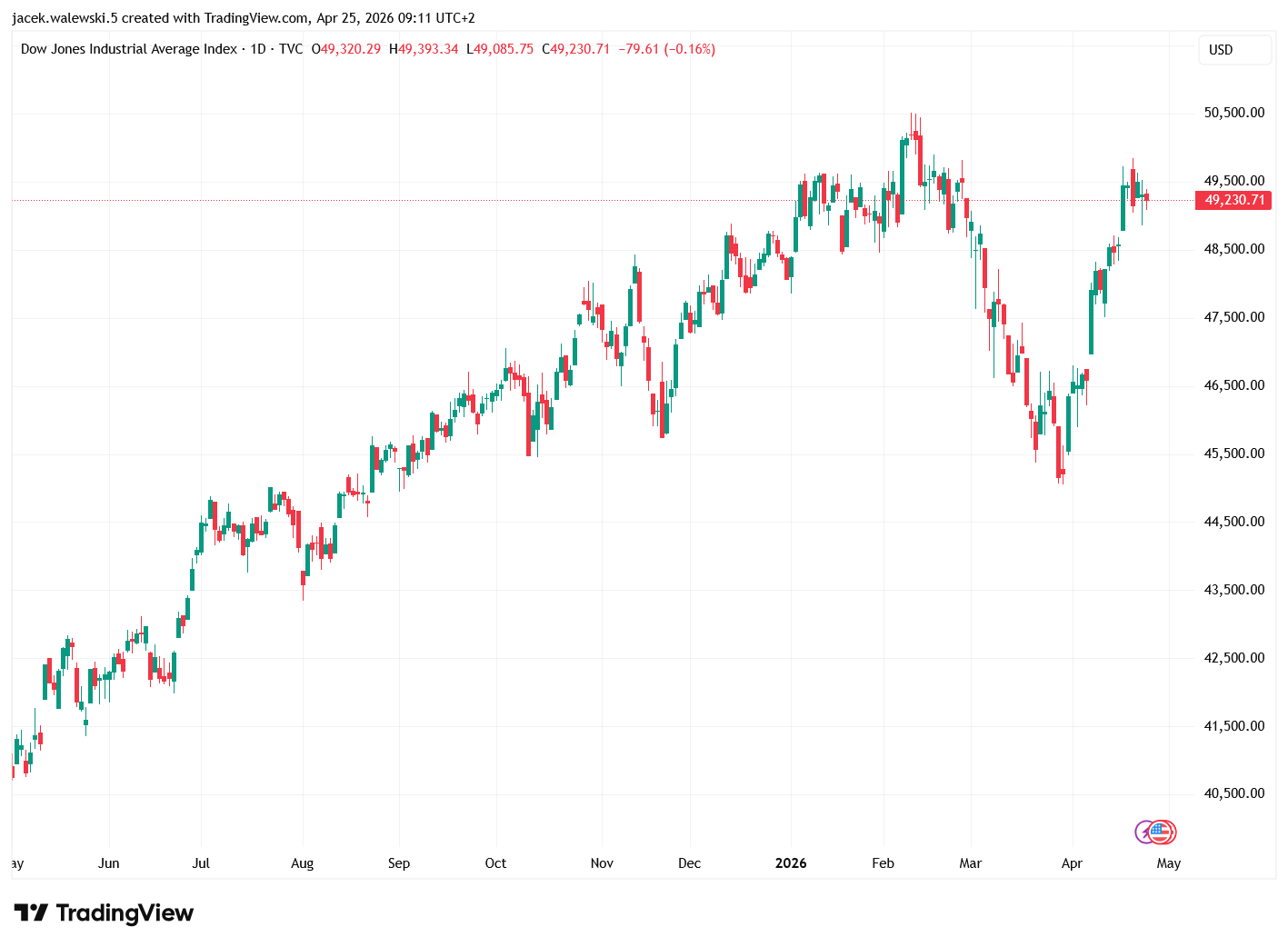
Meanwhile, the Dow Jones ended the session at 49,230.71 points. This translates to a decline of 0.16%.
Chart. Dow Jones index price
Source: TradingView
Read also: The American market plays green. Investors naively believe in peace in the Middle East? S&P 500, Nasdaq and Dow Jones data
See also: Oil market reversal. The fuel price spike is not a problem? "Well, they’re not too high," Trump convinces