Nvidia has conditioned Wall Street to spectacular results, creating almost dangerous expectations that each quarter will beat the boldest forecasts and boldly raise the bar.
The king of artificial intelligence behind a wall of expectations
The problem is that dissolved and wildly demanding financial markets rarely forgive the lack of breaking new records. The semiconductor sector drove this year’s gains, lifting the Philadelphia Stock Exchange Semiconductor index by an impressive 60%.
Recent sessions, however, brought slight sobering and a 6.4% dip in the index due to inflation worries that hit sentiment. Nvidia itself, despite a 18% rise since the start of 2026 and a 34% rise from the March trough, also lost over 6% in the last three days. While still lagging behind the tech NASDAQ 100, which gained a modest 14%, investor pressure is enormous. Market players will no longer be satisfied with just another successful reporting period. Investors now seek hard assurances that the infrastructural AI frenzy will last at least until 2028.
See also: Nvidia shares (+1.75%) gain value, Microsoft (-1.34%) lose. Great US economic data
Billionaires on the table and surprisingly cheap shares
The AI boom is like a powerful engine that will never run out of fuel because Big Tech constantly pours octane into it. The four biggest players (Amazon, Google, Microsoft, and Meta) plan to spend this year an astronomical 725 billion USD on capital expenditures, and in 2027 those amounts are expected to be even higher. Most of this funding goes directly to the accounts of graphics chip manufacturers, without whom advanced AI simply does not exist.
Interestingly, Nvidia’s rapid earnings growth makes its shares look very attractive. Market consensus for the company’s net earnings for fiscal year 2027 rose over the last three months by 13%, and revenue forecasts jumped by 12%. As a result, the price‑to‑earnings ratio fell below 24, placing it well below the 10‑year average of about 36.
Many investors fear that Nvidia shares are actually driven by an AI bubble that could end as tragically as the dot‑com bubble. Experts at Neuberger Berman Group are firmly opposed and claim that the company’s valuation has real backing in cash flows.
Nvidia remains the world’s most important company, generating almost one‑fifth of the 7.4% S&P 500 index growth this year. It is worth noting that it is supported by other cyclical industry leaders such as Micron, Broadcom, AMD, and Intel, a rare display of one sector’s strength.
See also: Nvidia and Alphabet shares react to the giants’ launch. One of them may fall behind
Competition clearly tramples from behind
The ongoing earnings season has so far been exceptionally kind for the AI sector – 93% of companies beat earnings forecasts, pleasantly surprising the market by almost 25%. However, repeating such success and sparking euphoria for Nvidia will be difficult for two reasons.
First, its gigantic market cap means it needs a massive influx of capital to noticeably move the stock. Second, competition is clearly tramping the leader from behind. AMD is doing increasingly boldly, Intel emerged from the shadows and triumphs after a deal with Apple, while Alphabet (Google) and Amazon successfully develop their own chips.
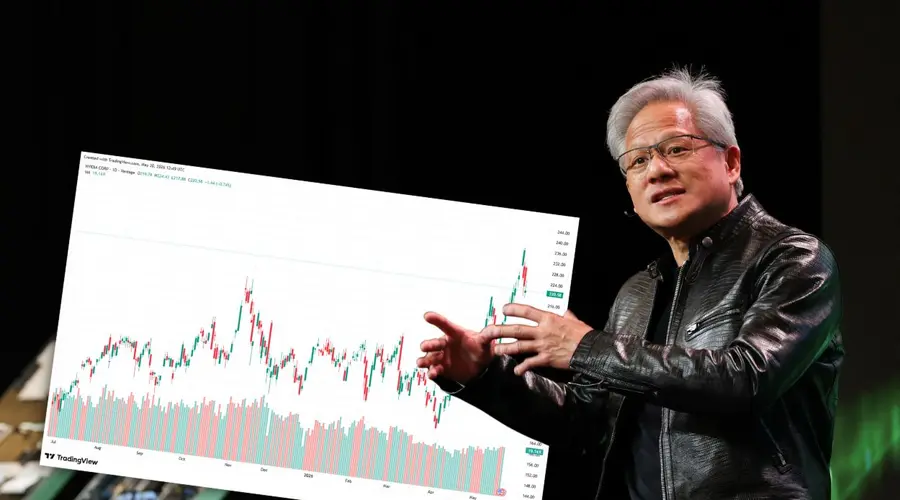
Despite uncertainty and nervous anticipation for the earnings report, Nvidia’s stock price falls only by 0.74% and sits at a floor of 220.58 USD.
Chart. Nvidia stock price
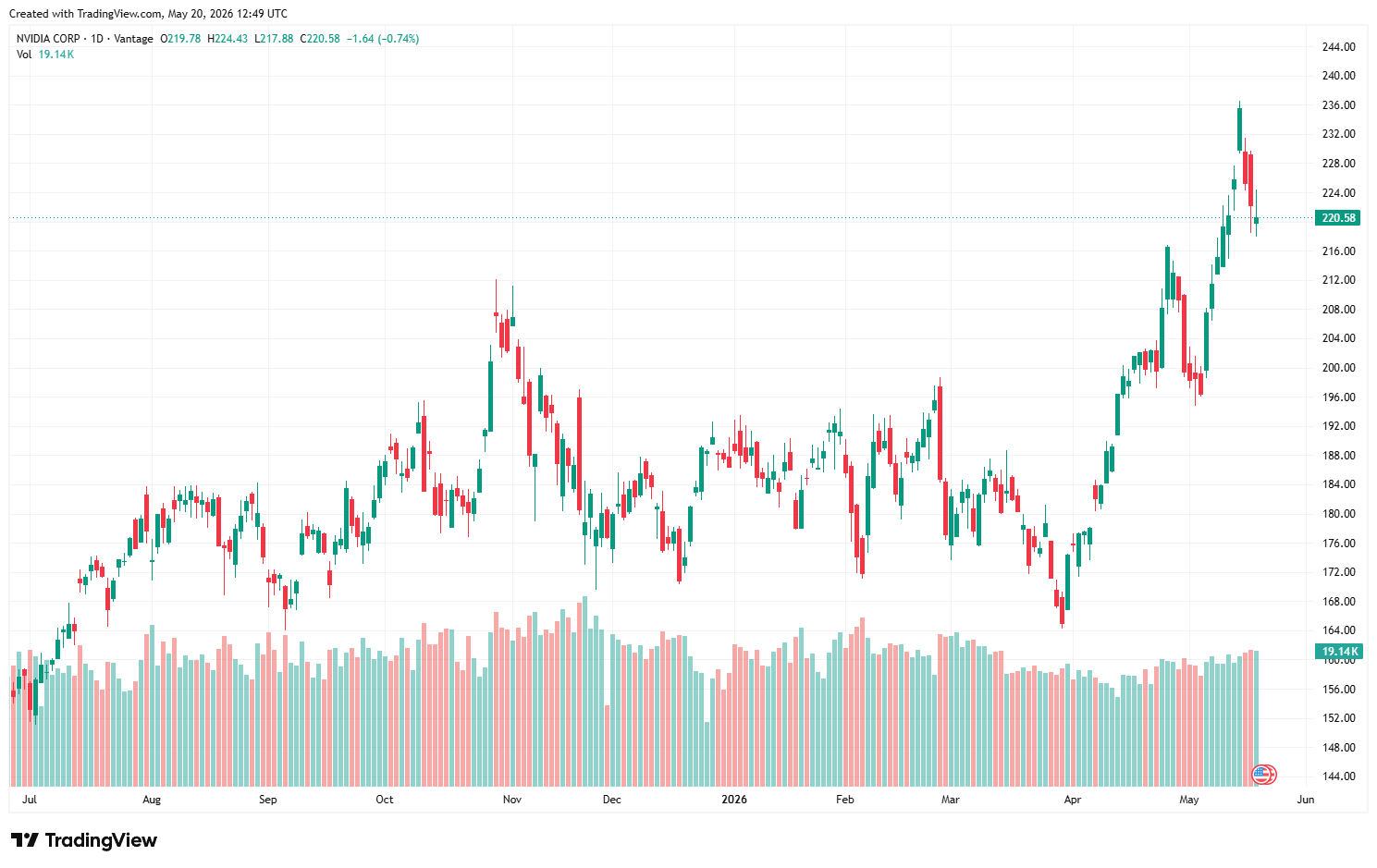
Source: TradingView.
See also: Nvidia, Intel, and AMD shares on the brink? AI devours the known industry
Source: Bloomberg.