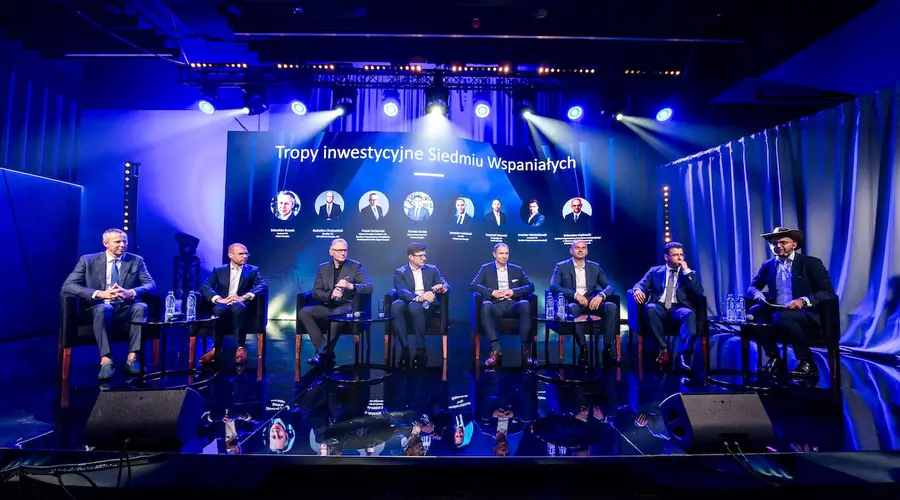
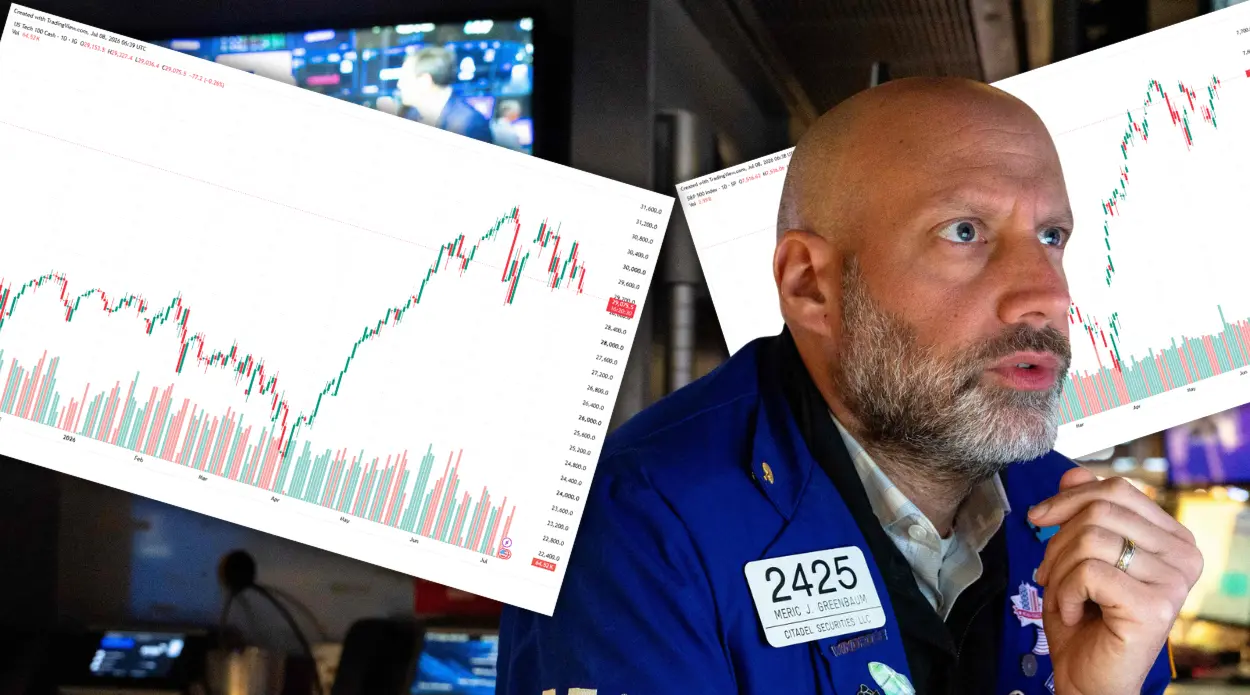
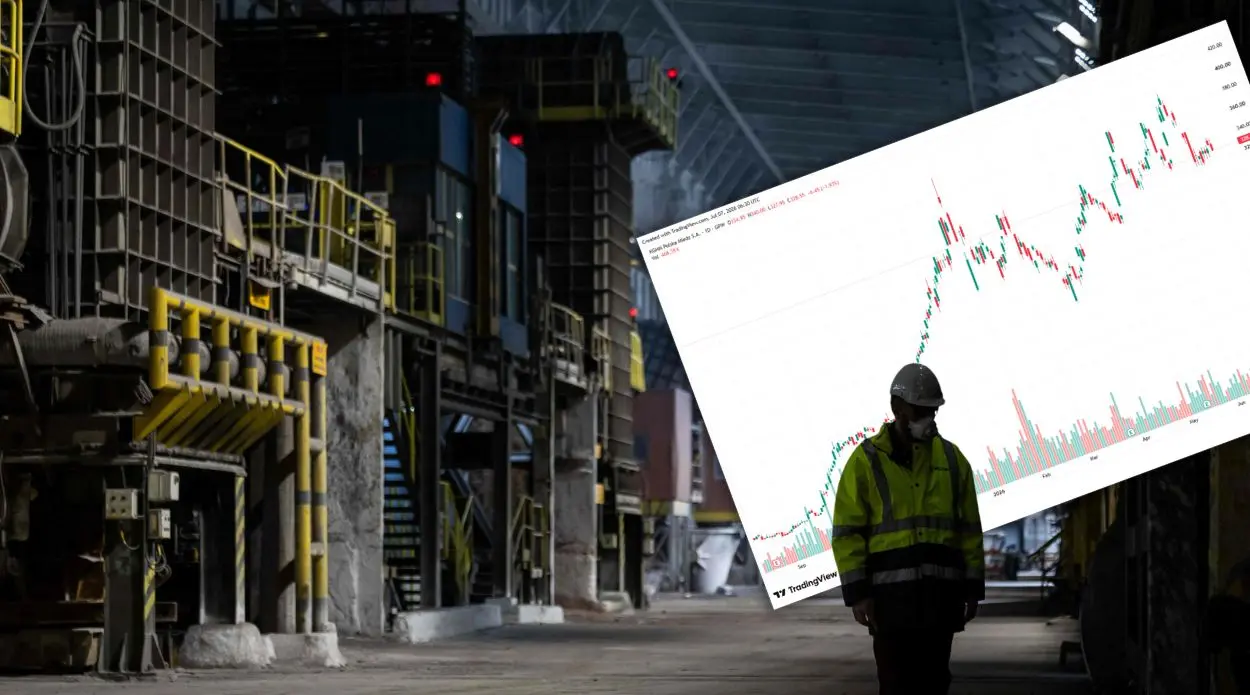
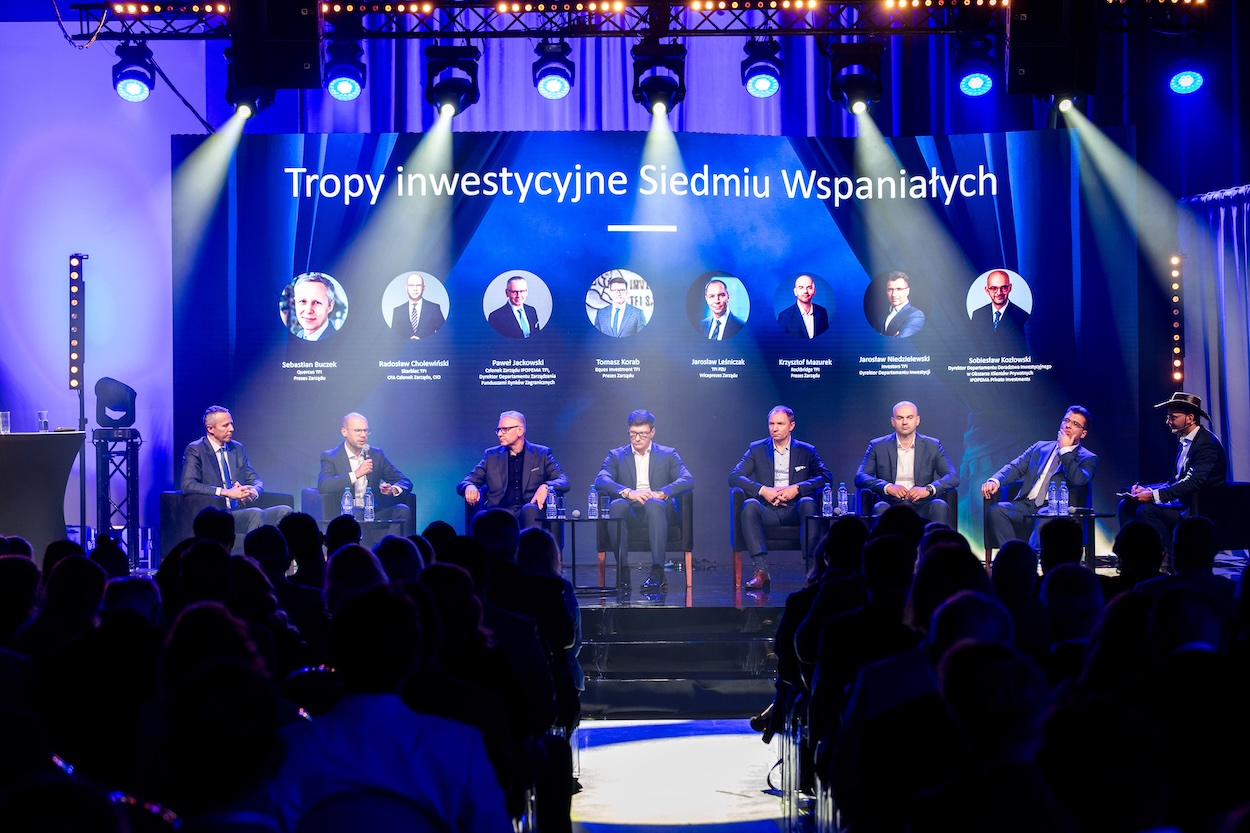
Participants in the discussion included: Sebastian Buczek (Quercus TFI), Radosław Cholewiński (Skarbiec TFI), Paweł Jackowski (IPOPEMA TFI), Tomasz Korab (EQUES Investment TFI), Jarosław Leśniczak (TFI PZU), Krzysztof Mazurek (Rockbridge TFI) and Jarosław Niedzielewski (Investors TFI). The focus of the discussion was on the prospects of financial markets, the consequences of the AI revolution, and ways to build investment portfolios in a world of increasing uncertainty.
Is the current bull market still potent? Which assets could deliver attractive returns in the coming years? Is artificial intelligence truly the best investment direction? Participants of the panel "Investment Tracks of the Seven Greats" sought answers to these questions during the inaugural IPOPEMA Private Investments gala.
The bull market continues, but selection matters
Despite geopolitical uncertainty and a changing economic environment, panel participants agreed on one thing – equity markets remain an attractive place to build long‑term value. Much attention was paid to the AI revolution, which today affects not only the technology sector but increasingly the entire economy.
– "Invest with great caution, especially in what is most talked about" – emphasized Sebastian Buczek, noting that the most popular trends are already reflected in market valuations.
Radosław Cholewiński pointed out that the investment potential of AI now extends far beyond technology companies and includes many more sectors of the economy.
Paweł Jackowski noted that "the heart of artificial intelligence beats today in the United States", and the biggest beneficiaries of the current bull market remain companies related to semiconductors, data‑center infrastructure, and cybersecurity.
At the same time, some experts reminded that every bull market has its cycle. Tomasz Korab observed that AI now permeates practically all economic sectors, so "it's harder to avoid this bull market than to participate in it".
Poland still has arguments
Although the U.S. market remains the natural beneficiary of the technological revolution, panelists did not forget the domestic market. They pointed out that despite a roughly three‑and‑a‑half‑year‑old bull market, the Warsaw Stock Exchange is still not overvalued.
– "It's better to buy a good company at a good price than the best company at a high price" – said Jarosław Leśniczak, encouraging investors to look for opportunities beyond the most obvious investment directions.
A similar tone was echoed by Krzysztof Mazurek, who urged looking for opportunities outside the investment mainstream and reminded that the most popular investment themes are not always the best source of future returns.
Experts noted that the Polish market remains an important element of a diversified portfolio, especially given attractive valuations of many domestic companies.
Bonds are returning to favor
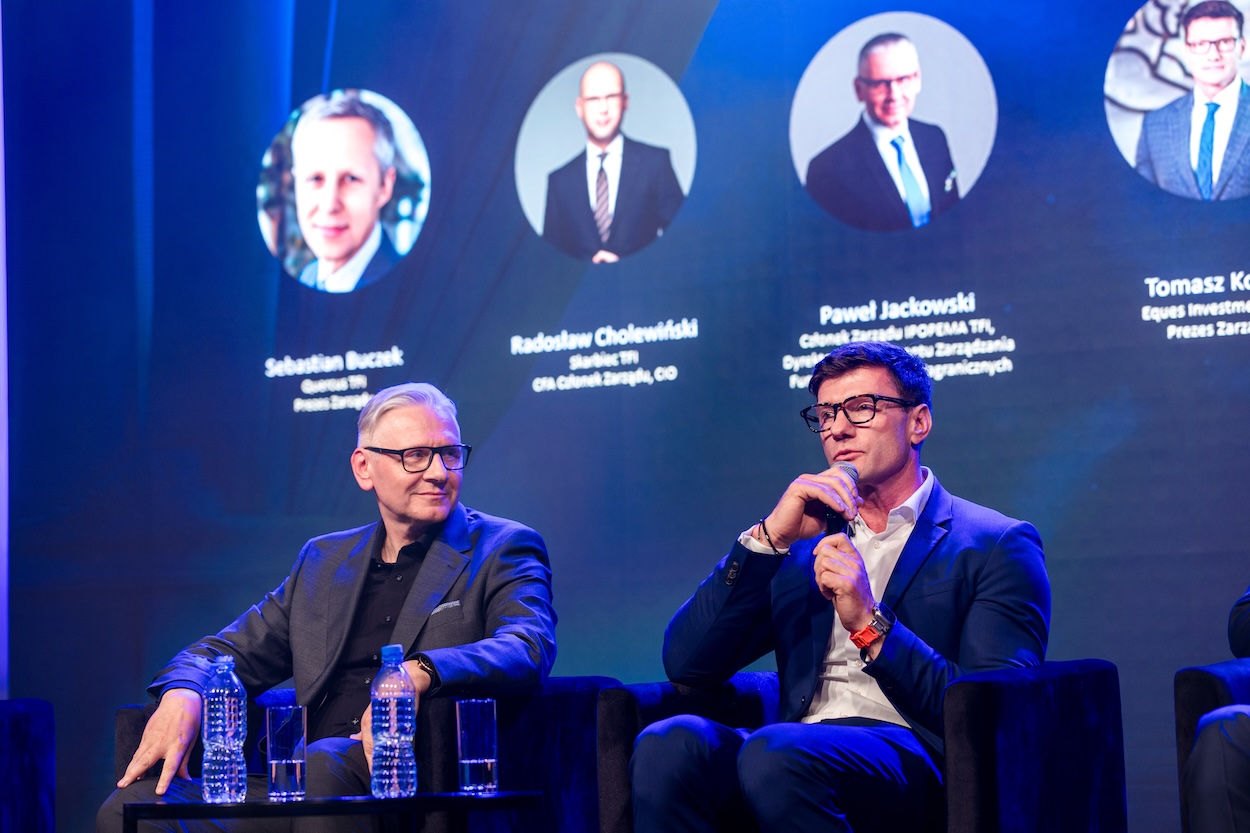
A lot of space was also devoted to the bond market. Participants felt that current yields make debt instruments once again an attractive component of an investment portfolio.
Jarosław Leśniczak emphasized that the bond market is today relatively more predictable than the equity market, and bond funds offer higher return potential than traditional bank deposits.
Sebastian Buczek pointed out that funds with low‑interest bank accounts could work much more efficiently in debt funds, which, while maintaining high safety, offer higher profit potential.
Diversification remains the foundation
One of the most interesting topics of the discussion was the issue of building an investment portfolio for the coming years. Despite differences in assessing the prospects of various asset classes, experts agreed that diversification is key.
Jarosław Niedzielewski compared the current market situation to the late 1990s and the dot‑com boom, noting that similar investment opportunities arise extremely rarely. He also stressed that even while participating in dynamic market trends, it is worth maintaining a balance between equities, bonds, and other asset classes.
Radosław Cholewiński recommended a portfolio combining Polish equities, global equities, and bonds, tailored to an investor’s individual risk tolerance.
Tomasz Korab, however, highlighted the growing correlation between traditional asset classes. – "Add uncorrelated assets – for example, alternative investments" – he recommended, noting that they can reduce portfolio volatility and improve the risk‑return ratio.
The value of experience
One of the strongest messages of the debate was the emphasis on professional asset management. In a world full of information, shifting trends, and unpredictable events, investors increasingly need not only market access but also experience, investment discipline, and the ability to assess risk properly.
The "Investment Tracks of the Seven Greats" panel was one of the key points of the inaugural IPOPEMA Private Investments gala – an event that marked a new chapter in the brand’s development and created a space for discussing the future of investing with leading capital market experts.