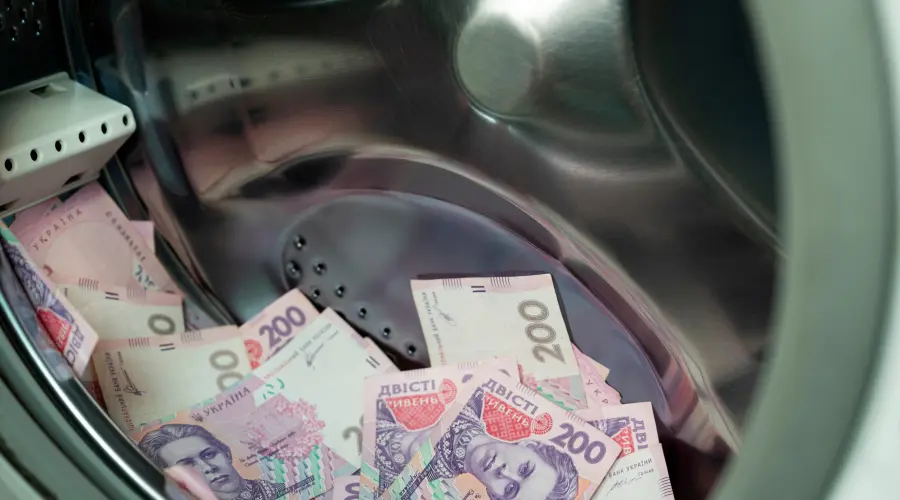
The grey market in Poland accounts for 17.7% of GDP, or over 800 billion PLN, and in the cigarette segment the budget loses 2.8 billion PLN annually. The biggest problems appear in industries subject to high excise taxes, where illegal trade rises after price hikes. Its share in the entire economy is falling due to better economic conditions.
The share of the grey market in Poland is low. Intuitively we know, however, that there are still many areas where our measurements could be improved. Therefore, together with the Ministry of Finance and other ministries, we are launching a new research system that takes into account various data sources – says Newseria agency’s Marek Cierpiał‑Wolan, president of the Central Statistical Office.
The grey market in Poland is falling, but not in all sectors
The grey market in Poland is falling. This is the result of relatively high economic growth last year and this year, but there are sectors of the economy where its share is increasing. An example is the nicotine sector. In the cigarette market the share of the grey market increased almost twice last year, due to a drastic rise in tax rates, specifically the excise tax – says Jacek Fundowicz from the Institute of Forecasts and Economic Analysis.
Excise on cigarettes and the rise of the illegal nicotine market
The Institute of Forecasts and Economic Analysis in the report "Grey Market 2026" indicates that the rise in excise on tobacco products has led to a 13% drop in legal cigarette sales. Budget revenues increased by only about 3%, roughly in line with inflation. According to estimates, the gap between planned and actual revenues was about 6 billion PLN, and the cigarette market alone costs the budget about 2.8 billion PLN annually.
– Legal cigarette sales fell by 13%, and budget revenues rose by about 3%, roughly the same as the inflation rate. This market was taken over by criminal groups that introduce smuggled or illegally produced products into the market – says Jacek Fundowicz. – E‑cigarettes are sold by websites hosted on foreign servers and shipped to consumers directly from warehouses also located outside Poland. Such a seller has no excise obligations to the Polish budget. In theory, consumers should pay the excise tax, but this is obviously impossible.
In recent years Poland has moved from one of the lowest excise levels on tobacco products in the European Union to a level higher than in many EU countries. In 2025 the excise on cigarettes rose by 25%, and in subsequent years the rate of increases is expected to be 20% in 2026 and 15% in 2027. Even higher increases applied to smokable tobacco – in 2025 the rate rose by 38%, and for 2026–2027 further increases of 30% and 22% are planned.
Changes also affect other nicotine products. In the case of heated tobacco sticks, the excise rose by 50% in 2025, and then is set to rise by 20% and 15% in the next two years. The most dynamic increases are planned for e‑cigarette liquids – after a 75% rise in 2025, rates are to increase by another 50% in 2026 and 25% in 2027.
– A few years ago Poland had one of the lowest excise tax levels on tobacco products, only in Bulgaria was the level lower. In 2025, already in five EU countries taxes were lower than in Poland, and after the last excise hike in 2026, 14 EU countries have a lower excise tax level on tobacco products than Poland – emphasizes an expert from the Institute of Forecasts and Economic Analysis.
According to the report "Impact of the Excise Tax on the Tobacco Market in Poland", prepared by the Institute of Public Finance on behalf of the Economic Freedom Foundation, a 10% increase in the monetary excise rate leads to a roughly 1% increase in consumer spending on cigarettes, while the number of legally sold cigarettes falls by about 9%.
– In 2026, from January, we had another excise hike. We do not yet have data on how the market reacted, but we can be sure that the grey market share increased. For 2027 another large excise hike is announced, so we can also expect that if the planned excise growth path does not change, we will see further growth in the grey market share – assesses Jacek Fundowicz.
Illegal alcohol, rental and online trade outside the official circulation
Similar mechanisms are also seen in other high‑tax or regulated industries. The IPAG report shows that in 2025, Poland sold 23 million liters of 100% illegal ethyl alcohol. Estimated losses to the state budget from this could reach 1.8 billion PLN.
This phenomenon is also present in other economic segments, including the real estate rental market and the trade of medicines and dietary supplements. In these areas the problem is both the lack of registration and the sale of products that do not meet quality standards. The report indicates that the development of technology and e‑commerce facilitates the operation of such activities outside the official circulation.
How GUS measures the unobserved economy and the scale of the grey market
In practice it includes both entirely illegal activity and legal economic activity hidden from the state. In the Central Statistical Office statistics it functions as the so‑called unobserved economy. It consists of three main elements: hidden activity conducted by registered companies, unregistered employment, and illegal activity.
– The grey market is an inherent feature of every economy. The question is only how to measure its scale. Of course, it is a multi‑dimensional problem, depending on many elements, from legal, organizational and tax regulations. The Central Statistical Office deals with measuring the grey market in seven areas, of course following the methodology developed by Eurostat or the United Nations – says Marek Cierpiał‑Wolan, president of the Central Statistical Office.
GUS measures the scale of this phenomenon in several areas, including underreporting of turnover by enterprises, unregistered employment, and selected forms of criminal activity, including smuggling or illegal production of excisable goods.
Advertising
According to GUS data, the unobserved economy accounted for 8.3% of GDP in 2023, compared to 11.9% in 2020. The largest share is hidden activity in legal firms – 6.7% of GDP, about 81% of the whole. Unregistered employment is 1.4% of GDP (about 17%), and illegal activity – 0.2%.
The largest part of the unobserved economy falls to trade and services – more than a third to trade and gastronomy, and about 18% to construction. These are the sectors where it is easier to hide part of the turnover or employment, although the scale of the phenomenon may be underestimated.
– We definitely have some shortcomings in these studies, because to make a good measurement of the grey market, you need to integrate a lot of data sources, including high‑frequency data from payment cards, mobile phone data, booking portals, the internet, obtained by web scraping, and of course administrative data. And also soft data on questions, somewhat tricky, on the basis of which we will be able to "catch" this process and the scale of the grey market – evaluates Marek Cierpiał‑Wolan.
The scale of the phenomenon is affected by high energy and financing costs, instability of tax law, rising labor costs and increasing excise. Symbolically, this means that in 2026 the so‑called day of exiting the grey market fell on March 5. This corresponds to 65 days of activity outside the official circulation.
Until now we used standard grey market measurement tools; it is about sample, qualitative studies. But today we know that to estimate it well, we need various data sources. Only then will we be able, for example, to have data on the value of sold production or the size of employment from official documents, versus questions to entrepreneurs, to draw conclusions about the difference between the unregistered economy and reality – explains the GUS president.
The Central Statistical Office announces a change in the approach to studying the grey market. New analyses will more heavily use administrative data and high‑frequency sources such as electronic payment information, mobile phone data, or the internet. The office is working on solutions that will better capture the scale of the phenomenon and reduce underestimation resulting from traditional methods.
FXMAG’s editorial team creates high-quality content on financial markets, investing, and the global economy. We provide timely analysis and clear insights to help our audience navigate complex market dynamics.