Choosing the right tank is a decision that lasts for decades, affecting the comfort of residents and the ecological safety of the property.
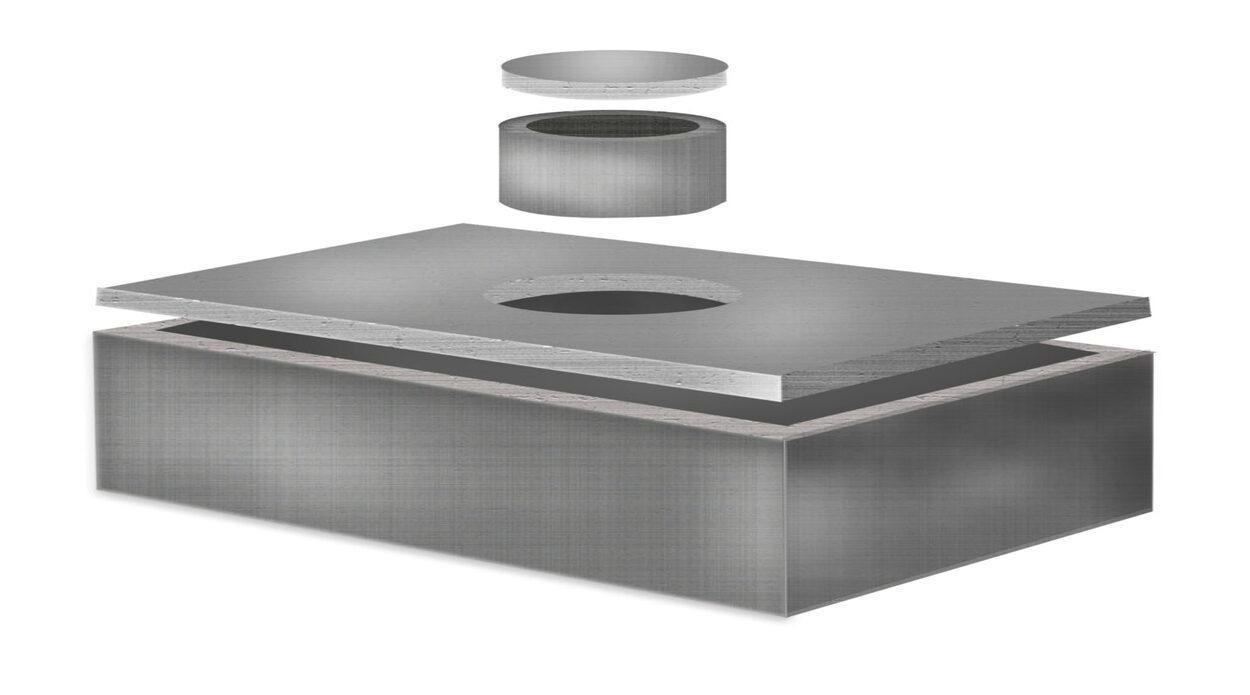
Why concrete septic tanks dominate Polish construction sites?
Choosing a sewage disposal system is one of the most important stages of building a house. Industry statistics show that nearly 80% of individual investors in Poland, building on sites without sewerage, choose concrete septic tanks. This is mainly due to their massiveness – a heavy tank will not be displaced by groundwater, a common problem with lighter plastic alternatives.
The concrete used for these structures is usually class B25 or B30 with added sealing chemicals. This mix makes the tank walls almost impermeable. Construction experts often compare a solid septic tank to a house foundation – it must be unwavering and resistant to external factors. By choosing proven concrete septic tanks, you gain confidence that the system will remain functional for 30, or even 50 years.
Benefits of reinforced concrete tanks:
- High mechanical resistance: They withstand the pressure of passing passenger cars, and with a reinforced loading plate – even trucks.
- Ground stability: The large weight (often exceeding several tons) eliminates the risk of the tank floating when groundwater levels are high.
- Low investment cost: Compared to residential sewage treatment plants, the purchase and installation cost of a septic tank is much lower.
- Simple construction: The absence of complex electronics or aeration systems means reliability.
How to match the tank capacity to family needs?
Choosing the correct tank size is crucial for operating costs. The average water consumption per person in Poland is about 100‑150 liters per day. For a four‑person family this means generating about 12‑18 m³ of sewage per month. To avoid frequent calls for a sewage truck, the most common solution is a concrete septic tank with a capacity of 10 m³.
This volume allows comfortable use of the system for about two to three weeks. By choosing a concrete septic tank, you optimize waste removal costs, because most sewage companies have vehicles with exactly that capacity. You pay for a full trip, which is the most economical solution.
Comparison table of popular septic tank capacities
|
Number of residents
|
Recommended capacity (m³)
|
Frequency of removal (days)
|
Main application
|
|
1‑2 people
|
4‑6 m³
|
20‑30
|
Cottage houses, small houses
|
|
3‑4 people
|
8‑10 m³
|
14‑21
|
Typical single‑family houses
|
|
5‑6 people
|
12 m³ and more
|
14‑20
|
Large households
|
Installation process: From excavation to backfilling
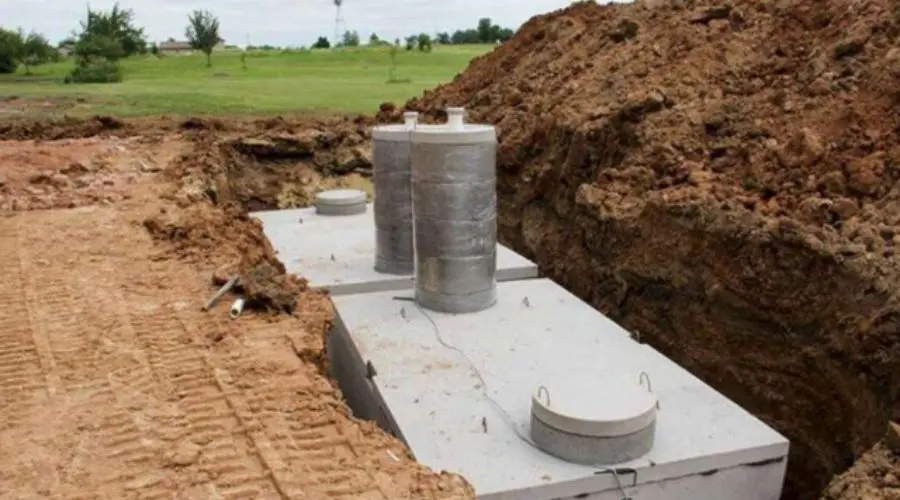
Installing a concrete tank requires precision and heavy equipment. The entire process usually takes a few hours, provided the site has been properly prepared. A professional manufacturer delivers the tank by truck with an HDS (Hydraulic Vehicle Crane), allowing precise placement of the column in the prepared opening.
- Excavation preparation: The pit should be about 50 cm wider on each side than the tank dimensions. This allows maneuverability during placement.
- Sand bedding: At the bottom of the pit, prepare about 10‑15 cm of leveled sand or thin concrete.
- Tank placement: The crane lowers the structure into the pit. At this point maintaining level is critical.
- Plate and chimney installation: A top plate is applied to the tank using frost‑resistant and waterproof adhesive, then concrete inspection chimneys are installed.
- Pipe connection: A hole is made (if not factory‑prepared) and the household installation is connected to the tank, ensuring proper pipe slope (min. 2‑3%).
Concrete quality and certificates: What to look for?
Not every septic tank is the same. The key to durability is the production technology. Renowned companies, such as Bet‑Dam, use vibration during concrete casting. This process eliminates air bubbles from the mix, making the material denser and more resistant to infiltration. Additionally, the exterior walls are coated with an asphalt‑rubber mass (isolbet), providing an extra moisture barrier.
Before purchasing, always ask for documentation. Every tank must have a PZH (State Hygiene Institute) certificate and technical approval from ITB or a CE certificate. Having these documents is essential for building acceptance by the construction supervision. Lack of certificates poses not only a risk of leaks but also serious legal and financial problems in the future.
Ecology and user safety
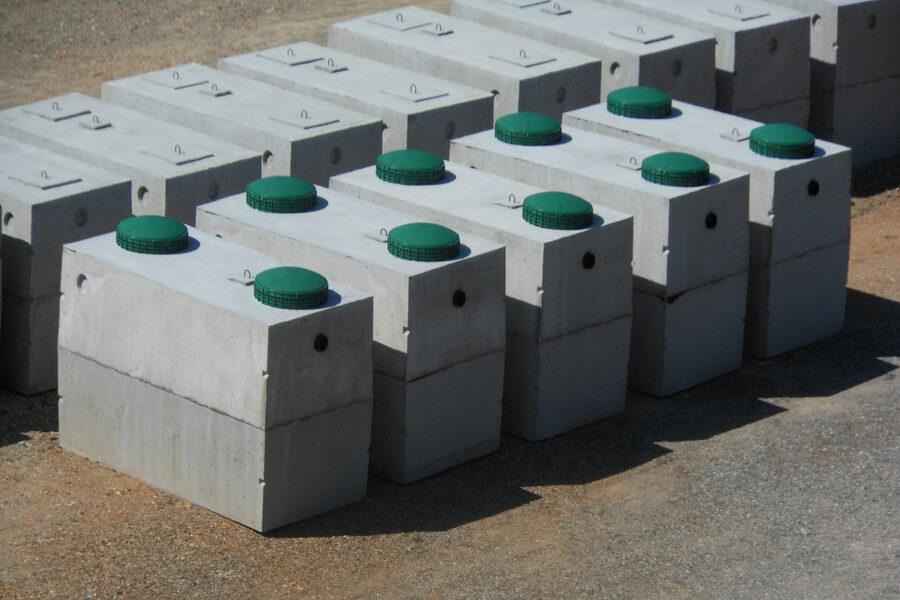
Although a septic tank is associated with a traditional solution, modern construction standards make it fully environmentally safe. Airtight concrete septic tanks guarantee that no toxins will penetrate the soil. This is especially important if there is a deep well on your plot or nearby.
It is also worth remembering to use biopreparations. These are special mixtures of bacteria and enzymes that are added to the toilet. They aid in sludge breakdown, reduce unpleasant odors, and prevent fat buildup in sewer pipes. With them, system operation becomes almost hands‑free and more hygienic.
Legal formalities when building a septic tank
Building a septic tank with a capacity up to 10 m³ usually does not require a building permit, only a notification to the appropriate city office or county authority. The notification must be made at least 21 days before the planned start of work. In the documentation you must specify the type of tank and its location on the plot map.
Proper distances must be maintained as specified in the regulations:
- 5 meters from windows and external doors of rooms intended for human occupancy.
- 2 meters from the neighboring plot boundary, road or pedestrian path.
- 15 meters from a well supplying drinking water.
Maintaining these distances ensures comfort for residents and eliminates potential neighbor conflicts. When choosing a concrete septic tank, ensure its location allows easy access for a sewage truck, even in winter or after heavy rain.