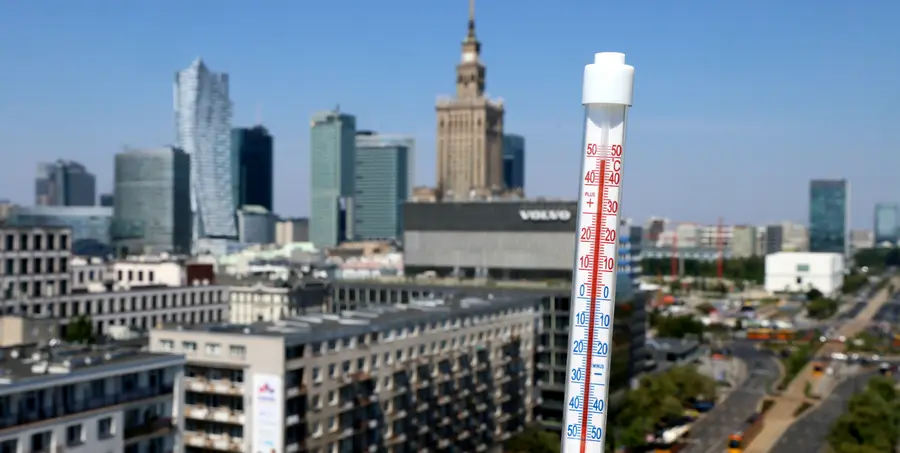
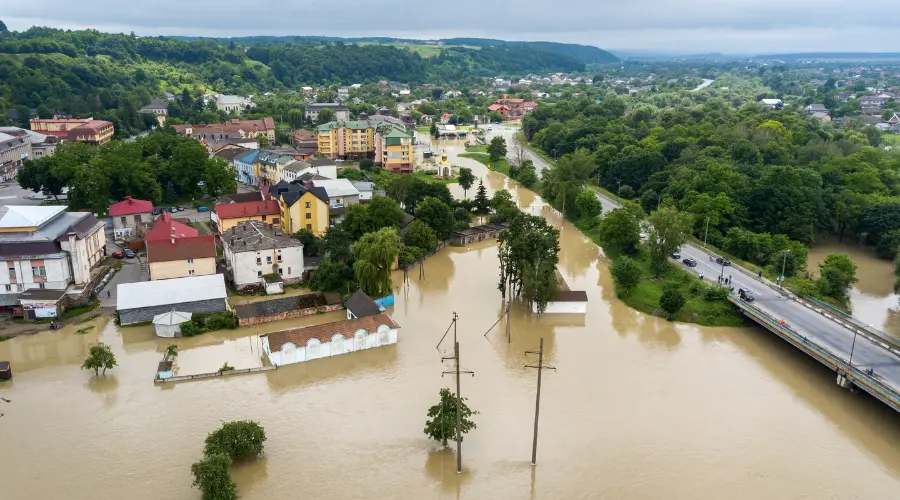
Europe is burning in the crucible of a climate crisis, and red weather alerts in Britain, France, Germany, Switzerland, Italy and Poland clearly indicate a real threat to the population’s lives.
Climate paralysis of the Old Continent
Temperatures above 40 degrees Celsius are a warning to city residents. European infrastructure, old buildings and the low prevalence of air conditioning are not adapted to such extreme temperatures.
The effects are visible to the naked eye in hard data. French nuclear power plants reduced energy production by about 7% due to lack of cooling water. The paralysis affects rail transport, schools are closed, and employee productivity drops sharply.
UBS strategists emphasize that this weather apocalypse will bring direct economic consequences.
It will translate into a strong political impulse that will drive investment in decarbonisation, climate adaptation and energy efficiency. For financial markets this is a clear signpost: a deep, structural transformation is coming, on which only a few dynamic players will profit.
See also: Real estate is no longer falling. In the month 40 k sales contracts were cancelled, apartments linger on the market for 60 days
Resilience architects, i.e. insurance and the El Niño spectre
How to wisely rebuild your investment portfolio for the era of global warming? Stephanie Niven from Ninety One points out that sudden weather events in Europe create unique, structural growth opportunities. Her fund seeks entities offering solutions that help societies build resilience.
The modern insurance and re‑insurance sector, represented by global leaders, broker Aon and Canadian insurer Intact Financial, comes to the fore.
Insurers are not waiting passively. They are massively deploying advanced AI‑powered climate modelling into their risk management systems. An additional market catalyst will be the upcoming El Niño weather phenomenon.
Experts say it could trigger a powerful shock in the industry, bringing stronger hurricanes and spectacular, catastrophic damage. For the insurance cycle it is a forewarning of major upheavals. It is a brilliant investment opportunity for firms that can precisely estimate risk and fill the insurance gap in the market.
See also: The European Commission will make another move toward vehicle electrification? Companies will be forced to do it
Great cooling and thorough grid modernization
When heated city streets start to resemble an oven, demand for cooling systems explodes. In this area, global industrial corporations lead. Michael Field, chief equity strategist at Morningstar, points to Johnson Controls and Siemens as beneficiaries of this wave.
Both companies operate in the HVAC segment, producing, among other things, commercial heat pumps that can serve as cooling devices. The New York‑listed Trane Technologies also shows huge potential.
Cooling alone is not enough when overload starts to massively affect supply. Matthew Donen from Morningstar notes that the current heat wave has put extreme pressure on the European power system, driving up market energy prices. The outdated grid cannot handle record electricity demand. This generates a burning need for transmission infrastructure modernization.
Those who show reflex and bet on climate‑resilient companies will be cooling champagne in hot days, looking at the green colour of their market positions.
See also: The vacation absurdity in Poland. A trip to Egypt is cheaper than staying in the Masurian Lakes. Poles wipe their eyes!
Source: CNBC.