CPI inflation falls to 2.5%. Today’s global PMI data marathon
Today we will learn the June PMI for Polish industry, after which we expect a slightly better result than the previous month. The construction of the index, however, means that in periods of supply chain disruptions worldwide, changes in this index may not be entirely intuitive.
PMI for Germany and the Eurozone will also be published, as well as inflation for the entire Eurozone and individual economies. In the US, the ADP labor market report and the ISM business sentiment index will appear.
June CPI inflation surprised downwards (again) at 2.5% YoY versus our forecast and market consensus of 2.7% YoY. Thus inflation is exactly at target and for the twelfth month in a row remains within acceptable deviation band.
The downward surprise relative to our forecasts was mainly due to food prices, which fell 0.7% MoM versus the expected 0.4% MoM (likely due to lower vegetable and meat prices, similar to May). Fuel prices fell 7.4% MoM and energy prices 0.4% MoM. Core inflation, according to our calculations based on yesterday’s data, fell to 3.0% YoY from 3.1% YoY.
Lower than market forecasts was also German inflation (2.4% YoY after 2.7% in May, consensus 2.6%).

NBP adjustments in the balance of payments and credit boom
NBP published quarterly data on the balance of payments, and with it the data for the last two quarters (Q4 2025–Q1 2026) were revised.
Adjustments focused mainly on the primary income position, where monthly changes in the balance were ±200-500 M€.
As a result, between October and January the 12‑month current account balance was lowered by 0.1 pp to –0.9% of GDP, and in March it was cut by 0.1 pp to –0.7% of GDP.
Changes in foreign trade data were smaller: exports were increased by just under 160 M€ per month, and imports by almost 120 M€, which did not significantly alter the dynamics of these categories or the trade balance.
Overall, revisions were mainly technical in nature and did not significantly change our forecasts, which expect a gradual deepening of the current account deficit.
May NBP data on new loans brought a better-than-expected rise in private loans and a slightly weaker result for corporate loans.
Polish housing loans recorded sales equal to 9.7 bn PLN after 9.5 bn PLN in April, already close to 100 bn PLN on a 12‑month basis.
Consumer loans were 12.1 bn PLN, unchanged MoM, and corporate loans 11.4 bn PLN, i.e. +0.5 bn PLN MoM.

Inflation translates to currencies and bonds
The inflation surprise significantly impacted the Polish currency and debt markets.
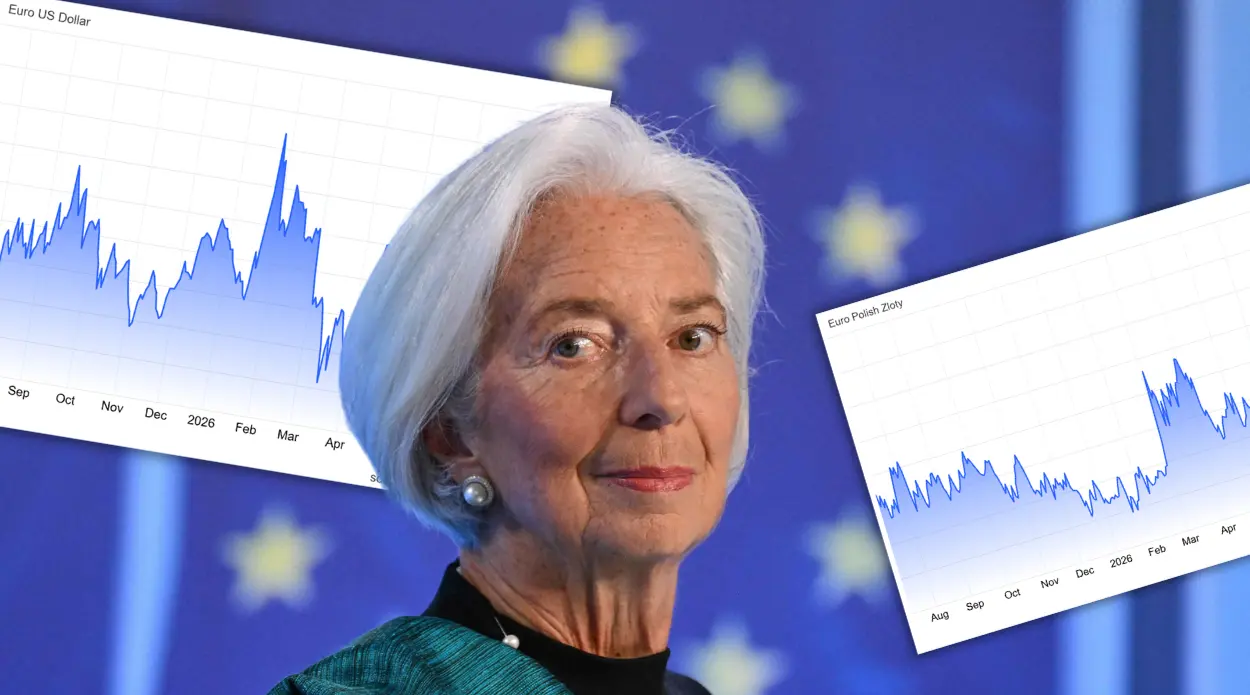
The EUR/PLN rate immediately rose 0.2% to almost 4.30, although it slightly retraced by the end of the day.
Yields on Polish bonds fell 7 bp for 2‑year SPWs, and slightly less for longer maturities.
IRS rates fell 4 bp, and FRA rates 2‑6 bp.
The Ministry of Finance stated that this year’s borrowing needs are covered at about 63%, and 7‑8 MF auctions will take place in Q3.
Meanwhile, BGK plans 6 auctions of FPC‑19 bond series.