Weaker data from Poland is just noise. Ahead of us: M3 money supply and MNB decision
Today we will see data on the M3 money supply in Poland, likely indicating continued solid annual dynamics and a month‑to‑month accelerating credit activity. The decision on interest rates will be made by Hungary’s central bank, and – unlike the Czech bank, which tightened monetary policy last week – it may consider a 25 basis point cut. We will also see preliminary PMI calculations for industry and services in the euro zone, Germany, and France.
Both May retail sales (3.0% YoY) and construction‑assembly output (3.9% YoY) showed growth below expectations. At the same time, a strong Friday reading of industrial production, still high wage growth, improving consumer sentiment, and a housing market rebound soften the negative tone of yesterday’s data and lead us to conclude that it is just noise in an otherwise solid economic environment.
In the housing market, the revival in issuing permits that has been visible for several months is already translating into actual start of residential projects and higher market activity. PPI inflation rose in May to 2.4% YoY from 2.1% YoY in April, slightly less than we had assumed.
The zloty is the weakest currency in the region. Weaker data and a shift away from oil after the US‑Iran deal hit the PLN
The pace of wage growth in the enterprise sector increased in May to 5.8% YoY from 5.4% YoY in April, slightly below our forecast (6.0% YoY) and market consensus (6.2% YoY). Real wage growth improved to 2.6% YoY from a local low of 2.1% YoY.
Employment dynamics in the enterprise sector remained at -0.9% YoY in May, unchanged from April and in line with expectations.
During the day, information came in about progress in US‑Iran peace talks, including the suspension of U.S. sanctions on Iranian oil for 60 days and Iran’s agreement to IAEA control. This allowed Brent oil prices to fall to about $78 per barrel.
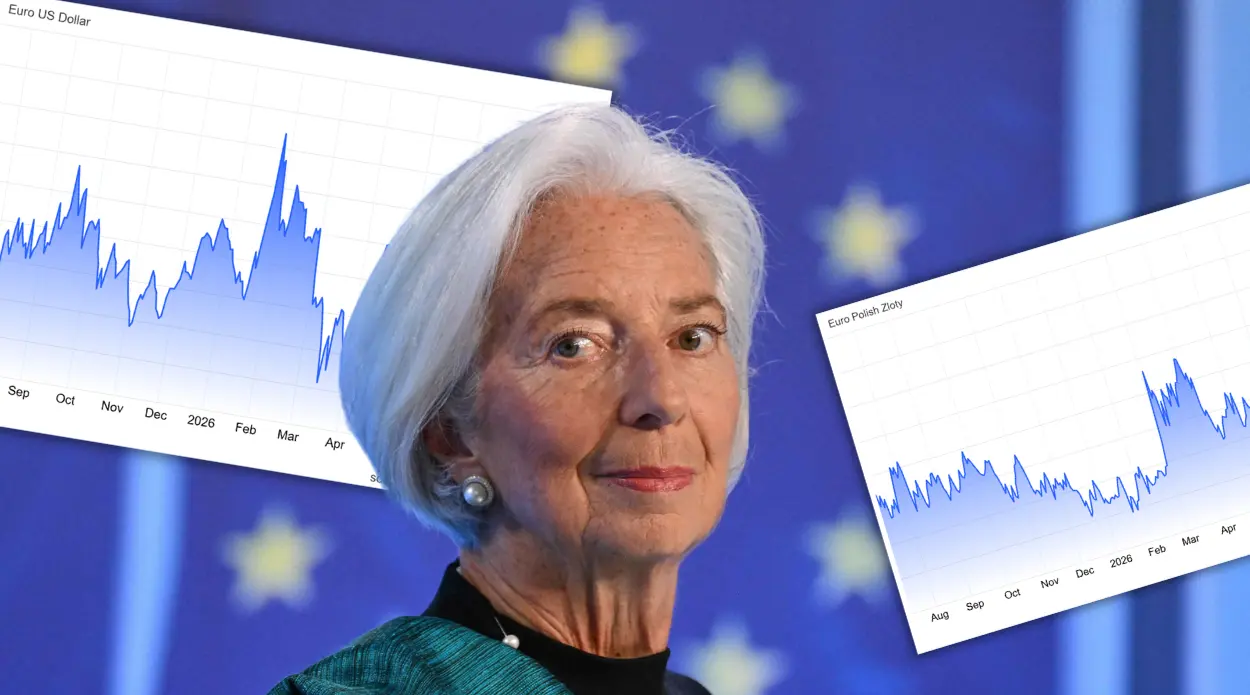
EURUSD remained relatively low, clearly below 1.15 and moved during the day toward a Friday low around 1.142.
Monday turned out to be exceptionally unfavorable for the Polish zloty, which that day – losing 0.4% to the euro – was the worst‑performing emerging market currency after the Russian ruble. The zloty’s weakening accelerated after the release of data that were weaker than expected in several aspects.
The behavior of the domestic interest rate market suggests that the zloty’s weakness was also a consequence of further adjustments in views regarding what may happen in Polish monetary policy this year and next.
NBP rate levels implied by derivative instrument prices no longer exceed 4% (with the current rate at 3.75%). IRS rates fell yesterday by 6‑7 basis points, and domestic bond yields fell by 4‑7 basis points, most in the middle of the curve.