The key to market reactions will be the narrative at the new president's conference and macroeconomic forecasts, including a dot-plot chart showing Fed members' expectations for interest rate prospects.
Currently markets price a 25 basis point increase in U.S. rates over a 12‑month horizon. Any revision of these expectations will be a source of euro‑dollar volatility.
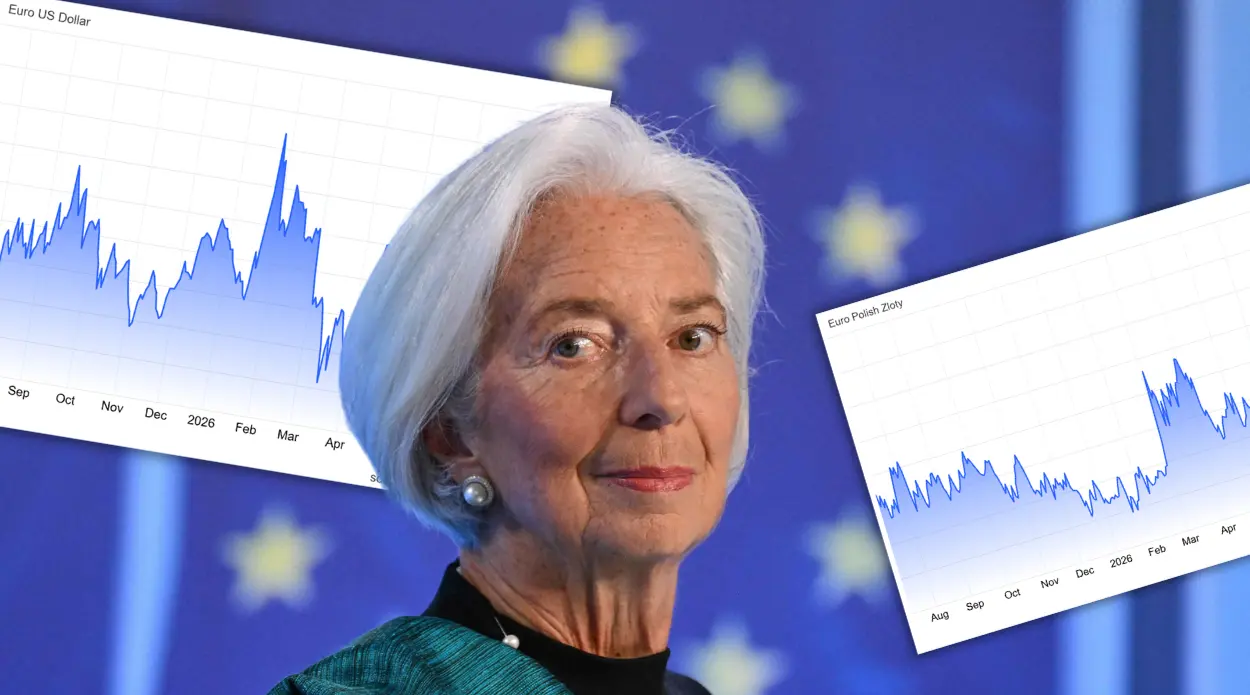
The EUR/USD starts today’s session at 4.2380 and, in our view, should not experience significant intraday swings. The day’s event on the domestic debt market will be an auction with a supply of 7‑12 bn PLN.
Yesterday’s session on the domestic equity market saw indices rise about 0.6‑1.8% in further reaction to the U.S.–Iran agreement.
This supported a gradual strengthening of the zloty against the euro to about 4.238 from about 4.25.
On the domestic interest rate market, IRS rates fell temporarily by about 4‑5 bp across the swap curve, although by the end of the day long‑end rates had not returned to opening levels. The yield decline over the day was slightly larger.
At the end of the session, the yield on 10‑year bonds was about 5.45%, roughly 2 bp below Monday’s close. The National Bank of Poland announced that at the 18 June swap auction it will sell FPC0229, FPC0231, FPC0332 and FPC0235 series securities and buy back FPC0427 as part of the first swap auction of this type of bond.
Oil continued to fall to about $80
On the European session, equity indices rose about 0.1‑0.7%. Futures on U.S. indices also rose after the record close of the DJI on Monday. The focus remains on the Middle East situation and central bank decisions. The U.S. President said yesterday that the next stage of negotiations with Iran will be easier. Oil continued to fall to about $80 per barrel from about $83 at open.
The U.S. President announced that on Tuesday sanctions on Russian oil loaded on ships will expire on Wednesday. Oil price declines supported a strengthening of base debt markets by 2‑3 bp for the German curve and about 5 bp for the U.S. curve, aided by U.S. data. U.S. construction market data turned out to be much weaker than expected.
The number of new residential construction starts in the U.S. in May was 1.177 m in a seasonally adjusted (saar) framework. The German ZEW index rose in June to +10.5 points from -10.2 against expected -5.5, which meant the scale of German yield declines could be smaller.
This also contributed to the euro strengthening against the dollar. The EURUSD rate rose to about 1.162 from about 1.158.
The market is increasingly focusing on the Fed decision meeting scheduled for this week with the inaugural K. Warsaw session. At the end of the day, 10‑year German yields were at 2.95% and U.S. yields near about 4.42%.