The recent moves of the ECB and Fed have accustomed investors to a relatively stabilized situation, so the decision of Norges Bank turned out to be a considerable surprise.
The Norges Bank decision hits like Mjolnir
The Monetary Policy and Financial Stability Committee decided to raise the deposit rate by 25 basis points to a level of 4,25%.
This is an "out-of-consensus" move, as most analysts expected rates to stay unchanged.
The main driver behind this decision is the fight against stubborn core inflation, which in March 2026 remained at 3%, and dynamically rising wages exceeding 4% year‑on‑year.
Governor Ida Wolden Bache clearly signaled that there is no room for deconcentration. The market priced only 13 basis points for today’s meeting, meaning the hawkish impulse caused a sharp shake‑up in investment portfolios.
The Norwegian central bank was the first among large European players to take such a step in this cycle.
Sweden, which also announced today a decision on rates, refrained from changing them.

Source: Trading Economics.
See also: Will the dollar surprise again? The expert issued a forecast for USD/PLN and EUR/USD. "I find it hard to believe there will be no more fires"
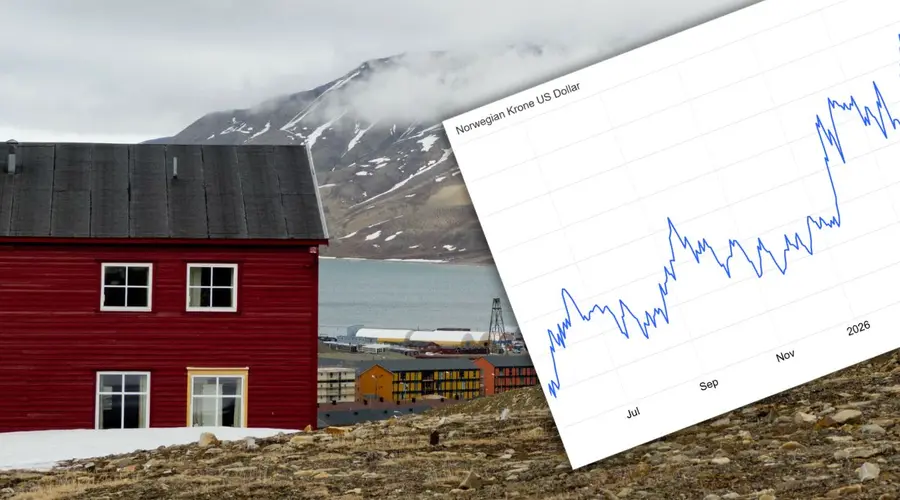
EUR/NOK and USD/NOK rates. Return to fundamentals?
The euro to Norwegian krone reacted to Oslo news with a quick drop, slipping to around 10.85 NOK after earlier tests at 10.90.
Experts at ING Think point out that yesterday’s oil price drop triggered a "positioning squeeze" in the NOK market, forcing the closing of long positions.
Today’s decision by Norges Bank fundamentally changes the game. According to ING analysts, concerns about inflation in Norway are broad and not solely due to fuel market tensions.
"Our forecast of a 25bp hike, though outside consensus, was based on analysis of minutes from previous meetings that indicated an urgent need for action. The market evidently underestimated the bank’s determination," they said.
Experts predict that despite oil market turbulence, the EUR/NOK rate should return to around 10.80 in the coming months. A strong economic foundation and high interest rates make the Norwegian krone increasingly seen as a European safe haven.
Chart. Euro to Norwegian krone (EUR/NOK)

Source: Trading Economics.
US dollar found no effective arguments against the surging krone.
The dollar to Norwegian krone fell under strong pressure, a result of the interest rate differential and a returning appetite for risk in the Nordic region.
The pair hovers around 9,25 NOK. Investors who previously fled to USD fearing a slowdown now must rethink their strategies.
Norges Bank not only raised rates but also left a door open for further moves in June and September, which for the USD/NOK pair means further drift south.
Chart. Dollar to Norwegian krone (USD/NOK)

Source: Trading Economics.
See also: Norwegian krone after a 27% drop. Will NOK bounce off the bottom? New expert forecasts
What does the Oslo decision mean for the Polish zloty?
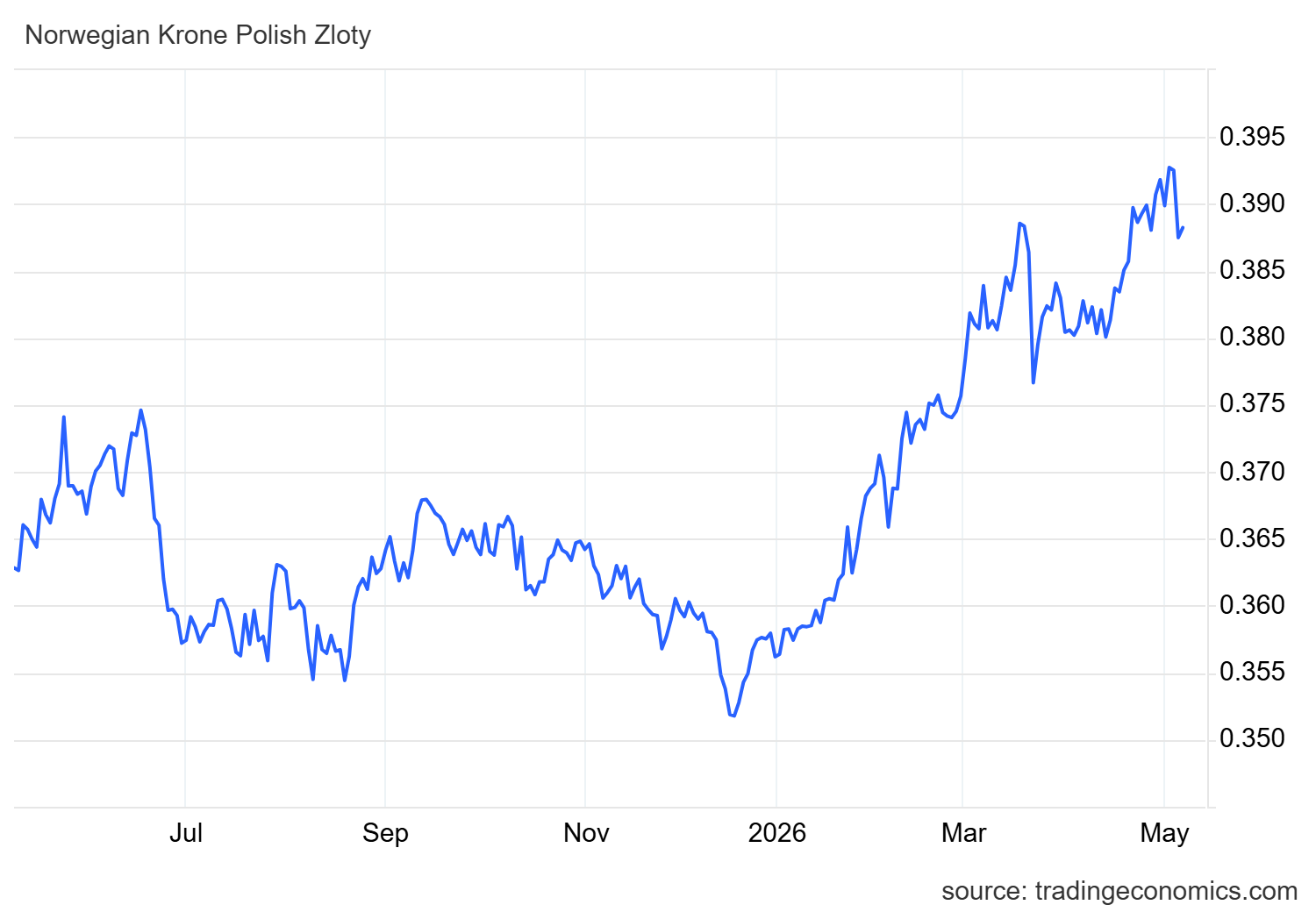
For Polish investors tracking currency rates, the strengthening of the Norwegian krone is a direct signal to closely watch the NOK/PLN pair.
This pair has risen to around 0,39 PLN, directly affecting import costs and (important for many) the profitability of seasonal work in Scandinavia.
From a stock market perspective, a strong krone could affect the results of Polish exporters to Norway, though on the other hand, a stronger krone increases their purchasing power in the CEE region.
Norges Bank set a higher pace, so both investors and other European central banks must closely monitor further moves by Scandinavian countries.
Chart. Norwegian krone to zloty (NOK/PLN)
Source: Trading Economics.
See also: Norwegian krone rises for 6 days in a row. Bankers prepare a shock for the NOK rate? Strong change in forecasts
Source: Bloomberg, ING Think.