Initially it was unclear what form Israel would use to reach an agreement. Later, Prime Minister Netanyahu’s office confirmed that it supports a ceasefire, but it does not cover military actions in Lebanon. The next step in de-escalating the conflict is expected to be talks in Islamabad. They may potentially start next Friday.
From the market’s point of view, the previous day brought a breakthrough. Not only was there a mutual ceasefire, but Tehran also agreed to open the Strait of Hormuz. Currently, the most important information for pricing energy commodities will be two facts. First, whether shipping conditions in the Persian Gulf will truly return to pre-conflict levels, and if not, what the scale of restrictions will be.
A strong discount on diesel should quickly translate into lower station prices
Additionally, it will be important whether military actions are actually halted. The market should also react positively to the formal start of talks. However, it can be expected that they will probably not end within two weeks, as the possibility of extending them has already been announced.
On Wednesday morning, the Brent barrel price was around 94 USD. That is about 15% below the level before the day. Fuel prices are falling much more. For diesel it is over 20% (160 USD/b).
A discount of this magnitude on diesel in the European market should relatively quickly translate into lower prices at distributors. At the same time, the chance that the crisis climax is already behind us is growing, and the potential appearance of additional fuel supply earlier than expected will exert constant pressure on prices and reduce the risk and scale of corrective swings in energy commodities even if negotiations between Tehran and Washington are rocky.
American debt is clearly stronger
In the early afternoon, the 10Y UST yield was around 4.38%. In the evening, based on media reports from the Pakistani side, pressure on American securities slowly eased. “Fixing” in the middle of the UST curve fell to 4.33%. In the following hours, after the official confirmation of the ceasefire by both sides and information about opening the Strait of Hormuz, the yield fell by another ~8‑9 basis points, and the start of trading in Europe is below 4.25% on the 10Y.
Debt on the Old Continent could not benefit from the de-escalation of tensions in the Middle East. As a result, the change in the Bund yield was +10, +8 and +6 basis points to 2.71% (2Y), 3.08% (10Y) and 3.53% (30Y) respectively.
EURIRS quotes suggest that the yield on the German mid‑curve could open even 20 basis points below yesterday’s close. We estimate that the scale of strengthening could ultimately be even greater, assuming the Pakistani agreement will be respected in the coming hours.
Potential for sudden strengthening
SPW Yesterday’s close on SPW was still heavily influenced by negative reports and the risk of escalation in the Gulf. This caused an upward shift in POLGBs on the main nodes by 15, 15 and 14 basis points to 4.51% (2Y), 5.22% (10Y) and 5.85% (30Y) respectively. The Middle Eastern breakthrough confirmed by UST behavior, increased risk appetite and a powerful discount on energy commodities could significantly support domestic bonds.
In the base scenario we assume that the domestic curve could already shift down by ~30‑40 basis points at mid‑opening. If positive sentiment persists and Pakistani agreements are not broken, we do not rule out that the 10Y SPW yield could fall by even 45‑50 basis points and close below 5.40%.
FX confirms risk appetite
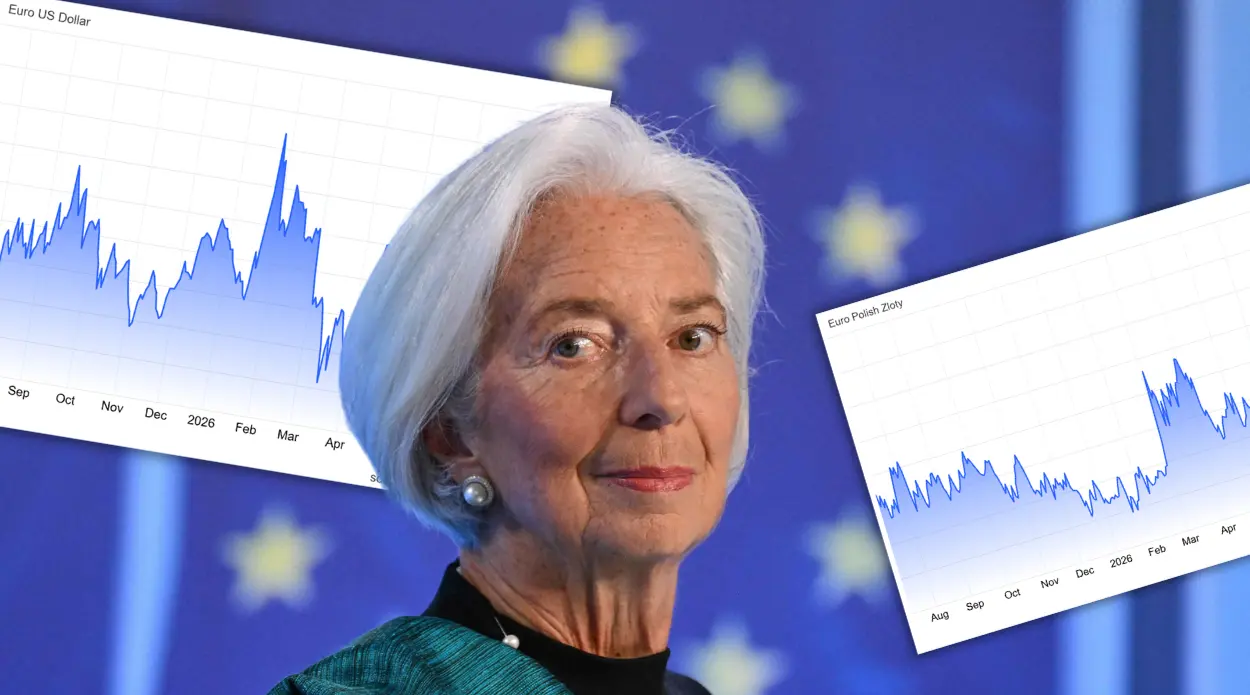
The previous day brought a return on EURUSD. During the first part of the US session the pair gently appreciated from about 1.1550 to 1.1570. Speculation about a possible agreement pushed the euro to the dollar to about 1.1600 at close (+0.5%). When the conditions for the ceasefire crystallized during the Asian session, the EURUSD move north continued, pushing the pair to 1.1700.
We assess that the potential for further strengthening of the euro is limited. EURUSD is only 1% below pre‑crisis levels in the Gulf, and the March discount scale was flatter than other risk‑sensitive assets. As a result, in contrast to FI, the chance of continued appreciation remains limited.

EURPLN returns near 4.25
Traditionally, the forint reacted most violently to the increase in global risk appetite in the CEE. After a flat yesterday’s session, today’s brought a ~1% drop in EURHUF.
The reaction to the Middle Eastern de‑escalation on EURPLN and EURCZK is calmer – in both cases the discount is about 0.3%. We assess that the potential for further strengthening of the zloty remains limited.
Similarly to the base FX situation, pressure on the domestic currency was limited in recent weeks and most external impulses were absorbed by the debt market. Hence we assume that the potential for EURPLN to fall below 4.25 is currently limited. We also do not expect USDPLN to fall below 3.60.