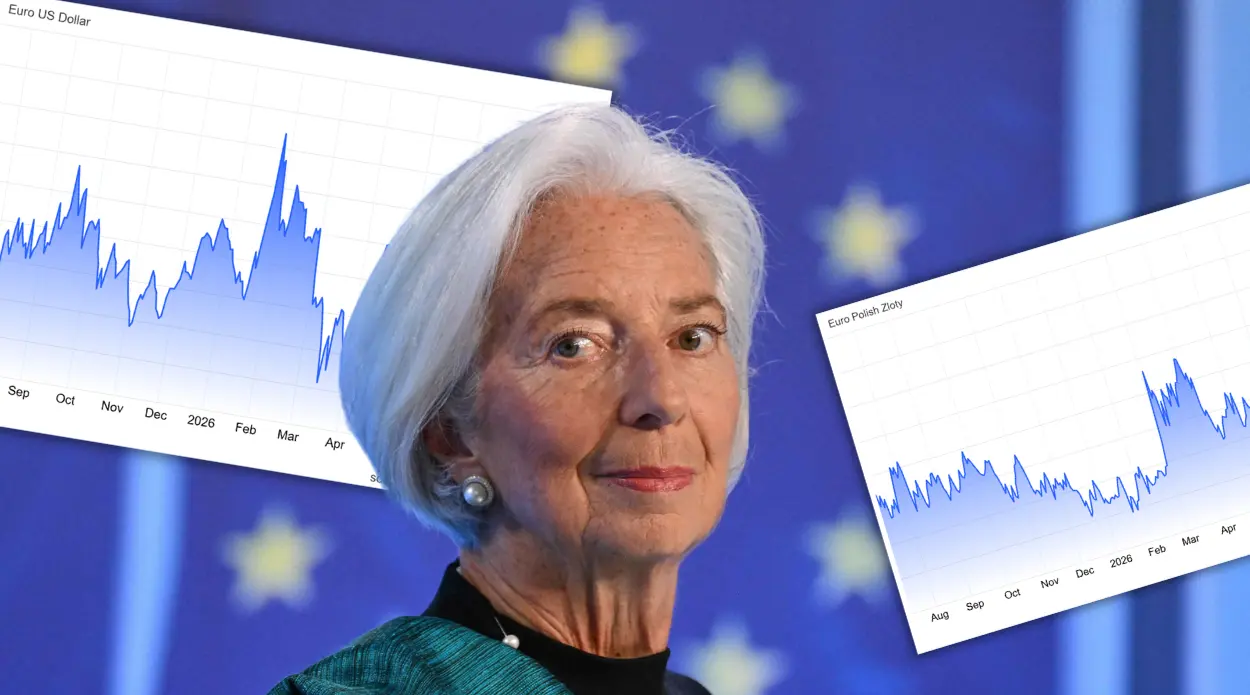
Technical picture of the EURPLN pair
In our assessment the weakening of the zloty was the result of a convergence of adverse local and external factors that recently pressured the Polish currency. Additionally, the scale of the move could have been amplified by the technical situation on the EURPLN pair.
Locally, after the June RPP meeting, market valuations expressed in FRA contracts for potential NBP rate hikes in 2026 fell, narrowing the expected spread of these rates relative to ECB rates and negatively affecting carry on the PLN.
Globally, EM currencies, including the zloty, were burdened by a stronger dollar and rising UST yields, a consequence of market expectations of Fed rate hikes in the coming months.
On top of that, the technical picture of the EURPLN pair showed a breakout above the consolidation that had been in place since mid‑April in the 4.22–4.26 range. A slightly weaker than consensus May retail sales reading in Poland was, in our view, of secondary importance.
Euro rate – forecast for the coming days
On Tuesday the national calendar does not contain significant publications for the zloty, so the domestic currency will remain sensitive to external impulses. Globally, market participants will focus on the release of preliminary June readings of industrial and services activity indicators from the euro zone and the USA.
In the absence of significant surprises, the EURUSD rate should stay above the important medium‑term support at 1.14, and the USDPLN rate below the medium‑term resistance near 3.75.
We also assume that, as a result of the factors described in the previous paragraph, the zloty may still lose a bit against the euro, and the EURPLN rate may temporarily rise above 4.28.
On Monday, domestic SPW yields fell by 3‑6 basis points. In base markets German government bond yields fell by 3‑5 basis points, and U.S. Treasuries rose by a similar amount.
Falling oil chokes European yields. The Polish market pulls back from NBP rate hike valuations
Positive news from Switzerland, where peace talks between the U.S. and Iran began over the weekend, and the U.S. decision to lift sanctions on Iranian oil production, sales, and transport for 60 days, encouraged further price declines. This supported the maintenance of short‑term inflation expectations in the euro zone and the U.S. near monthly lows and pressured European treasury yields.
It is worth noting that on the Polish market investors withdrew from NBP rate hike valuations, as evidenced by clear declines in FRA contract prices. The different behavior of U.S. Treasuries, in our opinion, is still an effect of the hawkish tone of the June FOMC meeting, indicated by the maintenance of a steep curve and a new annual high in the yields of those 2‑year bonds.
Silence before the storm on bonds
On Tuesday the MNB will hold a meeting, and investors are pricing a 25‑basis‑point rate cut in Hungary. In base markets preliminary June PMI readings from Europe and the U.S. may affect treasury bonds only with significant deviations from consensus, which we do not expect.
Thus, awaiting the Thursday U.S. PCE inflation reading for May, investors in the interest‑rate markets will continue to watch oil prices, dependent on progress in the peace process in the Middle East.
It is worth adding that a technical over‑sell of this market may, in the short term, limit the potential for further price declines. In such an environment the most likely scenario for Tuesday’s session appears to be a stabilization of treasury bond prices, both in base markets and domestic SPW.