Failure of talks in Islamabad and the blockade of the Strait of Hormuz
The basis of today’s chaos and uncertainty is the complete collapse of negotiations in Pakistan.
We wrote more about this in the article: Dollar rate before a breakout? Expert: “Capital will flow back to the USD”
Talks chaired by U.S. Vice President J.D. Vance and the chairman of the Iranian parliament Mohammad Bagher Ghalibaf were supposed to bring a lasting ceasefire.
Instead of an agreement we received a tightening of the situation in the region.
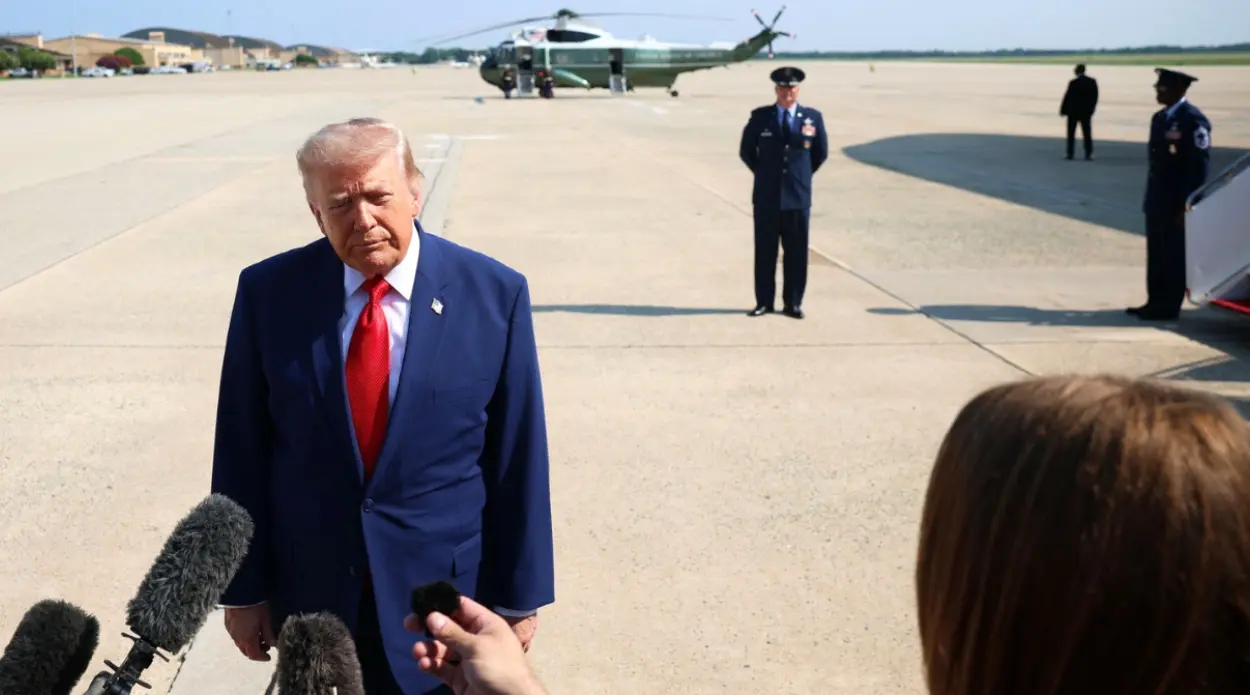
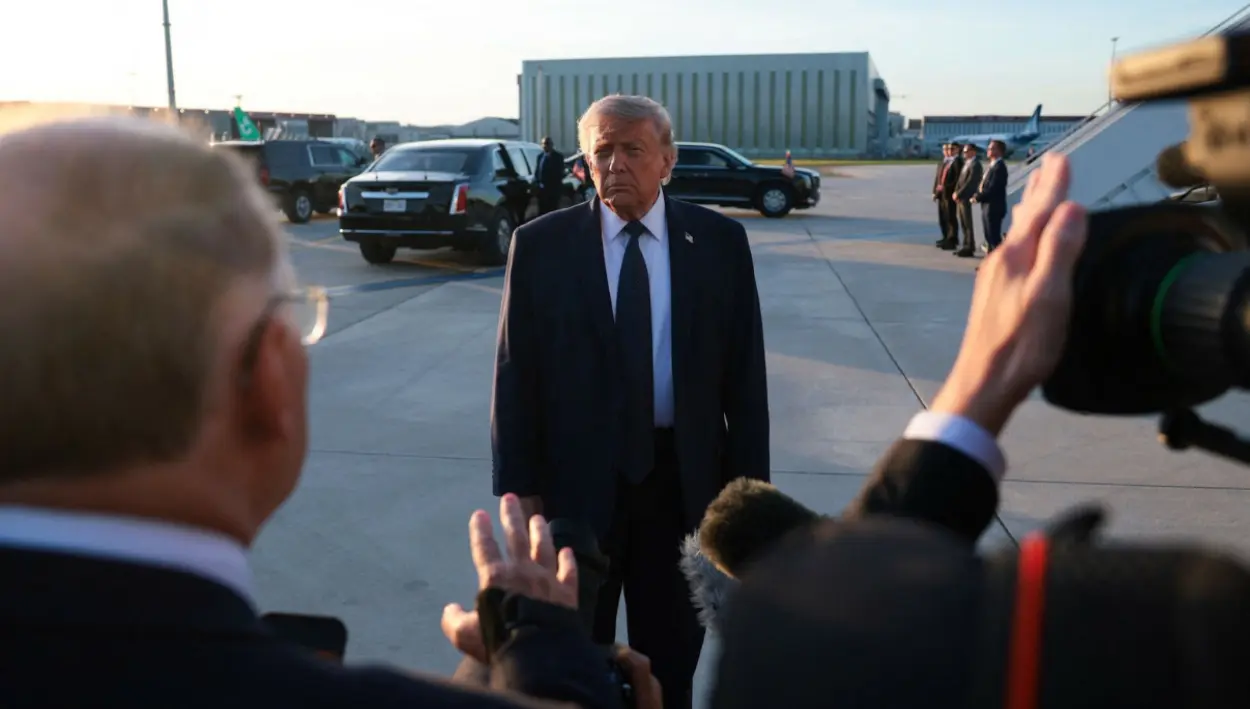
Donald Trump, in his characteristic style, commented on the fiasco of the talks by stating that he does not want Iran back at the negotiating table.
According to the U.S. president, the main military objectives (which have changed several times) – significant reduction of Iran’s missile and drone production capabilities – have already been achieved.
Trump also announced a blockade of the Strait of Hormuz by the U.S. military for all ships entering and leaving Iranian ports. The blockade will begin on April 13 at 10:00 A.M. ET (16:00 Polish time).
Bloomberg analysts claim that such a move could quickly push oil prices to 150 USD per barrel.
Mohsen Rezaee, a military adviser to Iran’s supreme leader, has already announced that Tehran will not allow the U.S. blockade of the Strait of Hormuz. According to him, Iran possesses “powerful, unused leverage tools”.
In practice this means expanding the war to the entire critical infrastructure of the region.
Refineries and traders worldwide have gone into a desperate search for readily available oil cargoes, further fueling the price spiral.
The blockade of the Strait of Hormuz will also have catastrophic effects on the liquefied natural gas and fertilizer markets. A peace that seemed imminent due to a temporary ceasefire is once again violently blown apart by new rocket salvos.
Read also: Dollar rate in the shadow of the Middle East conflict. Expert: “Hard to reach a compromise”
See also: Dollar rate before a breakout? Expert: “Capital will flow back to the USD”. What next for the euro?
Will the euro rate be shot with a shotgun because of the war in Iran?
The geopolitical fire in the Middle East is dangerously affecting the euro rate.
Investors, seeing the risk, are massively selling the common currency, expecting Europe to suffer the biggest energy shock.
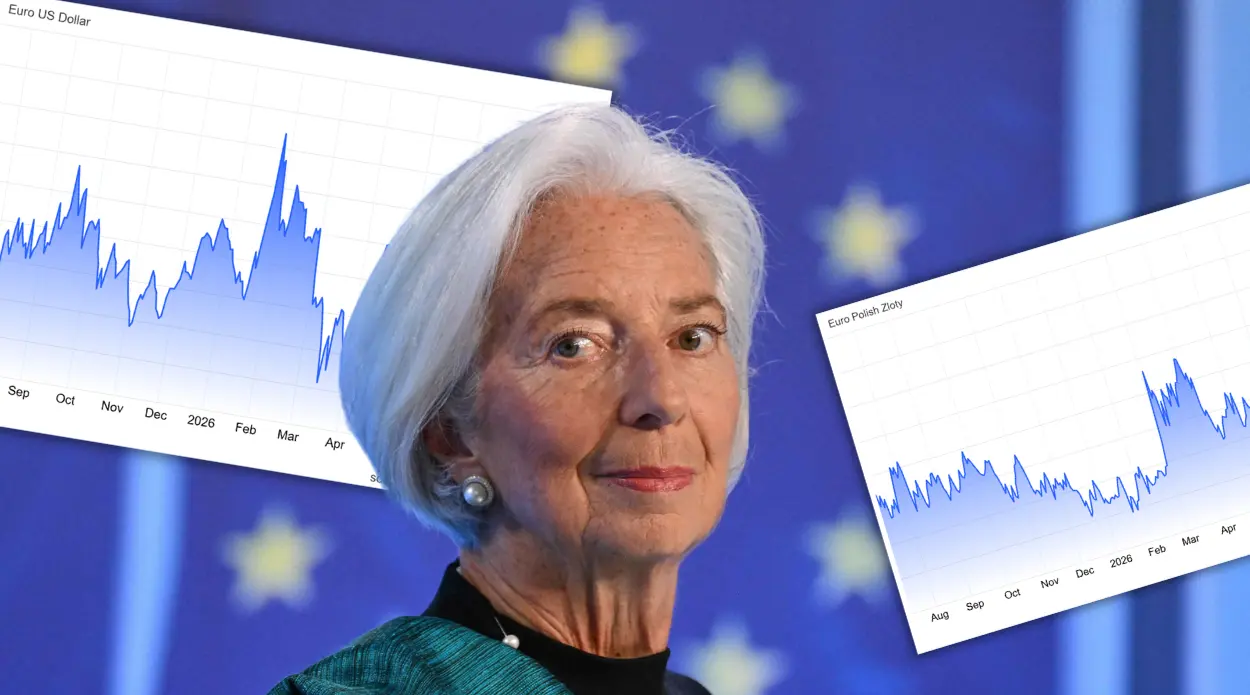
The euro to dollar rate fell to around 1,16 USD, reflecting fears of stagflation, a deadly mix of low economic growth and high inflation driven by energy prices.
UBS bank analysts forecast a drop in the EUR/USD rate to 1,15 USD in June 2026.
According to experts, the EUR/USD rate will rise to 1,18 USD in September and 1,20 USD in December.
Chart. Euro to dollar rate (EUR/USD)

Source: Trading Economics
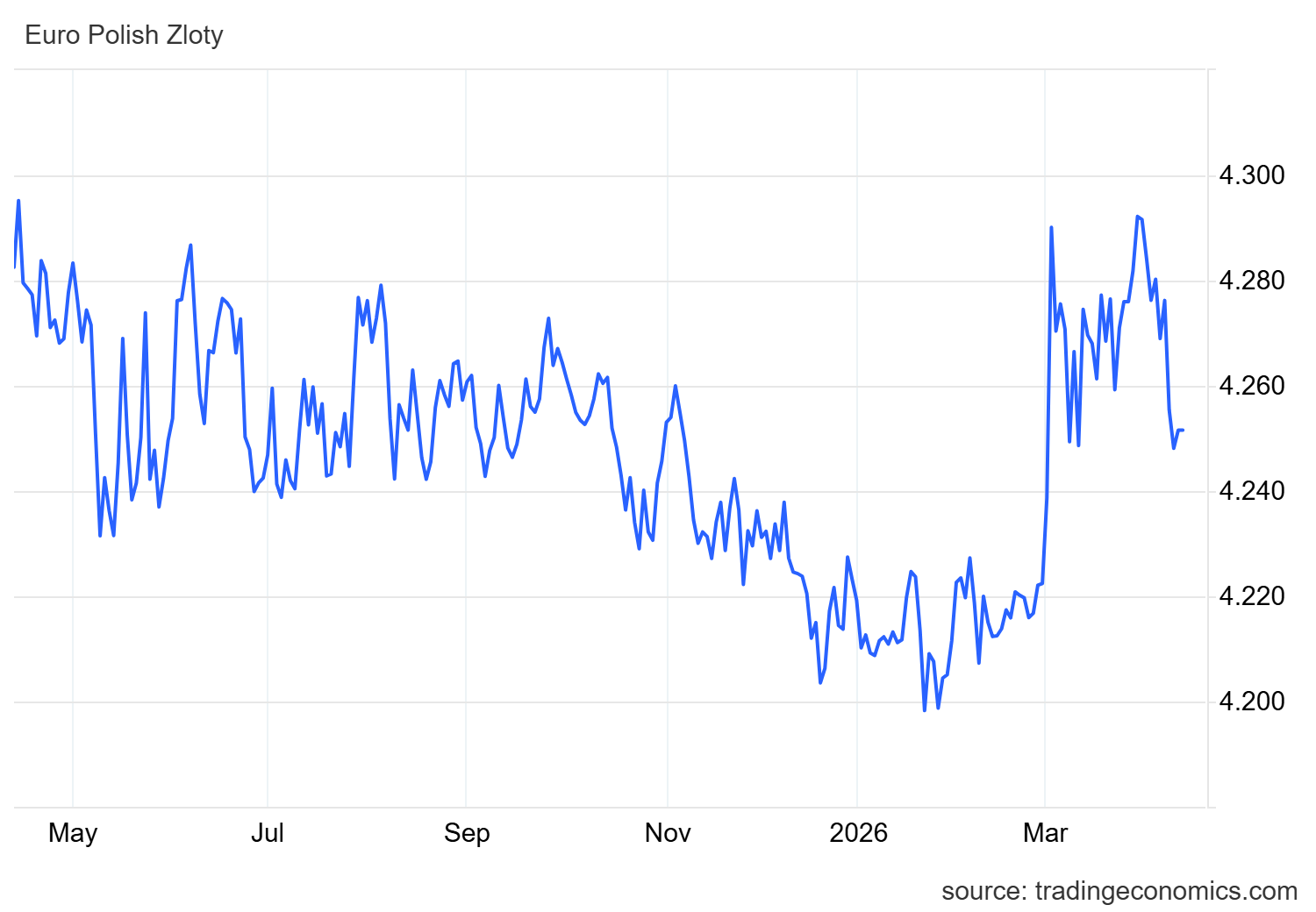
The euro to zloty rate still reaches 4,25 PLN.
UBS forecast predicts an increase in EUR/PLN to 4,30 PLN in June and a drop to 4,28 PLN in September and 4,26 PLN in December.
Chart. Euro to zloty rate (EUR/PLN)
Source: Trading Economics
Read also: Will the euro rate surprise soon? Expert says what will happen to EUR/PLN and EUR/USD
See also: Dollar rate before a “nervous and dynamic” move, euro awaits a drop? Expert issued a forecast for USD/PLN and EUR/USD