US-Iran talks in Switzerland. What has changed for financial markets?
The weekend meeting of U.S. and Iranian representatives in Switzerland sparked hope for de-escalation of the conflict in the Middle East.
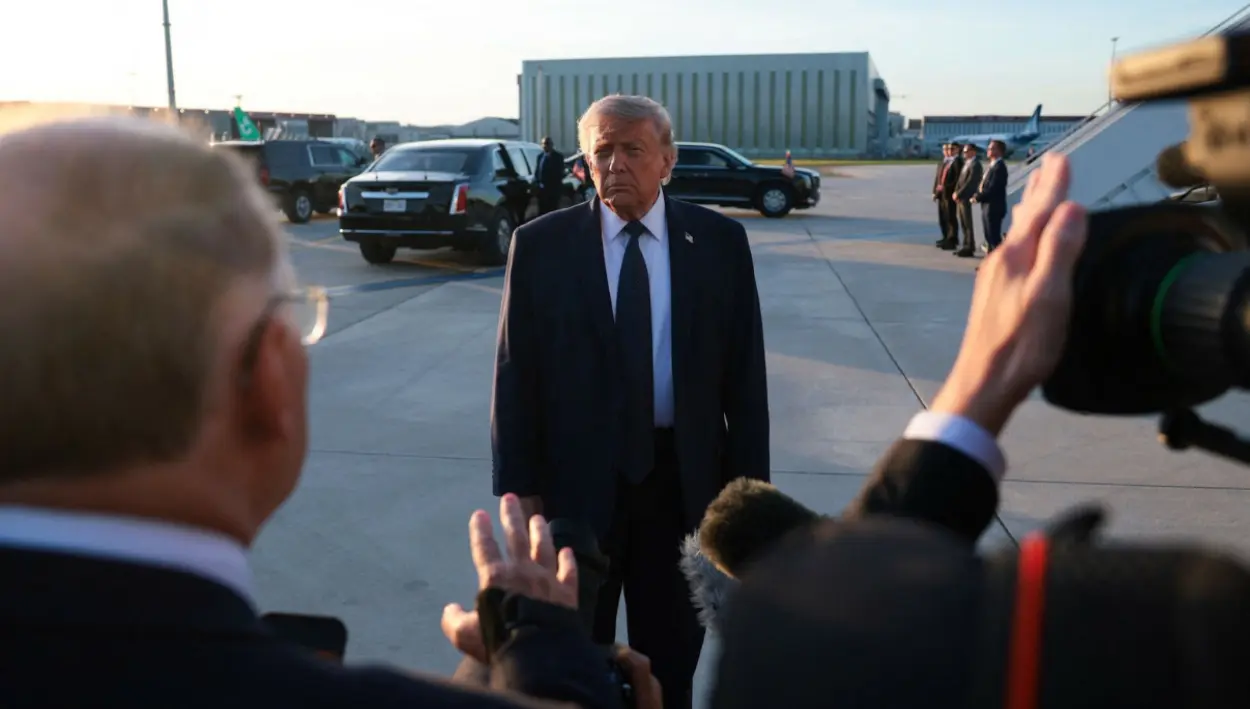
The durability of a potential agreement remains, however, in doubt, and uncertainty is amplified by Donald Trump’s rhetoric, who simultaneously directs threats at Iran implying the possibility of further military strikes.
Two semi-official Iranian sources reported that Tehran had temporarily paused talks with Washington after the Republican threatened new attacks in response to tensions in Lebanon.
Mirosław Budzicki, market strategist at PKO Bank Polski, told FXMAG how the latest reports affect financial markets.
“Any information indicating de-escalation of the conflict in the Middle East favors a drop in oil prices and also increases interest in risk assets. In such an environment, due to greater sensitivity to changes in energy commodity prices, European asset prices and the EUR should perform relatively stronger,” he said.
The protocol of agreements foresees a comprehensive agreement within 60 days, meaning the parties are still negotiating the final shape of commitments to end the war.
“Although the talks between the U.S. and Iran conducted in recent days have not yet produced a breakthrough, they represent another important step toward normalizing the situation in the Persian Gulf. One can estimate that a drop in oil prices of about 10 USD per barrel would result in an increase in the EUR/USD rate of about 1–2 cents,” added the expert.
Read also: The dollar’s direction has changed! Trump disrupted talks with Iran. What’s happening with USD/PLN and EUR/USD?
The expert emphasized that monetary policy still plays a key role in shaping both dollar and euro quotes.
“However, it should be remembered that in recent days the U.S. currency has been significantly strengthened by signals of possible interest rate hikes by the Fed. The sensitivity of EUR/USD quotes to changes in commodity market prices may therefore be somewhat lower precisely because of the revised expectations regarding U.S. monetary policy,” he said.
“I also think that the market has largely priced in a scenario in which the U.S. and Iran will reach a peace agreement, and the Strait of Hormuz will be fully open for shipping. Brent oil prices fell below 80 USD/b, and for comparison, at the end of February they were around 70 USD/b. This means that the prices still contain about 10–15 USD of geopolitical premium,” he noted.
The history of the peace process shows that a final agreement can be worked out over several weeks, meaning that any potential oil price declines will lose their current momentum and be spread over a longer period.
Taking all this into account, I think that EUR/USD quotes will not break the technical support around 1,14 and in the coming weeks will return above 1,16.
On Tuesday, June 23, Brent and WTI oil price declines are around 1.5 %.
Read also: The dollar’s long journey to 4 PLN? The expert issued forecasts for USD/PLN and EUR/USD. “The dollar may gain.”
See also: Will the dollar surprise again? The expert issued a forecast for USD/PLN and EUR/USD. “It’s hard for me to believe there will be no more fires.”
Dollar and euro rates on Tuesday, June 23
The dollar to zloty rate on Tuesday, June 23 is at 3,74 PLN (+0.18%).
Chart. Dollar to zloty rate (USD/PLN)

Source: Trading Economics.
The euro to dollar rate reaches 1,14 USD (-0.02%).
Chart. Euro to dollar rate (EUR/USD)

Source: Trading Economics.
Read also: Dollar before a chance to break out? Expert: “Capital will flow back to USD.”
See also: Dollar before a “nervous and dynamic” move, euro waiting for a drop? Expert issued a forecast for USD/PLN and EUR/USD