For years the government has been looking for a way, to help those who are too rich to apply for a municipal apartment, but too poor to buy one on the open market, even with a mortgage. Often this is due to a lack of creditworthiness.
This is a large group of people left to fend for themselves, forcing them into long-term rentals for which they often have to pay rents that far exceed what a mortgage payment would be. But banks will not lend them, even though they pay rent regularly.
The help for such people was supposed to be Social Rental Agencies (SAN), whose task would be to acquire apartments that can be rented on behalf of the owner at rates lower than market rates. The possibility of creating SAN was introduced in 2021. Since then, Social Rental Agencies have not made a splash in the market, but rather remain an option used by only a few.
Benefits for local governments, property owners and tenants
In theory it seems that establishing a Social Rental Agency could bring many benefits, which, like a magnet, should attract tenants and property owners. However, that is not the case. But step by step.
SAN is based on a three‑party model:
- the municipality establishes the agency and selects an operator,
- the operator acquires apartments from private owners,
- the apartments go to tenants identified under social policy.
This means that, in theory, the benefits should translate into real interest in this option for all parties:
- for the municipality – rapid increase in housing stock without construction,
- for the tenant – lower rent and stability,
- for the owner – guarantee of payment and no vacancies.
According to the assumption, rents proposed by SAN should be 15‑20% lower than those available on the open market. This is a benefit for the tenant. It also benefits the landlord, i.e. the property owner who hands the property over to SAN.
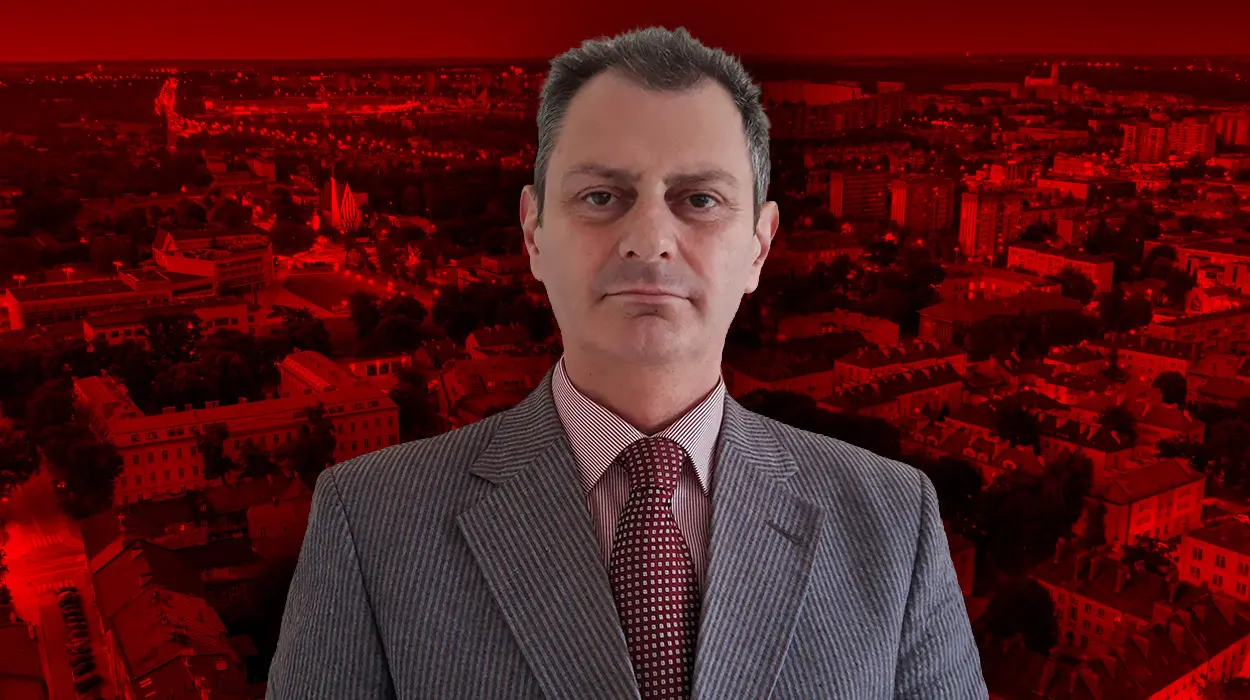
“Owners who hand apartments to SAN can benefit from tax exemptions on PIT, CIT, VAT and flat‑rate rental income tax. These are real financial benefits that are supposed to compensate for the lower rent received from the agency” - calculates Tomasz Błeszyński, real estate market advisor.
There are also downsides. These include lower income from the rented property. According to Tomasz Błeszyński, the difference can amount to several hundred zlotys per month.
For example:
|
Market rent
|
Rent for the owner through SAN
|
|
2 500 zł
|
2 000 – 2 200 zł
|
|
3 000 zł
|
2 400 – 2 700 zł
|
|
4 000 zł
|
3 200 – 3 600 zł
|
In return, the property owner does not have to deal with the formalities related to renting, which can be a major advantage for many. Additionally, they can expect an increase in the property's value. This is because an apartment that goes to SAN can undergo modernization financed by grants. After the SAN contract ends, the property returns to the owner with a higher market value.
“A mechanism is created that can be interpreted as an indirect transfer of public value to private capital, without a permanent increase in municipal resources” - notes Tomasz Błeszyński, real estate market advisor.
Despite many benefits, owners of properties intended for rent may not always want to engage in such cooperation.
“In practice, some owners may calculate that it is more profitable to rent independently on the open market than to join a program that requires full transparency to public institutions. This is especially true for those who have treated rent as an additional, partially unrecorded source of income for years” - emphasizes Tomasz Błeszyński.
The dark side of Social Rental Agencies
Social Rental Agencies also bring many negative financial consequences. These are the municipalities that decide to implement such a solution. A municipality that wants to create a SAN must bear the costs associated with its operation and management.
“It should be assumed that a board will be established with a chairman and a supervisory board overseeing the company's activities. This entity will also have a significant budget allocated for acquiring and managing apartments” - observes Tomasz Błeszyński, real estate market advisor.
As the expert adds, running a SAN will require hiring specialized staff, including property managers, lawyers, maintenance workers and technical supervisors. This means that the operation of such a company will generate ongoing and significant administrative and operational costs. These may not be the lowest.
Tomasz Błeszyński prepared a sample simulation of how the management staff's salary could look in a SAN, based on data on salaries in TBSs and SIMs.
Sample salary simulation for SAN based on data on salaries in TBSs, SIMs and other municipal housing companies.
|
Position
|
Small SAN (up to 100 units)
|
Medium SAN (100–500 units)
|
Large SAN (500+ units)
|
|
Chairman of the Board
|
15 000 – 20 000 zł
|
20 000 – 28 000 zł
|
28 000 – 40 000 zł
|
|
Vice Chairman
|
12 000 – 16 000 zł
|
16 000 – 24 000 zł
|
24 000 – 32 000 zł
|
|
Board Member
|
10 000 – 15 000 zł
|
15 000 – 22 000 zł
|
22 000 – 30 000 zł
|
|
Chair of the Supervisory Board
|
2 500 – 3 500 zł
|
3 500 – 5 500 zł
|
5 500 – 8 000 zł
|
|
Deputy Chair of the Supervisory Board
|
2 000 – 3 000 zł
|
3 000 – 4 500 zł
|
4 500 – 6 500 zł
|
|
Supervisory Board Member
|
1 500 – 2 500 zł
|
2 500 – 4 000 zł
|
4 000 – 6 000 zł
|
“At the same time, it should be noted that such entities can become a tool for political influence. Creating new positions in boards, supervisory boards and company administration therefore provides the possibility of filling them with people linked to the currently ruling majority in local government. Therefore, in addition to potential social benefits from the operation of SAN, it is worth considering the risk of increased administrative costs and the possibility of politicising the management of such an entity” - emphasizes Tomasz Błeszyński, real estate market advisor.
It is worth noting that since 2021 the number of Social Rental Agencies in Poland has reached 15. According to Tomasz Błeszyński, the system currently has about 260‑270 apartments. Public funds allocated for this purpose amount to over 75 million zł. Most SANs were created in larger centres such as Kraków, Poznań or Wrocław.
See also: Can property owners do more? The Treasury’s liberal approach to this type of business