Market situation June 29 – Middle East friction is insignificant...
Oil prices did not react to these "flashes", although the WTI and Brent dynamics have slowed. Levels are still low (WTI<70 USD), which supports the global macro picture. Investors "noticed" that the scenario of two rate hikes by the Fed may be overstated. As a result, the CME Fed Watch model today already shows chances for one move, more towards October than September. Upcoming macro data (this week ISM and labor market – readings especially on Thursday due to Friday’s Independence Day holiday) may become a verifier for the "hawkish" expectations.
Today the strongest rebound comes from the antipodes currencies, aligning with improved sentiment on Wall Street, but also in the case of NZD markets will soon start to play ahead of the RBNZ meeting on July 8, where a 25 basis point rate hike is expected. The euro and pound also fall. In the first case the market focused on the "hawkish" comment by Isabell Schnabel from the ECB; in the second we see falling tension around Andy Burnham, who is seen as the successor to Keir Starmer after the autumn Labour Party election.
In today’s macro calendar we already have solid data from Japan (retail sales accelerated in May to 5.3% YoY), which increases the chances of a second rate hike by the BOJ this year (but USDJPY has been stuck near 162 for several days), and we have upcoming eurozone economic data at 11:00.
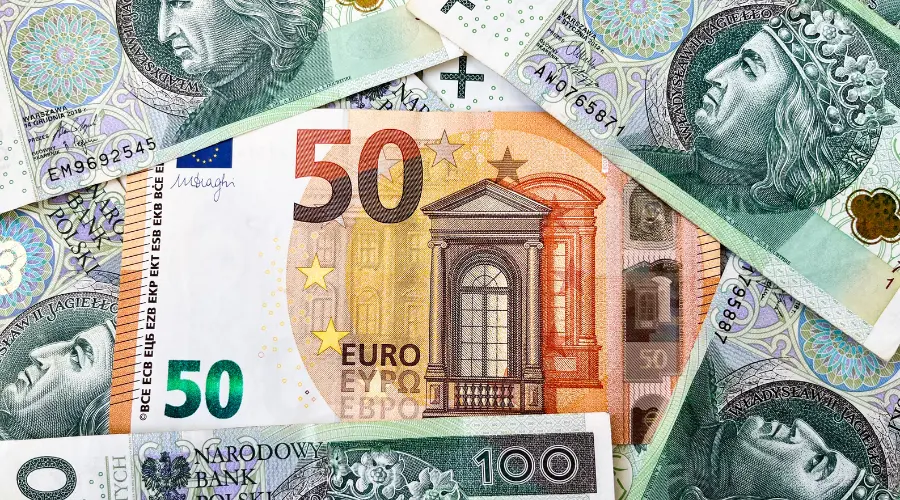
EURUSD – oscillations around 1.14
The EURUSD pair remains around 1.14 today after a stronger move towards 1.1433 on Friday was met with supply response. A return to a strong dollar does not seem likely when the market starts to verify earlier expectations regarding the scale of Fed rate hikes. Thus in the coming days (depending on falling U.S. data) a move above 1.15 may be more realistic than a return to the June 24 low of 1.1324.
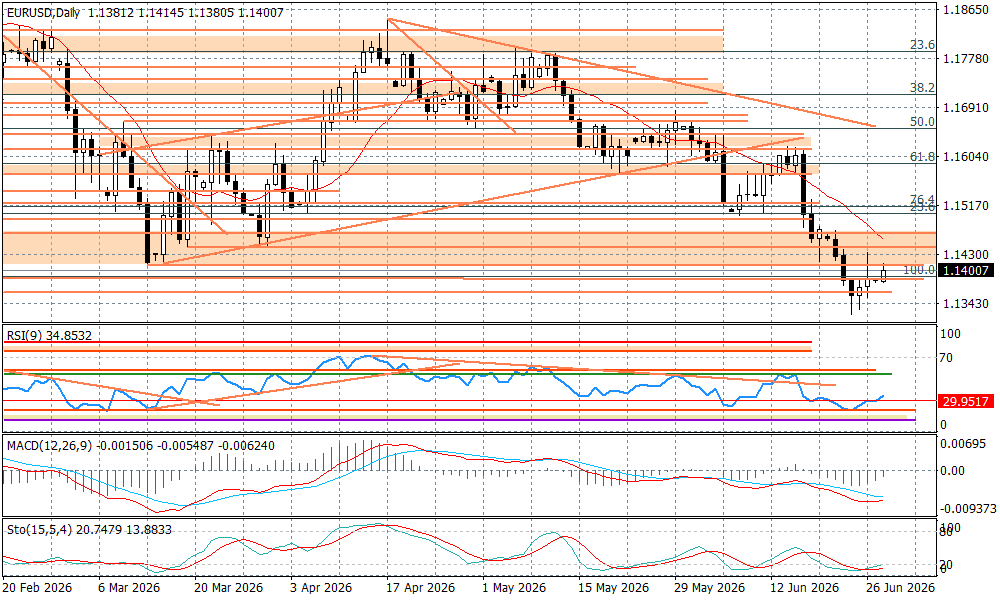
Daily EURUSD chart
Technically important resistance levels are 1.1410 (though that area has already been breached) and then 1.1442.