Solid growth in retail sales
The dynamics of retail sales measured in constant prices rose in March to 8.7% year‑over‑year compared to 5.0% in February and was also significantly higher than market consensus (5.9%) and our forecast (6.0%).
After eliminating the impact of seasonal factors, retail sales in constant prices increased in March by 3.3% month‑over‑month.
Many supporting factors for retail trade
The revival of retail sales in March had a wide scope. An increase in annual dynamics was observed in every category reported by GUS. The revival was a consequence of several favorable factors.
Weather conditions in March improved decisively compared to February, which encouraged household mobility and their willingness to make purchases. As a result, an increase in the dynamics of retail sales in constant prices was recorded in categories such as “motor vehicles, motorcycles and parts” (7.7% year‑over‑year in March versus 2.7% in February), “solid, liquid and gaseous fuels” (16.2% versus 10.2%) and “others” (15.1% versus 9.4%).
Fuel sales could also have been supported by purchases made in fear of a sharp price rise after the outbreak of the conflict in the Middle East. At the same time, higher temperatures favored accelerated purchases of spring clothing, reflected in a strong increase in dynamics in the “textiles, clothing, footwear” category (up to 13.6% year‑over‑year in March from 0.8% in February).
An important factor that positively affected the change in retail sales dynamics between February and March was the calendar effect of an earlier Easter holiday in 2026 compared to 2025 (in 2026 it fell at the beginning of April, while in 2025 it was in the second half of April).
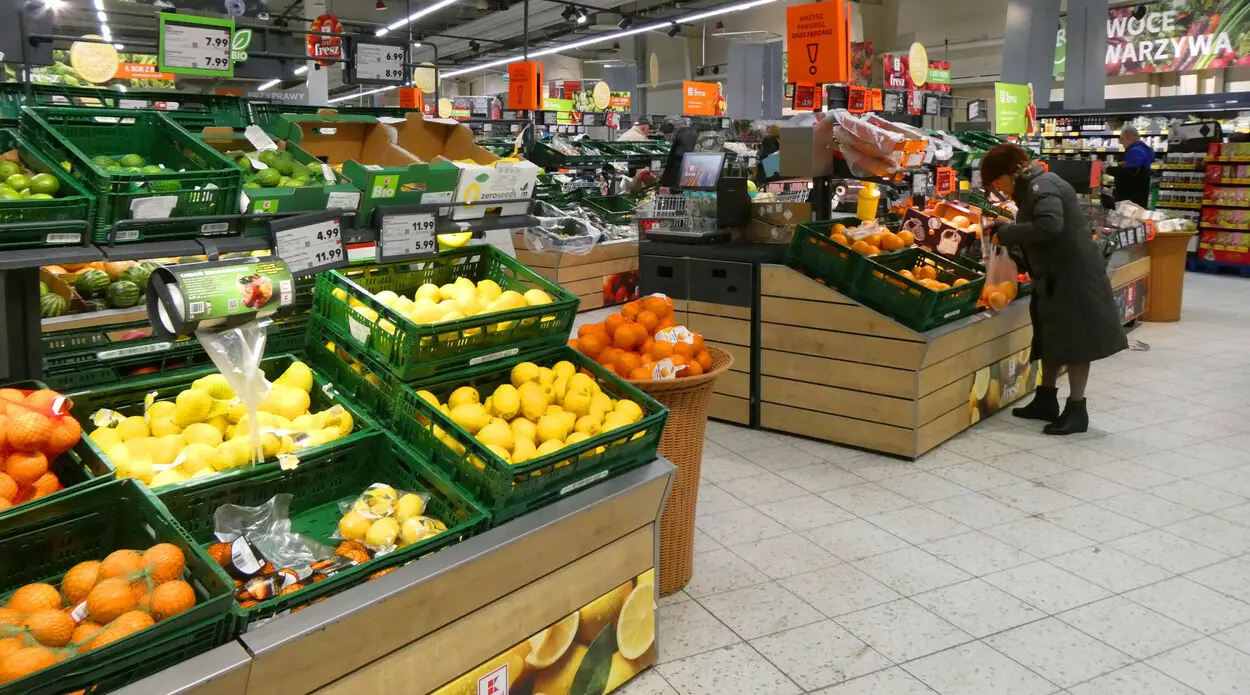
Consequently, this year’s pre‑holiday purchases were partially made in March, while last year they were completed entirely in April. This was reflected in a strong increase in real retail sales dynamics in the “food, beverages and tobacco products” category (4.3% year‑over‑year in March versus 0.2% in February).
Additionally, the increase in retail sales dynamics was also contributed to by positive calendar effects (in March 2026 the number of days was one higher than in March 2025, while in February 2026 the number of working days was the same as in February 2025).
Conflict in the Middle East remains a risk factor for consumption
The current data confirmed our previous assessment that adverse weather conditions had a temporary negative impact on retail sales, and households’ propensity to consume remains at an elevated level.
It is worth noting that the consumer confidence index for “current major purchases” reached its highest level since January this year in April. Moreover, the indicators regarding the probability of buying a car, a house (home) or undertaking renovations did not change significantly in April compared to the previous (January) survey edition.
This means that the conflict in the Middle East has so far had a limited negative impact on consumer sentiment and their purchasing decisions. Based on retail sales data for January‑March, we see a significant upside risk for our forecast of consumption dynamics in Q1 (3.8% year‑over‑year versus 4.3% in Q4 2025).
However, we maintain our assessment that the expected rise in inflation (see MAKROmap on 23.03.2026), reducing consumers’ real purchasing power, will tend to decrease retail sales and consumption in the coming months.
We also expect households to smooth their consumption path, i.e., only partially adjust their spending to the temporary income decline, using previously accumulated savings. Thus we forecast that the average annual private consumption dynamics will be 2.6% year‑over‑year this year versus 3.7% in 2025.
In our view, March retail sales data are positive for the zloty and bond yields.