The reality is less cinematic, but very important for the market. CTAs, or commodity trading advisors, are in practice a wide world of managers and funds that often act systematically, follow trends, and trade mainly liquid futures contracts. When prices and volatility cross key thresholds, the same models can quickly shift from reducing positions to rebuilding them.
Name from Another Era
The name itself is a bit confusing today. In the regulatory view in the USA a CTA is a person or firm that, for a fee, advises or manages exposure in futures contracts, options on futures, selected off‑exchange contracts, and swaps.
This is how the National Futures Association (NFA) defines the category. The problem is that many investors associate the word commodity only with oil, gold, or wheat, while the modern world of CTAs also includes equity indices, treasury bonds, currencies, and interest rates.
Moreover, not every CTA is a trend‑following fund. Formally it’s a broader category. But in market shorthand, especially when investment banks talk about flows, CTA usually means systematic managed futures and trend‑following funds. In other words, those that don’t build positions based on a Fed chair’s conference or a P/E valuation, but primarily on price behavior.
Why the Market Looks at CTAs?
The importance of CTAs comes from two things. First, they are a large and very active part of the futures market. The NFA reported that on February 28, 2026, there were 1,179 members in the CTA category. Second, the group’s significance is reinforced by the similarity of their operating mechanics.
If many models observe similar trends, comparable break‑through levels, and similar volatility measures, they can react in the same direction during strong price moves.
That’s why brokerage desks and trading departments often try to model how many CTAs might still sell or buy assets. It’s not that they know other algorithms exactly. It’s that in the world of systematic strategies one can estimate when fast models will reduce risk and when they will join the move.
Such flow can then become additional fuel for the market. When declines are deep, CTAs can accelerate them. When a rebound crosses key thresholds, the same models can turn into buyers.
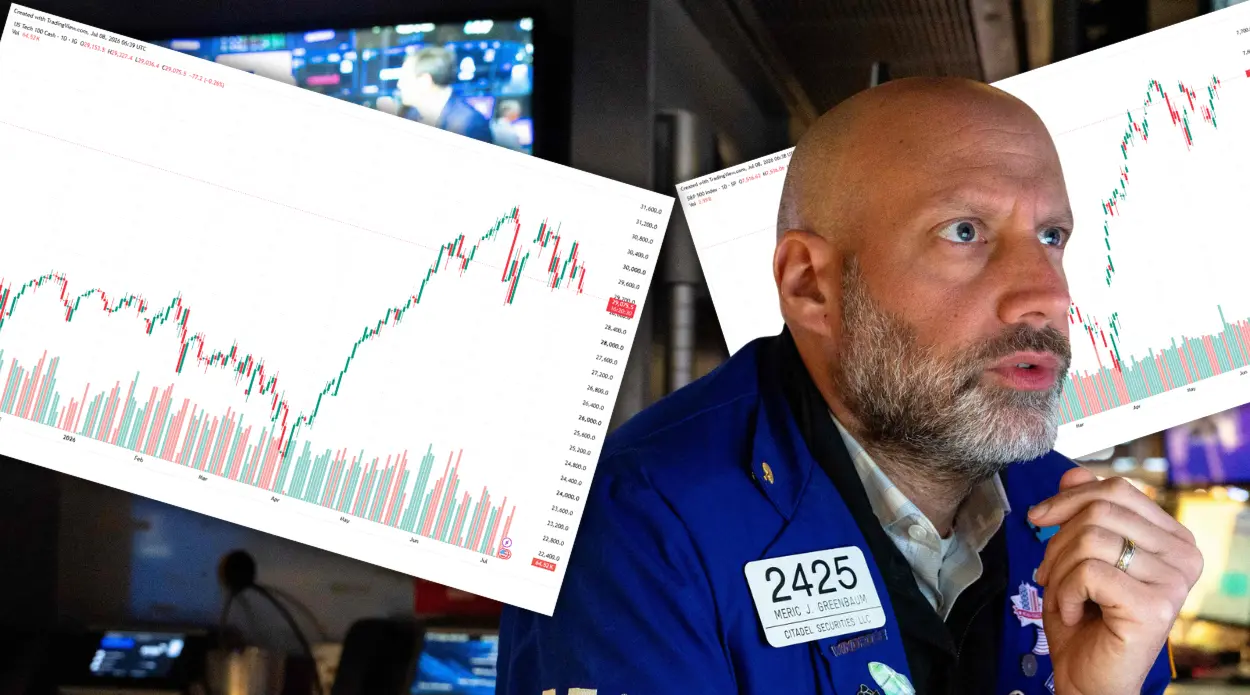
And that was visible in recent weeks. On March 7, 2026, BofA wrote that CTAs had sold a large amount of shares, especially in the S&P 500 and Nasdaq, after models quickly cut risk following a rise in volatility.
On March 23 the bank already assessed that faster models were leaning toward short equity, while slower ones stayed closer to neutrality. On April 9, Goldman Sachs indicated that at current market levels CTAs could buy back about $34 billion of S&P 500 exposure in the next week and move from a short position back to long.
This is a very good example of how quickly the narrative around this group changes. Not because the models suddenly changed their view of the economy, but because the market itself changed.
What Do They Base Their Decisions On?
The shortest answer is: on price, trend, and volatility. Official materials from AQR, Man AHL, or Winton show a common core of this approach. The portfolio is usually built across many markets, positions can be long or short, and decisions arise from rules based on momentum, various trend horizons, breakouts, and risk control.
Man AHL even describes models based on exponential moving average crossovers that the firm has used for decades. AQR writes about its own signals that indicate when to hold long positions in markets with a positive trend and short positions in those with a downward trend.
In practice this means that such a fund doesn’t ask whether shares are already cheap or expensive. First it checks whether the trend is rising or falling, how strong the move is, how quickly it changes, and how much risk can be assigned to it.
A very important distinction is also between fast and slow models. Fast ones react to break‑throughs and rebounds earlier, but they change positions more often. Slower ones need more time, but they are less likely to be knocked out of the market by short‑term noise.
That’s why in moments of sharp reversals banks often write that fast CTAs are already selling or buying, while slower ones have not yet confirmed a new direction.
From an investor’s point of view this is important because the second wave of flow often appears exactly when the slower part of the systematic trading model world joins the move.
Whose Algorithms Are They?
There is no single CTA algorithm. It’s not a shared Wall Street machine, but a collective label for many private, proprietary models belonging to specific firms. Société Générale, in its SG CTA Index methodology, explicitly states that the index tracks the largest CTA managers and includes the 20 biggest managers meeting futures‑based strategy and broad diversification criteria. That’s a good clue that we’re talking about an entire ecosystem, not a single player.
Behind this ecosystem are specific institutions and teams. Among the most recognizable names are AQR, Man AHL, Winton, Systematica, Aspect Capital, and Transtrend. The common denominator is simple: a lot of quantitative research, a lot of technology, rigorous risk management, and execution that itself is a competitive advantage.
Man AHL even emphasizes that its own execution infrastructure matters because it allows reducing costs and hiding flow. In other words, the advantage comes not only from what the model wants to buy or sell, but also how it does it.
Why CTA Positioning Can Be So Important?
The biggest mistake in thinking about CTAs is treating them as a group that always has the right view of market direction. That’s not it. Their importance comes more from the mechanics. CTAs are important because they can act quickly, across many markets at once, and often through very liquid instruments.
When banks see that key trend thresholds have been broken, they try to estimate how much additional demand or supply might still appear. This is useful not because it tells what should fundamentally happen, but because it tells what automatic capital can do.
In practice it’s also useful to remember one more thing. When headlines say CTAs are selling or buying shares, it’s often about index futures, not about manually dumping individual stocks from a portfolio. That’s an important distinction because the market impact first appears through futures and derivatives, and only later spreads to sentiment and risk pricing.
So if in the coming days titles appear again about CTAs buying shares, it doesn’t necessarily mean a sudden return of faith in fundamentals. It’s more likely that price trends and volatility parameters have shifted the model’s swing from risk‑reduction mode to position‑rebuilding mode.
For the investor the most important barometers remain simple: the direction of indices, the persistence of the move, and the level of volatility. Those decide whether fast and slow models will stay on the same side of the market.