History likes to repeat itself, but in the tech world this return to the past gives customers only chills.
Deja vu with USD in the background, or the great cartel comeback?
On June 25 of this year a class action lawsuit was filed in the Superior Court of Northern California, striking at the very foundation of the global memory market. Private individuals and smaller businesses accuse the RAM triumvirate (Samsung, SK Hynix and Micron) of blatant monopolistic practices.
The allegation concerns the artificial, deliberate restriction of DRAM bone production aimed at driving prices to absurd, record levels.
This is not the first time for the industry. The case stirs huge emotions because consumers still remember the big scandal from 2005.
Then the U.S. Department of Justice proved in black and white that the same entities had engaged in price fixing from 1999-2002. At that time Samsung had to swallow a bitter pill in the form of an astronomical fine of 300 million USD.
Could it be that Asian and American giants realized that after two decades it was time for a repeat of the entertainment? Given the gigantic rise in RAM prices, this is very likely.
The accused corporations quickly launched a counterattack, categorically rejecting allegations of market manipulation from the shadows. Their defense line is simple and extremely timely: “It’s not us, it’s AI.” Producers explain that current shortages are not the result of malicious throttling of production, but of unprecedented, aggressive AI sector growth. It cannot be hidden that they are right in this claim.
It is the tech giants developing AI models that generate a gigantic, almost unsatiated demand for the fastest memory chips, which factories simply cannot keep up with. Modern data center architecture devours DRAM and HBM memory in wholesale amounts. The three producers say they are doing everything they can, investing billions of USD in building new production plants.
The problem is that from the foundation to the launch of advanced lithography lines takes a lot of time, and the market needs goods now. Especially considering that giants like OpenAI, Amazon and Google reserve memory bones well in advance, so less and less equipment reaches the consumer market.
See also: Nvidia shares crashed! Jensen Huang encourages buying. “Everyone should be very excited.”
Fear of a bubble burst and real losses
Market analysts and the “Wccftech” service note significant differences between the old cartel and today’s situation. Currently the external factor of massive AI demand is an undeniable fact. Moreover, experts have already suggested that manufacturers’ caution in increasing supply does not have to stem from illegal collusion, but from pure pragmatism and trauma.
In 2022-2023 the industry recorded a massive slump. Post-pandemic demand dropped sharply, warehouses broke open, and prices fell, generating huge losses for manufacturers measured in billions of USD. No wonder Samsung or Micron boards approach the topic cautiously.
The market is haunted by the specter of an AI bubble burst. If the AI craze suddenly fades, the overbuilt infrastructure will again become a burden, and a return to standard production will flood the market with unsellable goods. RAM memory could then drop to prices unseen in markets for a long time.
See also: Trump in Beijing. Nvidia shares may not escape the rally? The giant’s CEO counts on a US-China agreement.
Valve breaks silence - monopoly dictates terms
Voices of dissatisfaction also come from places manufacturers cannot ignore. Pierre-Loup Griffais, an engineer from Valve, the company behind the Steam platform and the Steam Deck console, added fuel to the fire.
In a loud interview with “Gamers Nexus” he admitted without sugarcoating that the memory market situation was ruthless.
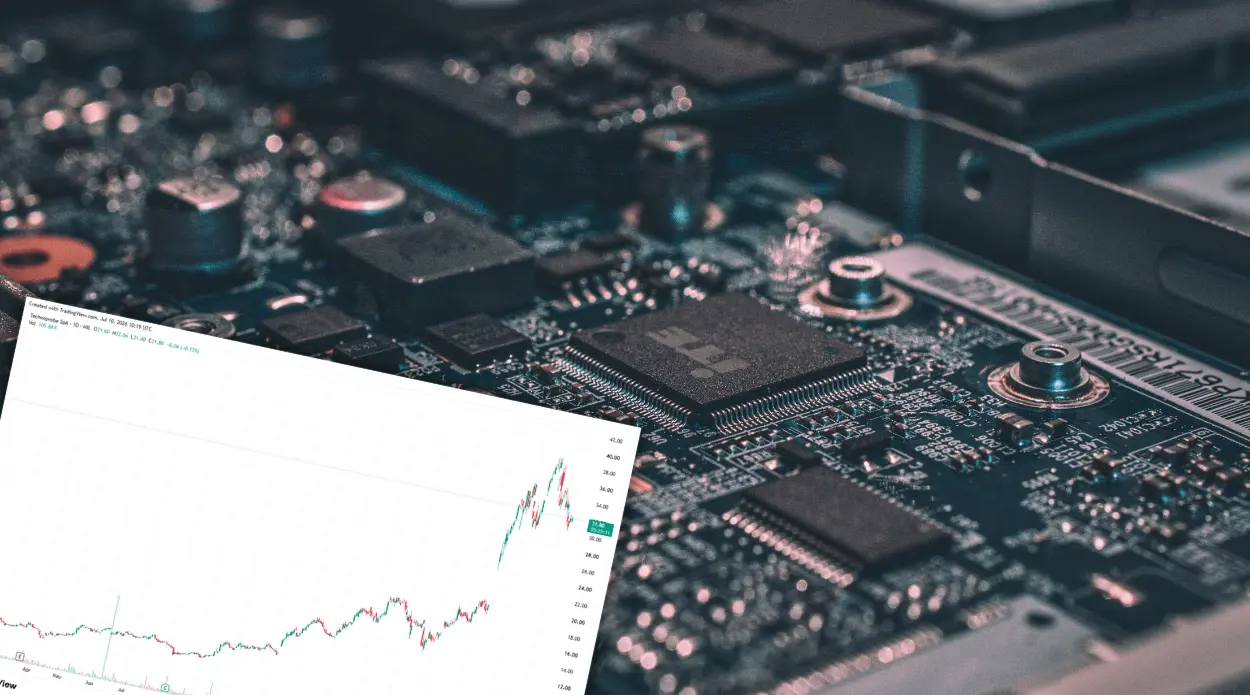
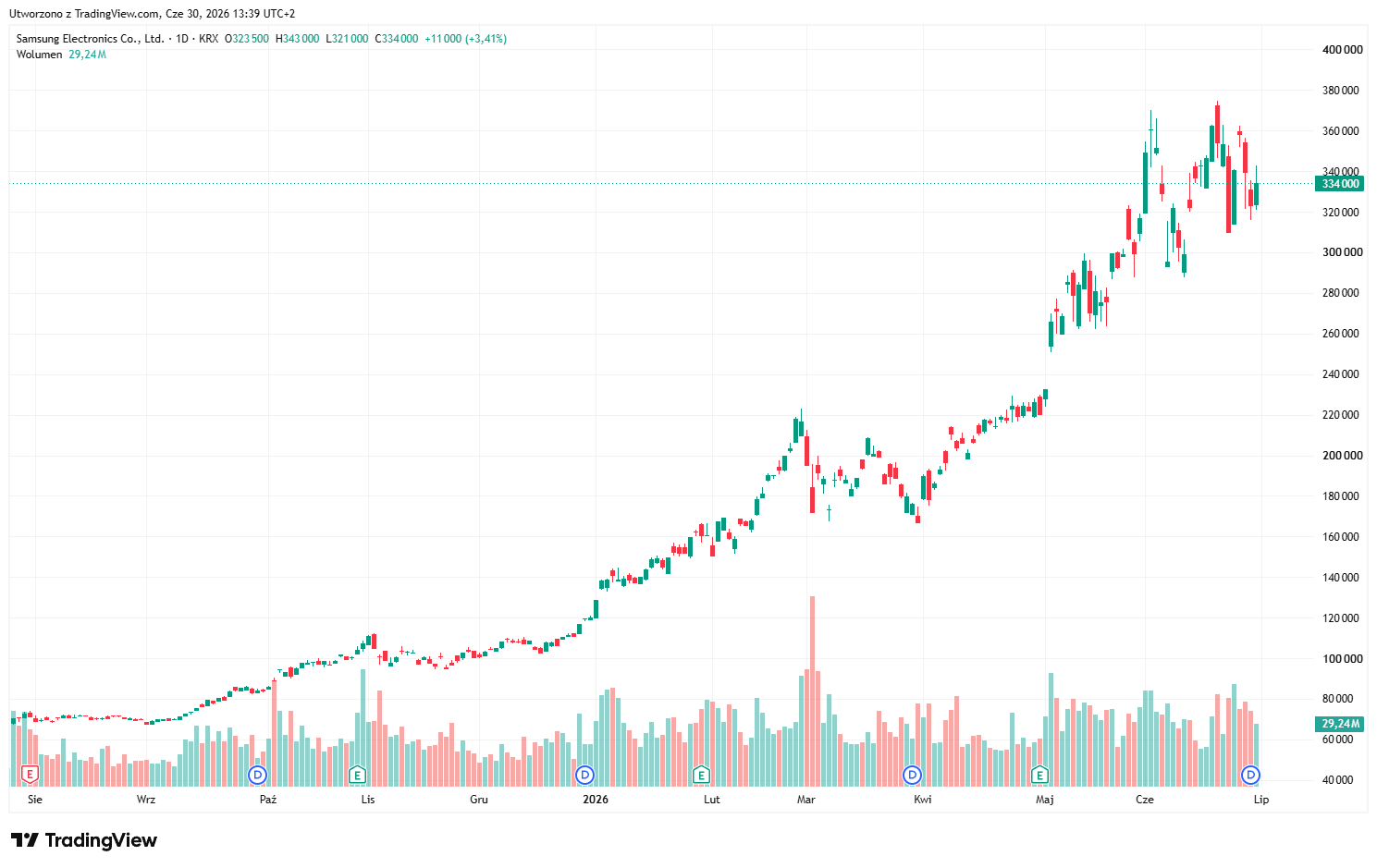
Samsung shares rose 3.41% to 334,000 KRW on the Seoul exchange.
Chart. Samsung stock price
Source: TradingView
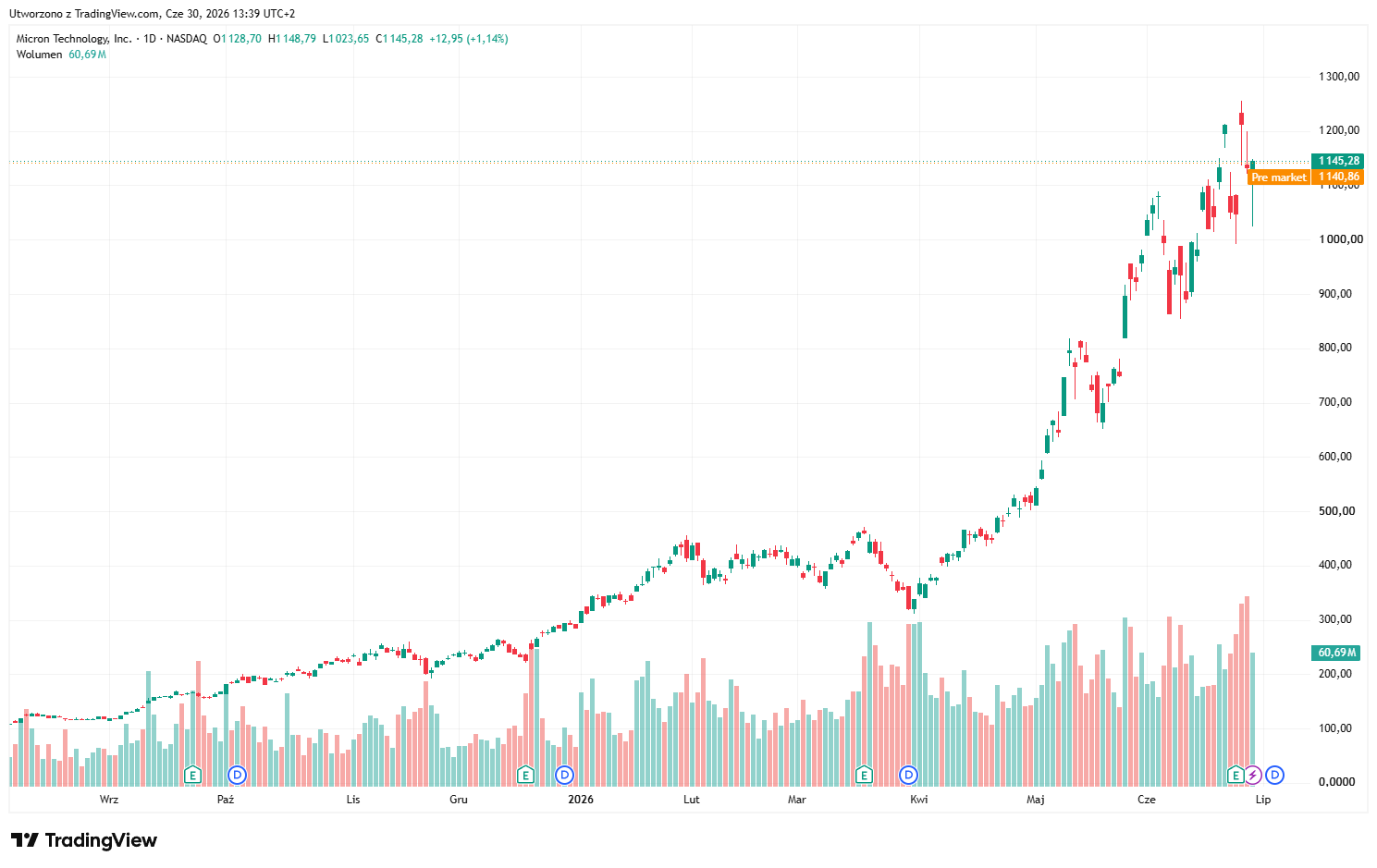
Micron’s stock on Nasdaq rose 1.14% to 1,145 USD.
Gaming hardware makers had absolutely no room for negotiation. Valve had to unconditionally accept the pre-set astronomical rates and strict limits on available component units to maintain production continuity.
Similar experiences likely exist for both Sony and Microsoft, as both companies work on a new generation of consoles that (according to leaks) may cost over 1,000 USD per console.
Chart. Micron stock price
Source: TradingView
SK Hynix shares surged 0.84% to a peak of 2,650,000 KRW.
Chart. SK Hynix stock price

Source: TradingView.
See also: Nvidia shares falling. The giant has an AI problem! A sincere confession.
Source: Investors.