It gets nervous on the exchange when the shares of the Santa Clara giant stumble, but the real battle is about the architecture of the future. Nvidia, presenting the RTX Spark chips with unified memory, has entered the territory long cultivated by AMD. Is this the end of the era of traditional graphics cards and how does the market react?
The last few days brought a slight cooling of the mood around the market champion of artificial intelligence.
The green giant’s market breathlessness
Although Nvidia’s market capitalization still leaves people dizzy, the temporary dips in the share price clearly show that investors expect concrete results, not promises. These came at the turn of May and June this year, when Nvidia announced a "newPC era".
It was about laptops and mini‑computers powered by breakthrough RTX Spark chips.
While the financial market reacted with a mild correction, a real debate erupted in the tech world about the new architecture. It turned out that Nvidia decided to unify memory inside its new chips, which for the eternal rival AMD was an ideal opportunity to flash a wide smile.
In this market‑hardware league of champions, the Green’s move was treated as a tactical triumph for AMD.
Advertising
For the Reds it was a clear signal that their previous strategy was flawless, and the entire industry is running on a track they themselves recently set.
See also: Nvidia, Intel and AMD stocks on the brink? AI devours the familiar industry
Was AMD right? The great unification becomes a fact
AMD representatives without hesitation point out that the competitor’s new releases prove the superiority of their own vision. The unified memory architecture (UMA) is a solution that AMD successfully developed in projects such as Strix Halo or Medusa Halo.
Advertising
In traditional computers the processor has its RAM, and the graphics card has ultra‑fast VRAM, which forces continuous copying of data packets over the PCIe bus.
UMA breaks that wall, because the CPU, the graphics subsystem (GPU) and the neural processor (NPU) use the same gigantic memory pool. In theory it eliminates bottlenecks, dramatically speeds up system operations and AI calculations. The most powerful RTX Spark variants will offer up to 128 GB of unified memory – a value unattainable for standard graphics cards.
Nvidia’s entry into this niche changes the rules of the market game, which is soberly assessed by David McAfee from AMD. In his view the appearance of such a large player in the UMA segment will force the entire industry to massively optimize software and hardware for the new standard.
"It’s hard today to predict exactly which direction this will develop in the next few years, but I believe it opens up entirely new perspectives for us", McAfee commented.
See also: Nvidia, Intel and AMD stocks on the brink? AI devours the familiar industry Nvidia, Intel and AMD stocks on the brink? AI devours the familiar industry Nvidia, Intel and AMD stocks on the brink? AI devours the familiar industry
Advertising
A cold shower for gamers. PC console‑ization has its price
But is UMA a realm of thermally conductive fluid? For gamers and traditional PC enthusiasts it is not necessarily so.
Sharing resources brings the risk of process cannibalization. If a demanding game or locally hosted AI consumes a large portion of memory, other operations simply lack space. Moreover, classic GPUs rely on extremely fast GDDR memory, while system RAM, even the newest, offers lower bandwidth, which can lead to a performance drop (especially in gaming).
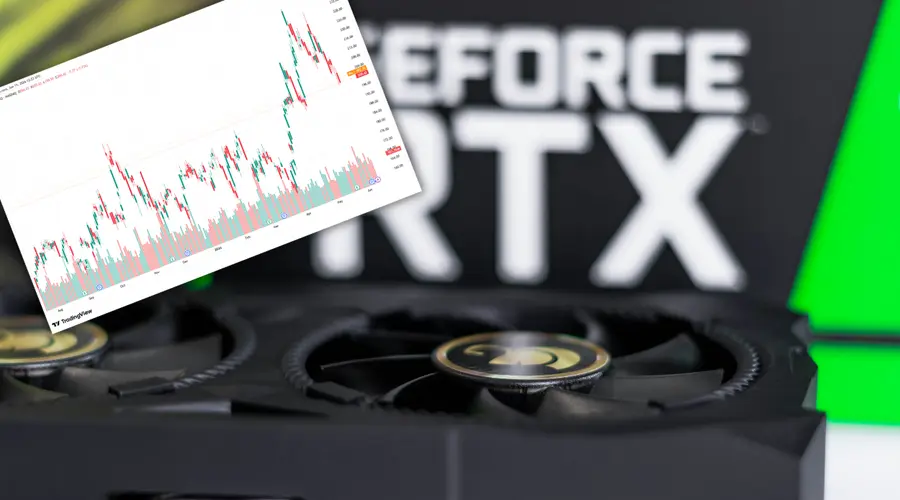
Investors approach Nvidia’s new releases with caution, which is clearly visible in the Green’s share price.
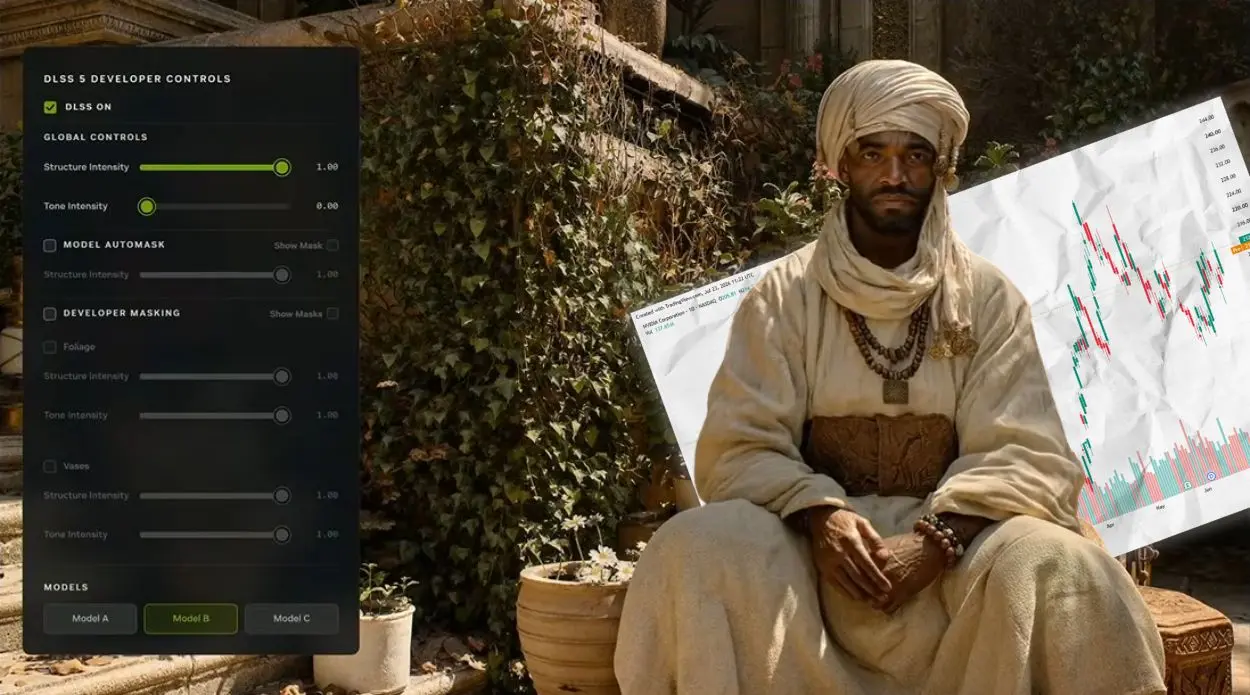
Nvidia’s share price at the market close on 10 June fell by 3,73% to 200.42 USD.
However, pre‑market trading data from 11 June shows an increase of 0,86% to 202.13 USD.
Advertising
Chart. Nvidia share price
✕
Source: TradingView.
See also: Nvidia, Intel and AMD stocks on the brink? AI devours the familiar industry
FXMAG’s editorial team creates high-quality content on financial markets, investing, and the global economy. We provide timely analysis and clear insights to help our audience navigate complex market dynamics.