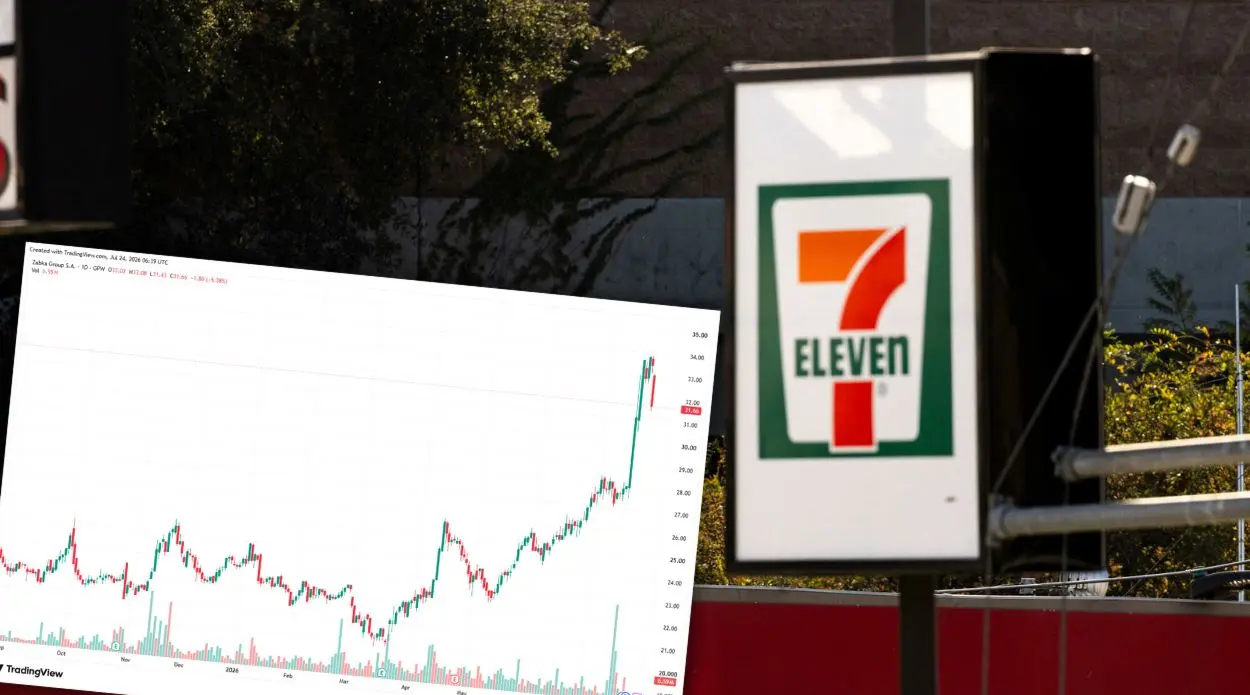
Those who did not have these assets in their portfolio began to feel that something was slipping away. A strong urge to hop on the train appeared, especially since media headlines screamed about further gains. The belief in a trend continuation was so strong that when we, Portu, warned in January about the risk of investing in silver at those levels, comments appeared that we were not serious, and that "silver is currently the only investment that makes sense." Less than two weeks later silver recorded about a 50‑percent correction.
This is FOMO (Fear of Missing Out) – the fear that an opportunity will pass us by.
In this article I will show where this mechanism comes from, how it affects investors’ decisions, and how to avoid falling into this trap and not buying assets at the worst possible moment.
Why do we succumb to FOMO?
Psychologists Przybylski, Murayama, DeHaan, and Gladwell describe FOMO as anxiety arising from the fear that others are experiencing something more satisfying than we are. In practice it means one thing. When we see others earning, our brain treats the lack of participation in that profit as a loss, even though we have not actually lost anything.
According to Kahneman and Tversky’s prospect theory, the pain of loss is about twice as strong as the joy of an equivalent gain. In the case of FOMO the "loss" becomes the missed opportunity. That is why observing others’ gains triggers greed and a sense that we are falling behind.
At the core of this mechanism lies something even deeper. As a species we survived through cooperation, so we have a strong need for belonging. Being outside the group for thousands of years meant danger. Today it manifests in a simple way. When we see others earning and we are not, we feel excluded from the group.
In practice, on the market it looks like the investor buys not because the risk‑reward relationship is attractive (in the case of FOMO it is not), but because the psychological cost of being left out becomes greater than the real risk.
Additionally, FOMO is today strongly amplified by the internet and social media. Financial sites fight for attention, so they publish catchy headlines. On forums and social media investors show gains, rarely losses. "Analysts" also appear who correctly predicted one move and then announce further rises based on that.
The effect is always the same. The narrative strengthens, more people believe in further gains, and prices rise. The problem is that when the belief becomes widespread, new buyers start to dry up. That is when painful sobering occurs.
How FOMO harms investors – examples
One of the most famous examples of FOMO is the internet bubble at the turn of 1999–2000. Investors bought companies because they believed the internet would revolutionize the world (and they were right).
The problem was that over time the rational narrative turned into euphoria. Investors began buying almost everything related to the internet, regardless of business fundamentals or growth prospects. It was enough that a company added the suffix ".com" to its name, and its price could rise by several hundred percent, even though fundamentally nothing changed.
That is when FOMO appeared. The desire to participate in a breakthrough trend turned into panic buying. The result was mass overpaying for companies and the creation of a speculative bubble that eventually burst with a bang. After it burst, hundreds of companies disappeared from the market, and the Nasdaq index fell by about 80% from its peak. It only returned to previous levels in 2016.

The second classic example is FOMO in cryptocurrencies. Bitcoin rose from about $1,000 at the beginning of 2017 to almost $20,000 in December of the same year. Everyone talked about cryptocurrencies then. Media, friends, taxi drivers. The narrative was simple. "This is just the beginning, and prices will keep rising."
Even before Christmas the trend reversed. Bitcoin lost value for several months and in 2019 fell to around $3,000. Then history repeated itself. In 2021 the price approached $70,000, then in 2022 fell to about $16,000.

How FOMO Works
Such examples can be multiplied, but the pattern is always very similar. At first an asset appears that starts to rise, but few notice it. The narrative then builds. Then the first big gains come, but that is still not the moment when the so‑called "street" enters the game.
Over time the topic reaches the media. More and more articles about gains appear, and investors start sharing information about their profits. More and more people who previously were not interested in the market start paying attention to it.
The next stage is euphoria. The belief that the asset is undervalued, that "this time is different" or that it will revolutionize the economy appears. Investors reinforce the conviction that real gains are still ahead. In the public sphere people who predicted earlier moves also appear and now announce the next ones.
At this point FOMO appears. The sense that something is slipping by grows, so we start buying in a hurry and without analysis. We ignore warning signals and focus only on news that confirms our beliefs.
Then the first declines appear. Demand starts to weaken, but the market message is that it is only a correction and a pause before further gains. Over time the declines accelerate, and FOMO and panic buying turn into a panic sale. Stress, regret, and realization of losses appear.
Finally the capitulation phase arrives. Investors leave the market convinced that the exchange is a casino and no longer want to invest.
How to Recognize FOMO in Yourself?
Recognizing FOMO in practice boils down to one thing. You need to learn to recognize your own emotions. The problem is that at the moment of making an investment decision it often feels like we are acting rationally. That is why it is worth knowing specific warning signals.
The first is time pressure. If you feel you must buy "now and then" or the train will leave, a red light should turn on. Strong excitement works similarly. A racing heart at purchase, euphoria or the feeling that "this is a sure thing" often mean that the decision is not cool and well thought out.
Another signal is basing the decision on others’ opinions. Friends, anonymous forum users or influencers may have their own interests. Sometimes they act in good faith and simply share their thoughts. Other times they want to brag about profits. In extreme cases actions aimed at inflating the price to sell the asset higher may appear. For that you need demand, which most often comes from the street. Therefore a cool analysis is key. Otherwise you easily become a capital donor for those who exit the market at the end of the upswing.
FOMO especially easily affects beginner investors. When signals of a "risk‑free investment" come from all sides, it is hard to keep a healthy distance. The belief that everyone is earning and we are falling behind appears.
That is why the most important thing is one. Investment decisions should come from a strategy, not from emotions.
Strategies to Deal with FOMO
Develop a plan and stick to it
The best defense against FOMO is a clearly defined investment plan. Before you invest, answer yourself a few basic questions. Why am I investing? What is my investment horizon? What level of risk do I accept? Do I understand what I am investing in? Based on this you build a strategy and stick to it. It protects you from emotions and rash decisions.
Portu offers ready‑made portfolios tailored to the investor’s profile and tools for regular investing. This makes it easier to stick to the plan and limit the influence of emotions on decisions.
Focus on data, not noise
The internet and media often create narratives, but fundamental data show how much an asset is worth. While we can estimate this for profit‑generating assets such as stocks, it is much harder for precious metals or cryptocurrencies. That is why, in my opinion, long‑term stocks should form the core of the portfolio.
Do not buy just because the whole internet says you should. When almost everyone is buying, it is often the final phase of the upswing. The more pumped an asset is, the more painful its decline can be.
Build knowledge and confidence
To invest effectively you do not need to be an expert. Basic market knowledge already allows you to distinguish hype from real value.
A better understanding of market mechanisms and financial products allows you to trust your own strategy and not succumb to external pressure.
Diversify your portfolio
Portfolio diversification involves spreading capital across different assets, which reduces risk. Declines in some assets can be offset by gains in others.
It may happen that an asset in our portfolio becomes a speculation target and starts being driven by FOMO. Then its share in the portfolio increases. In such a situation, by sticking to diversification rules, it is worth rebalancing the portfolio and returning to previously set proportions. This involves selling part of the assets that have risen the most and buying those with a smaller share. This way we realize some gains earlier, and a potential bubble burst is less painful for us.
In Portu, within own and thematic strategies, you can create portfolios from various asset classes and set automatic rebalancing, so that maintaining the right proportions is done without the need for manual control.
Conscious participation in FOMO
There are investors and traders who consciously try to profit from FOMO, hoping for continued gains. Sometimes it indeed brings high returns.
However, this is a very risky approach that requires experience, discipline, and the ability to exit an investment at the right time. In practice, few investors succeed.
Therefore for most people a calmer, long‑term passive investing and limiting the influence of emotions on decisions is a better solution.
Summary
FOMO is a natural mechanism that stems from our need for belonging and the fear that something will slip by. In markets it often leads to bad decisions, buying at peaks, and unnecessary stress.
The problem is that at the moment of decision everything seems rational. Only from a time perspective do we see that emotions took control. That is why the key is one thing. Have a plan and stick to it. Base decisions on data, not on narrative. Think long‑term and do not chase the market.
In investing, winners are not those who react to every move, but those who can keep calm and consistency.