First of all, Iranian media reported on the actions of the Tehran air defence. Practically at the same time Israeli radio reported the resignation of the chairman of the Iranian parliament (Mohammad Baqer Qalibaf) from leading the negotiation team in talks with Americans (potentially an escalatory signal).
On top of that, a WSJ article indicated that leaders of the Islamic Republic had published almost identical statements on social media, manifesting unity and support for the supreme leader.
This was meant to show, according to the journal, that despite tensions Iran remains politically cohesive at the highest level.
In contrast to these statements, a deeper NYT analysis suggested that the severely wounded M. Chamenei is acting as a coordinator of actions presented to him by generals, and in practice the Guardians of the Revolution dominated the decision‑making process, marginalizing the president, the government and the foreign minister.
At the same time, according to the journal, generals, among others, decided to suspend negotiations with the USA. Today, besides the market analysis of information about the war in the Gulf, investors’ attention will be drawn to the April reading of the leading German economic indicator.
Money supply grows fastest since the COVID policy mix
According to data from the NBP for March, the monetary aggregate M3 increased at a 11.5% year‑over‑year rate. That is above our forecast of 10.9% year‑over‑year. It is the highest reading since March 2021, when the effects of the fiscal‑monetary expansion applied in 2020 faded. From the asset side, it is seen that expansion occurred both due to government debt and credit to the non‑financial private sector.
The pace of the latter accelerated to 6.9% year‑over‑year, the highest since May 2020. Corporate loans grow at a 12.4% year‑over‑year rate, and household loans at 5.3% year‑over‑year.
On the liability side, we see a dynamic increase in cash in circulation. It grows at a 15.9% year‑over‑year rate (i.e., more than twice the growth of nominal GDP). Its ratio to nominal GDP rises to 12.0%. These are already levels seen in Italy and Austria – countries known for a high propensity to hold cash, but still not Japan (>20% of GDP).
JST deposits after the seasonality again rise to a historical maximum of 118.0 billion PLN (3.0% of GDP). The data indicate the pace of a booming economy and probably reflect the implementation of the KPO this year.
Domestic sales surprised upward
The annual retail sales dynamics accelerated from 5.0% to 8.7%. That is above our forecast, which assumed a stabilization (4.8% year‑over‑year). After seasonality, the growth was +3.3% month‑over‑month, with a slight improvement of the February correction (-1.1% month‑over‑month). Looking under the hood, it turns out that we did not account for several prosaic factors in our forecast. A significant part of the aggregate growth was due to an increase in fuel sales.
Most likely it had a precautionary character in response to the US‑Israeli attack on Iran, which shook the global energy market. Similarly, fuel sales rose in February and March 2022 after the Russian attack on Ukraine. We assumed that this phenomenon would not repeat this time due to the lack of realization of concerns in 2022 and because precautionary fuel purchases in Poland were an incidental behavior compared to other EU countries.
Another surprise was the scale of the increase in clothing and footwear sales. After seasonality, the volume of this category rose by 7.6% month‑over‑month. Apparently, spring sales started earlier than we expected. The only declines were recorded in food, probably due to the spread of Easter purchases to the end of March and the first days of April.

The mentioned factors had a one‑off character. We believe that by April the annual dynamics will already be expected to slow down. Regardless, the data collected so far close the first quarter of this year and suggest a solid private consumption result in the upcoming national accounts. GUS will provide a quick estimate for this period on the twelfth of May.
Risk of false signals from European PMIs
The April business climate in the eurozone measured by S&P Global surveys clearly deteriorated. The composite index of services and industry plunged to the lowest level in just over a year, 48.6 points (previously 50.7 points). At the same time, a strong divergence occurred between sectors. The manufacturing index reached 47‑month highs (52.2 points, previously 51.6 points), and the services index was 47.4 points (previously 50.2 points), falling to five‑year lows. In the first case, business activity was supported by, among others, potential consequences of the Gulf war.
Risks of disrupted supply chains and rising component prices favored production for inventory. In the case of services, we speculate that companies linked to logistics, tourism and real estate may have felt the strongest increase in uncertainty and the sharp rise in fuel prices or even the prospect of shortages. Our hypothesis is supported, among others, by the Australian reading. In March, when concerns about fuel availability and related consequences were greatest in that country, the services PMI also fell sharply. However, the “flash” for April already recovered about two‑thirds of earlier losses and returned above 50 points (previously 46.3).

Price indicators in the European PMI clearly moved upward. This mainly concerned the rise in production factor costs. To a lesser extent, finished service prices rose, which may suggest a muted effect of the commodity shock on the aggregate. Employment did not react to external impulses – it still rose slightly in services and fell in industrial manufacturing. We assess that both a high PMI for industry can send false signals, and the collapse of the services component overestimates the scale of a potential slowdown in that sector (Australian example). We lean toward a scenario that the probability of normalizing economic activity in the coming months is much higher than deepening the trend observed in April.
Inappropriate fixing moment for UST
The Thursday session on US Treasuries can be assessed as a draw. Before a series of negative information (details in the first paragraph) the yield on the mid‑term UST was even slightly falling, testing values below 4.30%. After potentially escalatory reports about the Gulf conflict, the middle of the curve sprinted to about 4.35% and the close fell marginally below that level.
Ultimately, on the main US nodes the curve moved up by 4, 4 and 2 basis points to 3.83% (2Y), 4.34% (10Y) and 4.92% (30Y). German debt did not react to the mixed PMI reading (details in the previous paragraph). It also could not assess the evening reports from the Middle East.
Ultimately, the change in the Bund yield on the main nodes did not exceed 1 basis point to 2.56% (2Y), 3.01% (10Y) and 3.53% (30Y). The Asian session brought a slight strengthening of Treasuries – the yield on the mid‑curve fell by 2 basis points to 4.32%. As in previous days, we assume that time does not work in favor of the base debt. Without positive information from the Gulf, pressure on yield growth may rise.
It was not a good day for debt in the region
Thursday brought a clear weakening of CEE FI. The yield on 10‑year Czech and Hungarian papers rose by 4 and 18 basis points to 4.71% and 6.18%. In the case of domestic papers, the weakening was also significant.
However, it should be noted that the bulk of the movement was realized right after the opening. At the same time, 9X12 FRA contracts (proxy WIBOR 3m at the beginning of next year) moved up by +10 basis points to 4.30%. The published high dynamics of domestic retail sales had a marginal impact on SPW valuation.
Also, the auction of debt by the MF contributed little to the condition of POLGBs. The resort placed bonds of series OK0128, NZ0331, PS0731, DS0436 and NZ0936 for a total of 8.9 billion PLN, with a demand of 11.2 billion PLN. It gave a bid‑to‑cover of 1.25 (previously 1.13, average of 10 auctions 1.47). Considering market uncertainty, we assess the auction neutrally.
Ultimately, on the main domestic nodes the curve moved up by 10, 12 and 11 basis points to 4.40% (2Y), 4.98% (5Y) and 5.59% (10Y). External conditions so far do not favor the strengthening of domestic debt. As a result, we assume that quotes near yesterday’s close remain the baseline scenario for SPW.
Light appreciation of the US currency
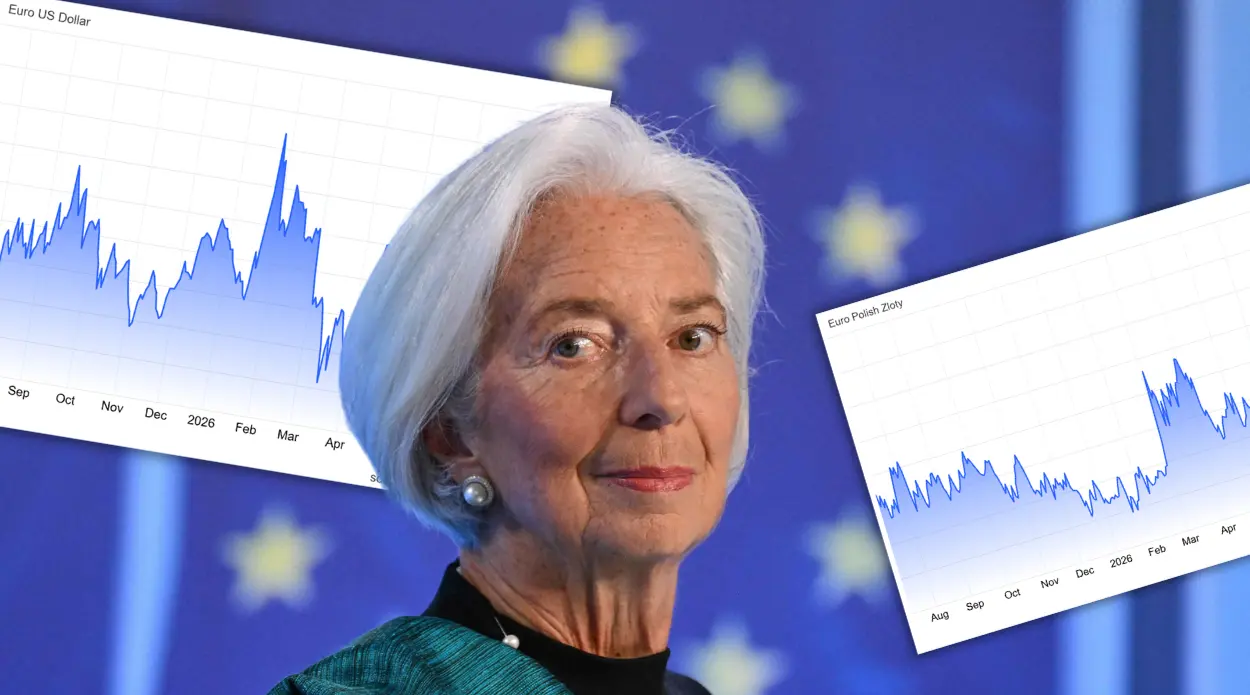
Without evening reports from the Middle East, the session on the base FX would end in a draw. The dollar index fluctuated for most of the time near the mid‑close. The evening rise in risk aversion supported the DXY by about 0.2%. This caused EURUSD to fall from about 1.1700 to 1.1680.
On the other Euro‑linked pairs (EURCHF, EURGBP, EURJPY) it was exceptionally calm.
The first quotes of the day are calm on EURUSD. As in previous days, the escalation of events in the Middle East can support the dollar, but the appreciation of the US currency should not be exceptionally strong excluding the scenario of a return to full‑scale military actions.
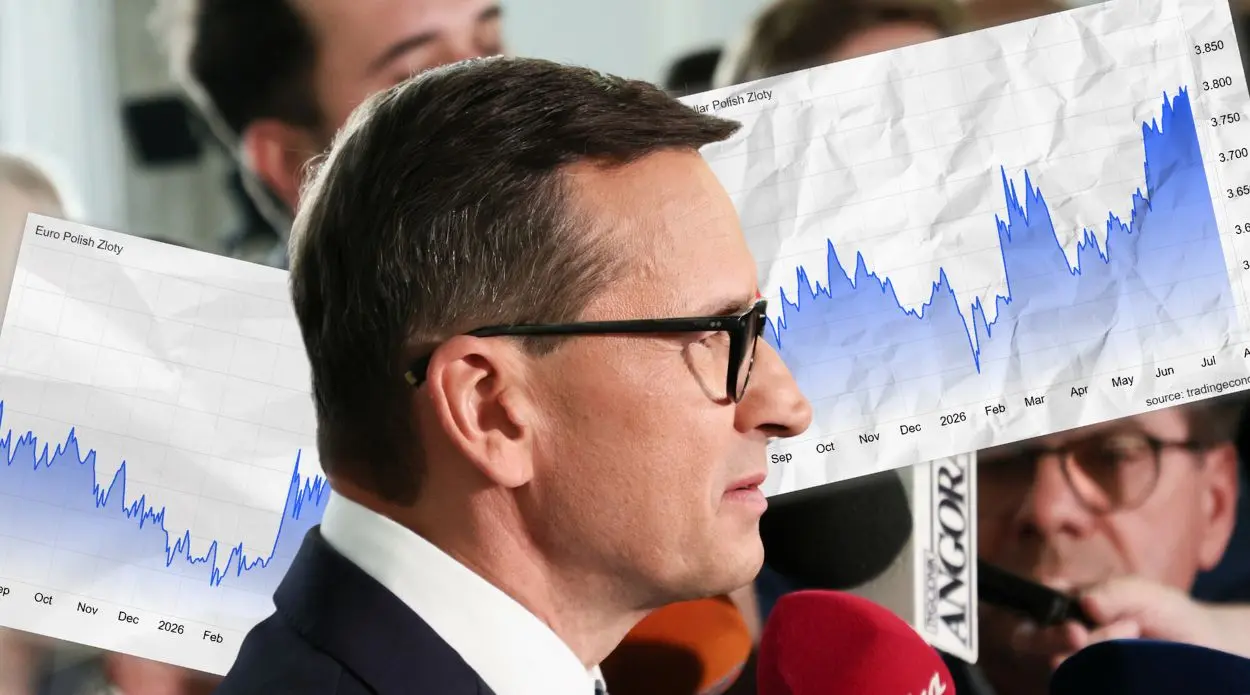
Poland’s currency remained calm. The national currency was resilient to both external and internal factors.
EURPLN stayed around 4.24 for the whole session. The session on EURCZK also ended in a draw.
The evening rise in risk aversion with lower liquidity negatively impacted the forint – EURHUF sprinted by 0.7%.
We assess that, similar to previous weeks, the debt market will absorb most external impulses. Consequently, the situation of the zloty should remain stable and the baseline scenario is trading in the range 4.23‑4.25