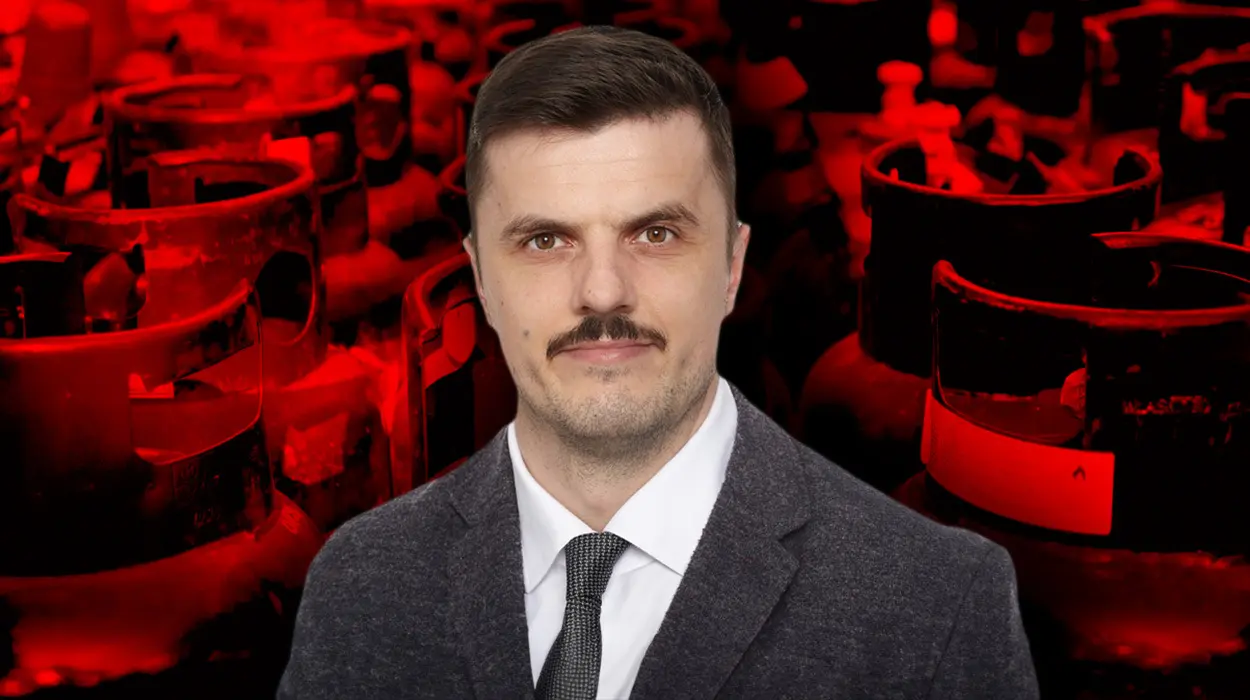







Kamil Markiewicz (FXMAG): What can we expect in Poland regarding gas prices in the near future? Could there be regulations, similar to other fuels, that would lower retail prices?
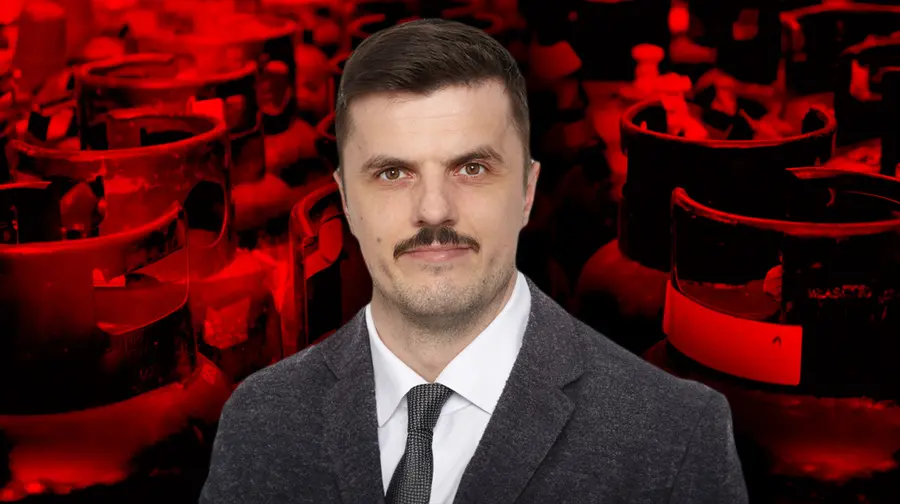
Maciej Bukowski (Head of Energy and Resilience Program at the Kazimierz Pułaski Foundation): We don’t have a crystal ball to peek into the minds of those in power. If we could, we would see trajectories that must align with what is happening internationally. The gas market has this to do with us, at least for our country, that we are dependent on what happens beyond our borders.
Our consumption is largely sourced from supply generated abroad, so any regulations that could be established domestically must somehow account for market configuration as it develops outside the country. What could happen in the medium term is an increase in storage capacity, which remains a kind of our “Achilles’ heel.”
However, in principle, the infrastructure plans that were undertaken long before this crisis, which realize the vision of diversification by increasing our import and transmission capabilities both domestically and abroad, would allow us to be optimistic that we will regulate less and rely more on market mechanisms.
Read also: Prime Minister equated Trump and Putin. “I’m fed up.” High energy prices are not the end of the problems?
What can we do to increase storage stocks? Looking at Poland and our gas reserves, it’s not that bad. But compared to other EU countries, there are places where storage is empty.
Indeed, it is relatively weak. It is impossible to set a benchmark here that would average this metric, because while the average level of storage in the European Union is about 20%, for example in the Netherlands it fell below 5%.
In reality “everyone scrapes their own rzepkę.” Of course there are mechanisms that have already addressed this situation to some extent. Remember that the Union is just waking up. This happened after Russia’s invasion of Ukraine. After that event, regulations were adopted that allowed us to prepare for the next shock in some way, while simultaneously diversifying further from Russian gas.
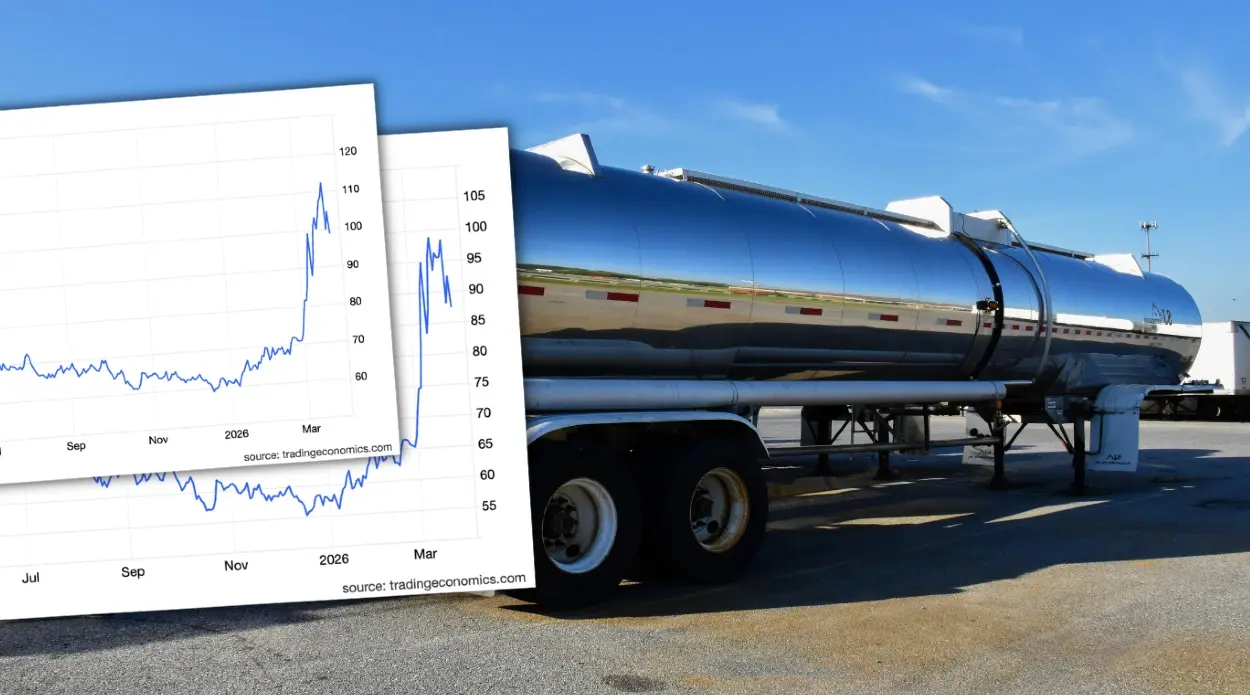
This is a fact reflected in the numbers. The first shock at the beginning of 2022 caused prices to jump to 300 euros per megawatt‑hour. Now it’s about 45‑50 euros per MWh, more than twice as much as before the war in Iran. Yet it is still a huge difference compared to what it was four years ago. This shows that the solutions adopted in the meantime, such as filling storage before winter to 90%, the RePowerEU program, and joint gas purchases that allowed us to gather over 100 billion cubic metres from the market, almost a third of EU annual consumption, strengthened us and limited buying chaos, while the phenomenon that I consider overlooked when talking about this whole puzzle is that during this time we simply lowered gas demand significantly. That is a fundamental change, because it roughly corresponds to the level of previous Russian gas imports. It means that in the EU we have managed to remove Russian gas not only from supply but also from demand.
In addition, of course, there is the decarbonisation of supplies, because the supply of Russian raw material fell to the lower double‑digit annual thresholds. This led to the fact that in short‑term contracts we can no longer acquire Russian gas, and long‑term contracts will have to be terminated by the end of next year.
More and more voices are heard that Europe, given the geopolitical situation, will have to change strategy and might again turn to Russian gas. Is that even possible?
I will point out that despite this geopolitical mess, we still try to be the cradle of the rule of law. If we consider that law has the highest normative value for us, it currently dictates the complete removal of Russian gas from the market. To change that, we would first have to reverse the legal trajectories we collectively decided to follow.
This is not something that could happen in one Brussels meeting attended by ministers who say we have a crisis and must change it ad hoc. Such an undertaking would require broad consultations that would underpin this type of scenario. Without that, such action would simply be illegal.
Another factor that influences this is more political. Although it must be admitted that indeed among politicians the discussion on this topic has intensified recently, not only in German circles. However, we must note that while in 2022 or 2023 one could still wonder whether it makes sense. At that time Russian gas supply could have been optimal in some configurations. Since then the situation has changed dramatically because we have reduced that demand. And that is not all. Another major change that occurred is the increase in EU LNG imports, which are brought from various parts of the world, mostly from the United States.
When Russian gas imports fell, LNG rose to almost 45%. Note also that gas in both Polish and EU strategy is labelled as transitional fuel. Unfortunately, as my good friend Prof. Anna Mikulska noted in one article, this nomenclature is aging poorly, because it turns out that the very concept of transitional gas, at the moment when price shocks of that gas, on which this transition was supposed to be based, distance us from the possibility of looking at this commodity in that way.
We must see that the entire LNG market has only recently been established and, according to the latest International Energy Agency data, is growing at double‑digit rates year on year.
That does not change the fact that a one‑time blow to the world’s largest infrastructure complex in Las Rafan in Qatar, the world’s largest LNG complex, removed about 2.5% of global LNG supply from the market, hitting a market where we compete with other importers worldwide. The LNG market is globally par excellence, and we now have a situation where, as the EU, we imported about 9% of LNG from Qatar. It’s as if that 9% was missing. At this point Asian countries will do everything to regain as much of the reduced gas supply as possible, which means we will have to compete with them. Competition with Asia for LNG becomes a structural element of the market, not a transitional phenomenon.
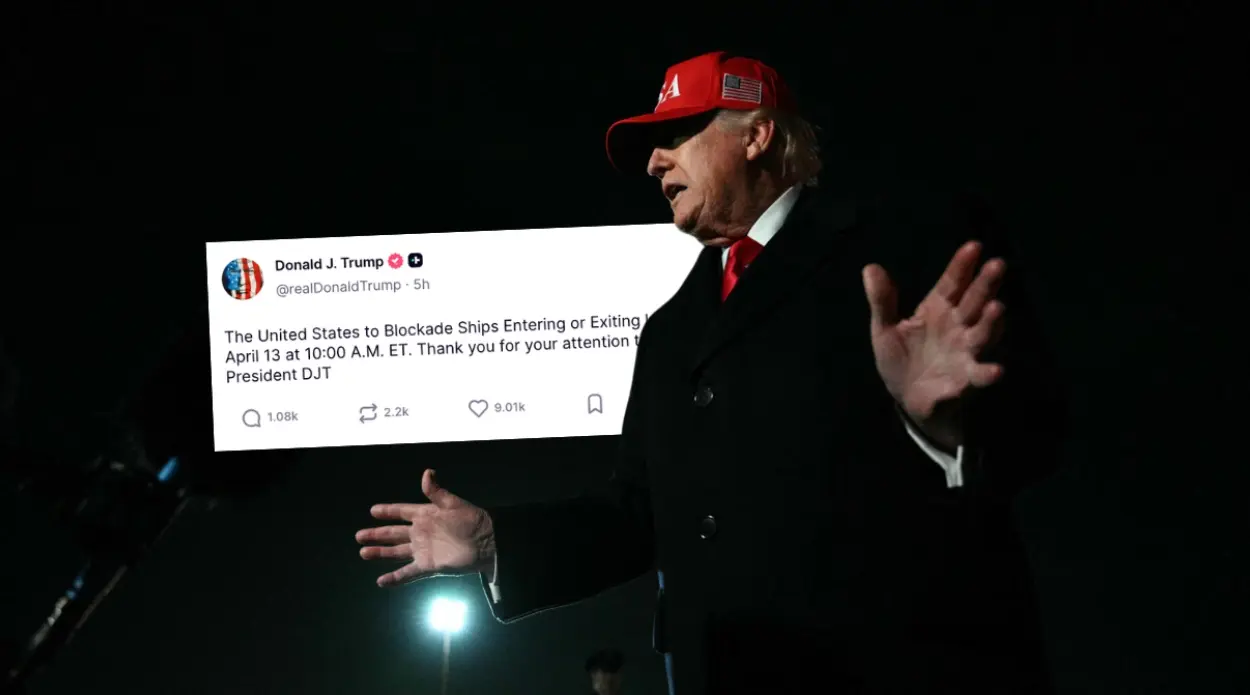
Here, the “white horse” arrives with Americans, who in the energy dimension seem to be the winners of the Middle East war. Regardless of how the geopolitical consequences of the conflict itself play out, the risk associated with gas flow from that direction will increase. This makes places that have no such risk or where it is much lower more valuable. The market is the United States, which has a lot of shale gas. Americans play very hard on this. Just a week ago President Donald Trump threatened the EU that if it does not unanimously accept the negotiated trade agreement from last year, it will not be treated preferentially regarding LNG access. It would then be sold elsewhere. One must remember that part of that deal is that the EU will buy LNG from the USA for hundreds of billions of euros.
Here I would like to return to the first question. The regulatory solutions implemented undoubtedly reduced the risk that was the biggest factor that drove prices after 2022. As a result, current volatility is much lower. At the same time we have a situation where if gas plays an important role, first in the diversification process away from Russian raw material, and second as any transitional fuel in the decarbonisation process, we will probably increasingly rely on American goodwill. Supply outside the USA and Qatar is heavily limited, even contrary to what we can read that we can import LNG from Angola or Australia.
At the end of April, the Tri‑Sea summit will take place in Dubrovnik. I will note for readers that the Tri‑Sea project started 10 years ago as a political platform to bring together 18 countries from Central, Central‑Eastern, and Southern Europe. All to fill an investment infrastructure hole. In reality it gave little, except that Americans politicised the platform to regionalise the discussion on American gas supplies, marginalising the skeptical EU. Tri‑Sea would not have returned to us during Trump’s second presidency if it weren’t for the fact that Americans are trying to build a foothold in Europe for liquefied gas, i.e. directly selling more than ever to Europe, effectively replacing Russian gas. That is already happening. Rising LNG volumes are already reaching the Tri‑Sea region through the Świnoujście terminal, soon also in Gdańsk, and terminals in Greece and Croatia.
Besides the United States, do you see other directions that could increase LNG imports?
These countries that already have some export, like Mozambique or a few others, are currently dealing with other problems. I mentioned Mozambique because it is a rather unfortunate example of a country where French Total tried for years to expand export capacities based on projects they developed there. There were many dramatic scenes, including armed incidents and blood spills.
What I want to say is that even if supply somewhere could be increased to replace one direction with another, the places where this could happen have their own problems that cannot be solved so easily. Those countries have their own regional specificity, which means that the ability to increase volumes is often quite limited.
Finally, the most important thing is what I have been repeating in recent interviews: what I heard in 2022 in the Department of Energy while in Washington, that the only guarantor, in the case of the United States, but by logic also applies to other places where LNG could be pushed into the market, is to increase supply overall, systemically and long‑term. The price signal that LNG demand will last not just a few years but a decade or two. All because these are huge projects worth billions of dollars that are needed to start export in the first place. This shows that it is not simple, even if we know that gas exists somewhere and we can easily start transporting it. If I had to look for places that could in the future be the source of LNG flowing to us, it would be Canada, where the sector development is today exceptionally vibrant. At the same time, amid tensions on the EU‑USA and USA‑Canada lines, Canadians are today a natural partner for us.
You mentioned that preventing gas price increases could increase LNG in storage. Are there other mechanisms to influence price? Looking at our national backyard, can we expect a reduction in excise or VAT, as happens with other fuels in retail sales?
I would not want to take the role of Finance Ministry experts here, who undoubtedly consider such things. I would focus more on the fact that there is no magic wand. Every action triggers a reaction, and if we now have government intervention in the fuel market, which to the public’s delight allowed us to fill up on holidays with 6.15 95 petrol, we must also remember that the budget suffers. And the budget is not elastic, so when we still have relatively high prices compared to the EU, it seems to me that any solution, the maneuvers for those in power are strongly limited.
Of course we have tariffs for households, but one must consider whether, for example, freezing gas prices for industry is really the most sensible solution? Of course for the most critical sectors it may give some one‑off breath, but in the long term it cannot be maintained, and it also involves other macro‑economic factors that affect the market structure long term. Even if it happened, it would be an ad‑hoc solution.
One must also note that gas is not an optimal element for building our energy resilience. Although it is indispensable for us, but only for a period.
We have taken seriously that without imported gas, not by pipelines but LNG delivered to the country via the Świnoujście gas port, and soon also via Gdańsk, we will be able to amortise the shock associated with decarbonisation we are approaching. Remember, however, that there is no escape from electrification. We must do everything to progressively reduce gas imports so that it becomes an increasingly smaller part of our energy mix. Then we will be more secure in all this, and this will translate into smaller subsequent price shocks – which will undoubtedly happen – being smaller, even in situations we are witnessing now.
First of all, this concerns, of course, gasoline and diesel, because electrification plays a big role in transport and communication. But it also concerns other sectors that are a very important element of the whole puzzle. I think there is no escape from this.
I will point out what is already happening in Asia. There, due to supply shortages, which are increasingly felt in many industries, because as we know, what happens is a bomb with delayed ignition, the discussion is growing about whether in this situation we should again rely on coal energy. Of course this discussion is entirely different from the one happening in our country. Regarding Asian countries, a large part of them receives Australian or Indonesian coal mined in open‑pit mines, which makes it much cheaper than deep‑mining coal.
If we do not carefully move away from hydrocarbons, the discussion about coal will also return to us. Although in Poland the situation is different, because mining this resource is not sensible, because it is too costly. That may not be that significant, because in our country the number of voices saying that new coal units should be opened in Poland to avoid shock situations is increasing.
Also see: Electricity could be cheaper? Expert: “Systemic changes are needed to achieve it”
In your opinion, if the conflict in the Middle East extends, will we feel gas shortages in Europe?
The regulation being implemented allows for some maneuvering and deviation from the rigid rule that required filling storage to 90% by 1 November. It seems that this will not be as painful as it was a few years ago.
However, in terms of filling the storage itself, we face a test we will have to pass. We must note that with limited supply, demand is increased, so I am inclined to risk the thesis that we will do everything to maintain good relations with Norwegians, from whom the most gas comes to our country. Of course we must accept imports from the United States.
In this situation we are dependent on the American grin. We must remember that LNG supply contracts are signed with private companies, and in the USA politics plays a huge role. Even if we sign new documents with them, it is not excluded that in the future, when Americans want something from us, they will try to negotiate on another field in exchange for delivering gas to us.
We are entering a phase where the gas market stops being just a raw‑material market and becomes a field of system competition for limited LNG volumes. The next months will test its limits. The LNG market is heavily loaded, so can gas run out? The grandmother divined for two.
Thank you for the conversation.