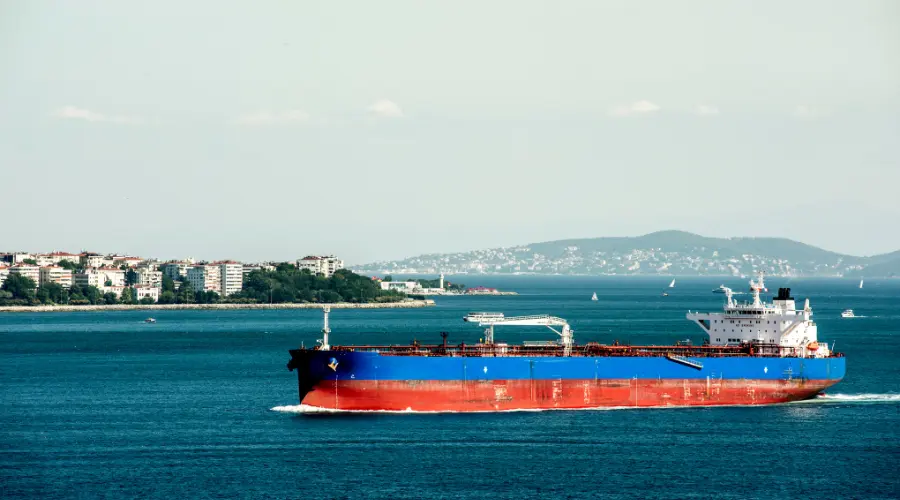
Iran wants companies whose tankers pass through the Strait of Hormuz to pay a special fee. Nothing would be so shocking if it were not that this fee would be regulated in Chinese yuan or cryptocurrencies. Not in dollars!
Strike where it hurts the most!
The power of the USA largely rests on the dollar. More precisely: on its “petro” version. Americans can afford to heavily debt their country because the demand for their currency is constant. This is because the dollar is used to settle oil transactions.
In the past Washington already started wars in defense of “green”: just recall the conflicts in Iraq and Lebanon. In both cases the elites of those countries considered selling oil in exchange for currencies other than the dollar. And they fell victim to the USA.
Now Iran is being asked to solve problems – the national parliament has prepared regulations that aim to introduce fees for tanker passage through the Strait of Hormuz. The problem is that a tariff of one US dollar per barrel would be regulated not in the USA’s currency but in Chinese yuan or stablecoins, i.e., cryptocurrencies with a stable rate.
But where does the idea for such a fee come from? It is, of course, the result of the war that the US‑Israeli alliance sparked in the region. Iran explains that the tax became necessary because it would ensure safe flow through the strait. Companies that transport “black gold” must contact a brokerage firm linked to the Islamic Revolutionary Guard Corps, submit the appropriate documents and pay the new “tax”.
If the USA allows such a system to be created, it would mean a break in the petrodollar regime. Piotr Arak, chief economist of Velo Bank, in an interview with Money.pl said that “Iran’s decision to introduce a transit fee for tankers (...) would primarily have fiscal and political significance.”
“About 20–21 million barrels of oil flow through the strait daily. In a purely arithmetic sense such a fee would potentially amount to over 7 billion dollars a year, but on the scale of the global energy market it is a rather marginal cost and would not change the oil price structure,” Arak added.
He does admit, however, that introducing fees in yuan and stablecoins would mean a continuation of a dangerous trend for the USA, although the death of the petrodollar is still far away.
“Today about 80–85% of oil market transactions still settle in dollars, and the yuan accounts for about 3% of global currency reserves (dollar 60%), so its ability to take over the dollar’s role is . China would have to change its economic model and buy more than it produces and exports,” the expert added.
See also: Will fuel prices soon fall? Oil could drop to $40 a barrel. Piotr Cymcyk for FXMAG
Will the oil price still rise?
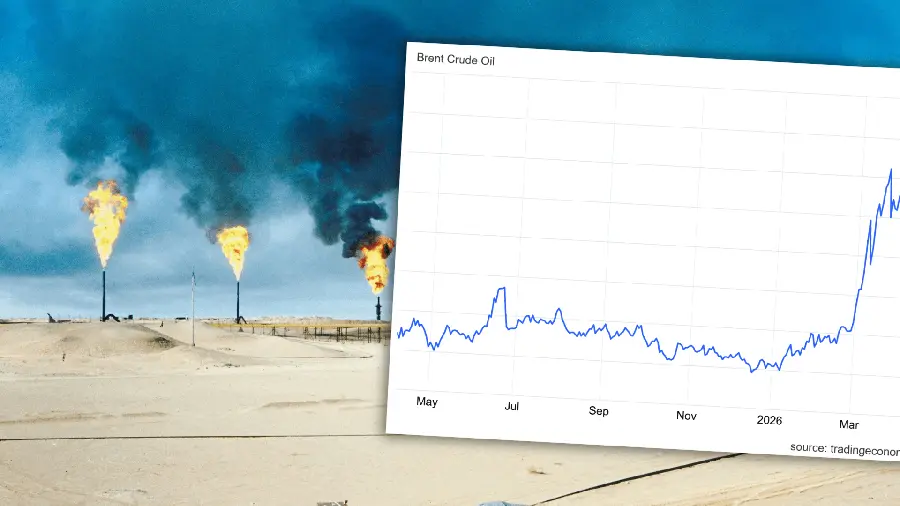
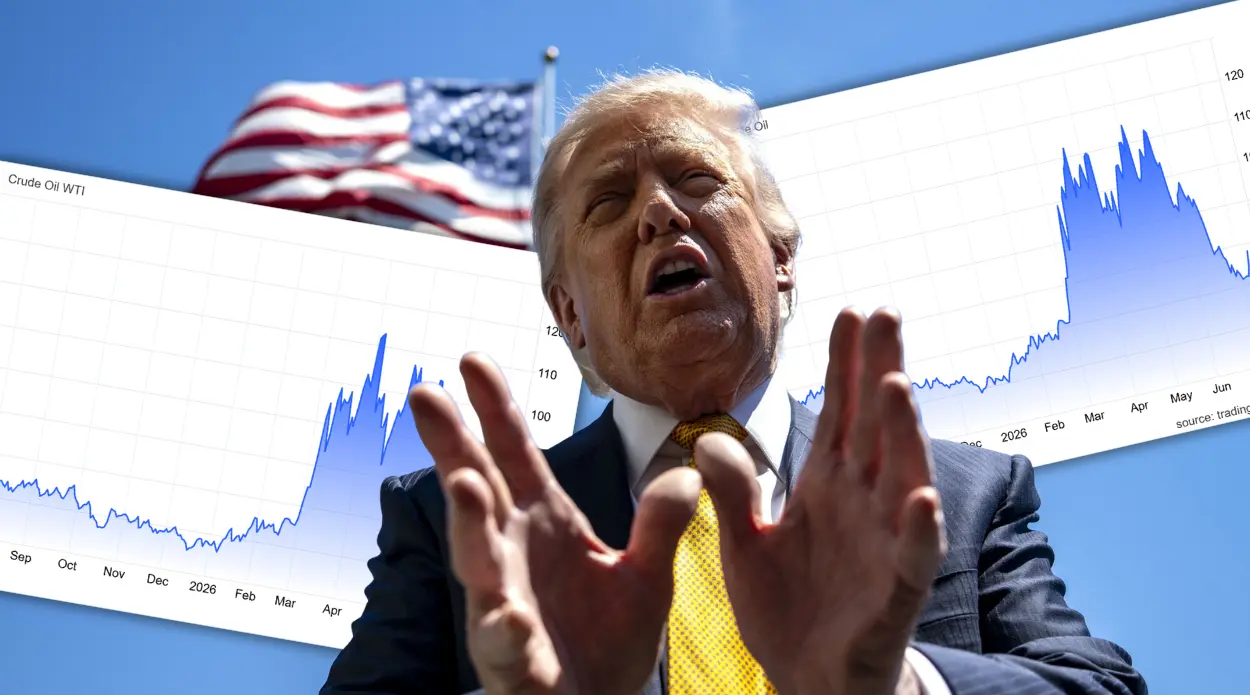
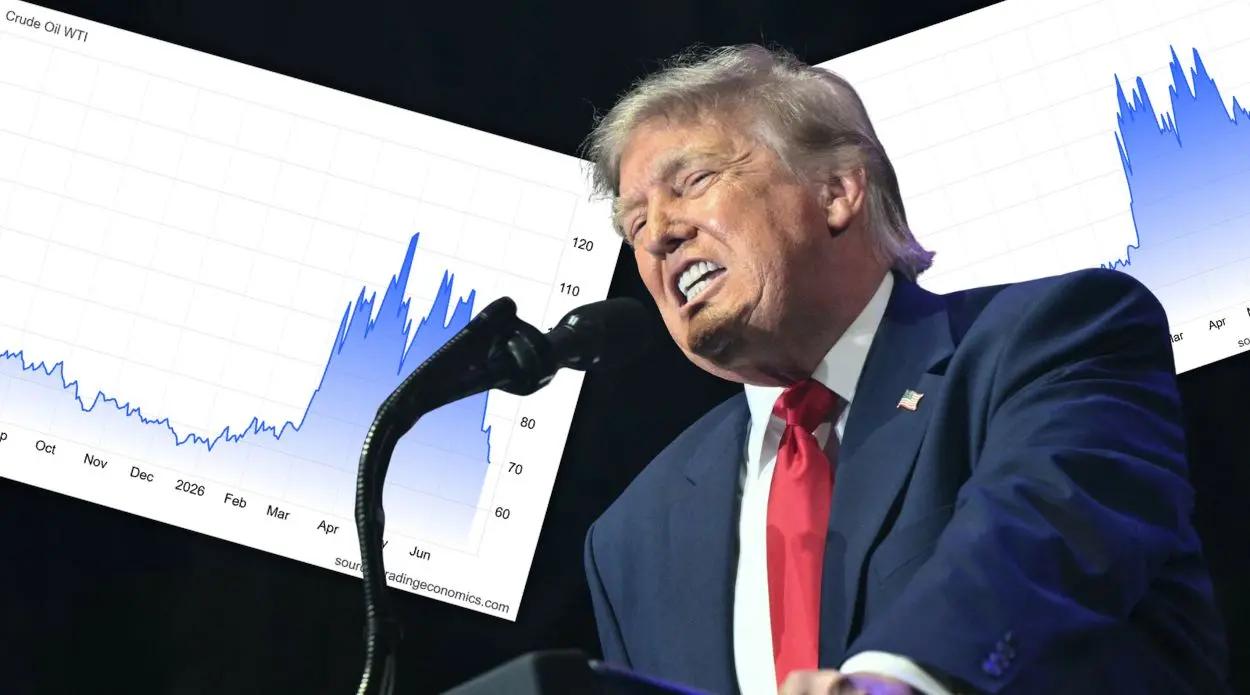
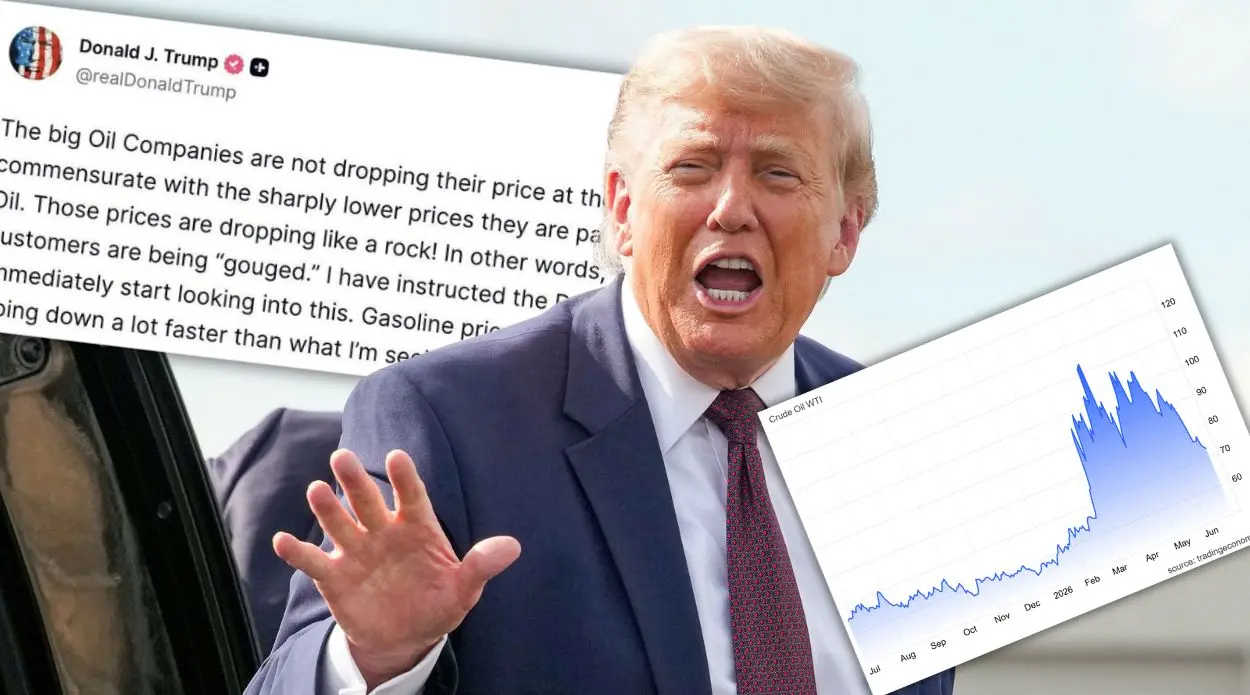
It is worth noting that we are still observing further increases on the oil price chart. XTB even warns that “if the war does not end by mid‑April, the market will start having trouble with an oil shortage or gas, which could lead to further rises, even to historic highs around $150 a barrel.”
“At the same time, if the war were to end today, we will not return to low levels. In the most optimistic scenario the market will be relatively balanced, and the barrel price will fall to about $80. That level will still trigger a clear return of inflation worldwide,” we read in the company’s statement.
The price of Brent futures contracts already reaches almost $110 a barrel, which means a jump of about 50% in a month.
Chart. Brent futures contract price

Source: Trading Economics
On the WTI futures market, the barrel is priced at $111.5. Over 30 days the rate rose by about 50%.
Chart. WTI (West Texas Intermediate) futures contract price

Source: Trading Economics
Read also: Fuel prices up almost 10%! The price surge may still come – analysts say
See also: Oil will soon record a new local record? One decision will be key