Recommendations to further integrate sustainable electrons and molecules
1. The ultimate goal of the large-scale application of green hydrogen is not yet achievable; focus on the intermediate steps and embrace hybrid solutions
Many of the experts we interviewed indicate that system integration is hampered by wishful thinking. The transition to a large-scale hydrogen economy is a striking example. For many, this transition should immediately focus on green hydrogen, based on renewable electricity, while that business case is still not viable and will not happen for a while. The desire for large-scale production of steel, plastic, and fuels based on green hydrogen is a utopia for now. This leads to 'the drama of good intentions'; by only looking at the ultimate final solution, too little progress is made with intermediate steps that seem more feasible in the medium term.
A solution could be to use the available blue and green hydrogen where it is easiest, for example, in refineries, so that the production of gasoline and diesel is accompanied by fewer emissions. Hydrogen can also be mixed with methane (natural gas and LNG) in the existing gas network, reducing the CO2 emissions from the gas consumption of households and SMEs. These are quick wins with blue and green hydrogen scaled up more easily. Scaling up is necessary to make hydrogen applications affordable. But these 'easy forms' of scaling up face a lot of resistance because they do not correspond to the desired use from the final picture (the greening of steel and plastic and phasing out coal, oil, and gas). As one interviewee aptly put it: "Perfection is the enemy of good here."
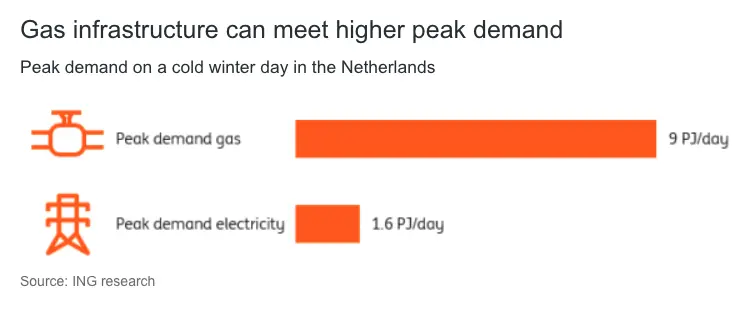
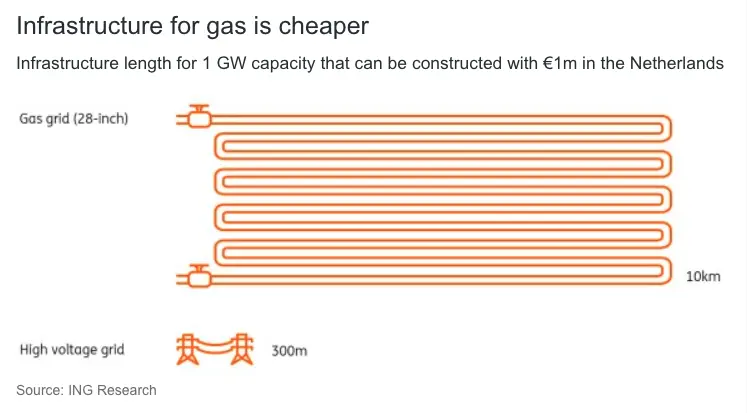
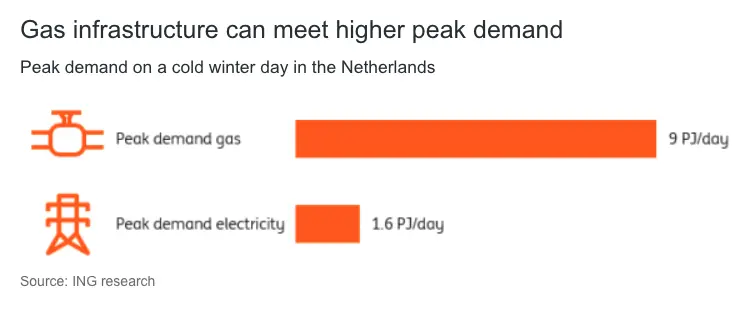
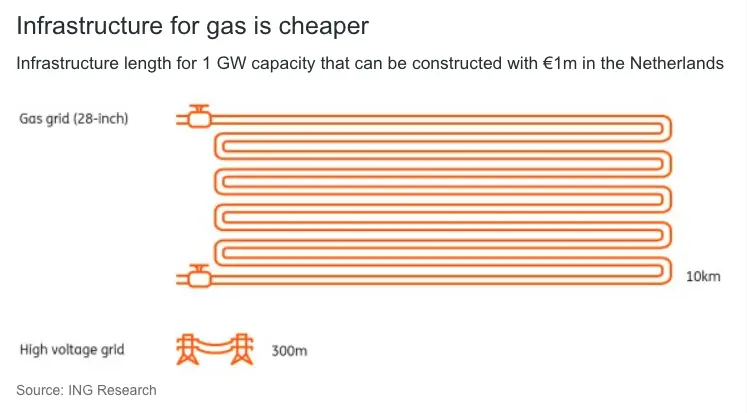
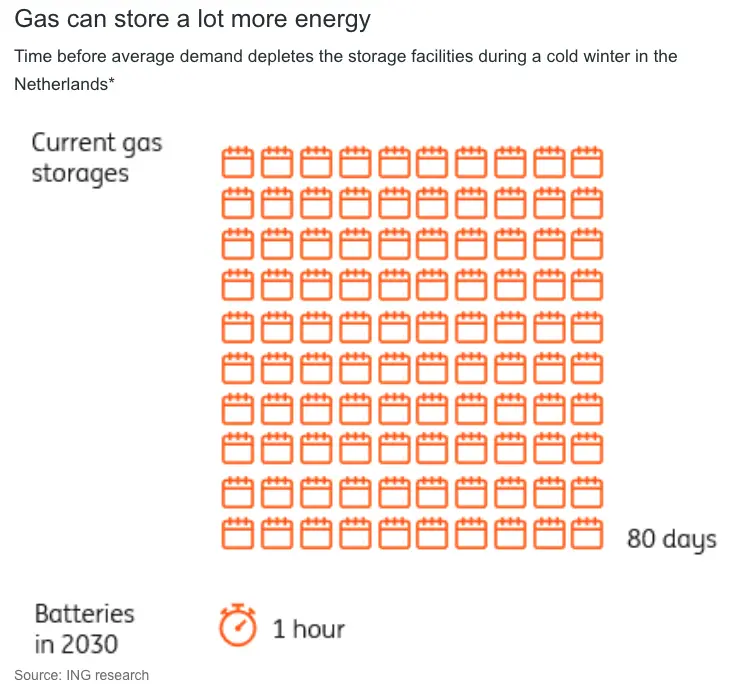
System integration can be further strengthened by promoting hybrid solutions instead of all-electric solutions. The latter solutions place a disproportionately large burden on the power grid. This is because power cables can transport less energy than gas pipelines and can also provide less for the peak demand for energy, for example, on cold days (see graphs below).
Hybrid heat pumps use electricity for most of the year, but switch to (bio)gas when it is too cold and the grid is too heavily loaded. This way, more homes can be (to a large extent) electrified than when homes are fully electrified and disconnected from the gas grid completely.
The same applies to district heating networks. These offer society as a whole a relatively inexpensive way to green homes in densely built-up areas near heat sources. A successful rollout of district heating grids then creates more space on the power grid, creating more opportunities for the electrification of cars (more charging points) and the densification of neighbourhoods (building more homes and electricity-intensive facilities such as supermarkets, schools, and swimming pools).
2. The greening of energy-intensive industries and bunker fuels is an uncertain factor; develop a vision on reorganising production chains
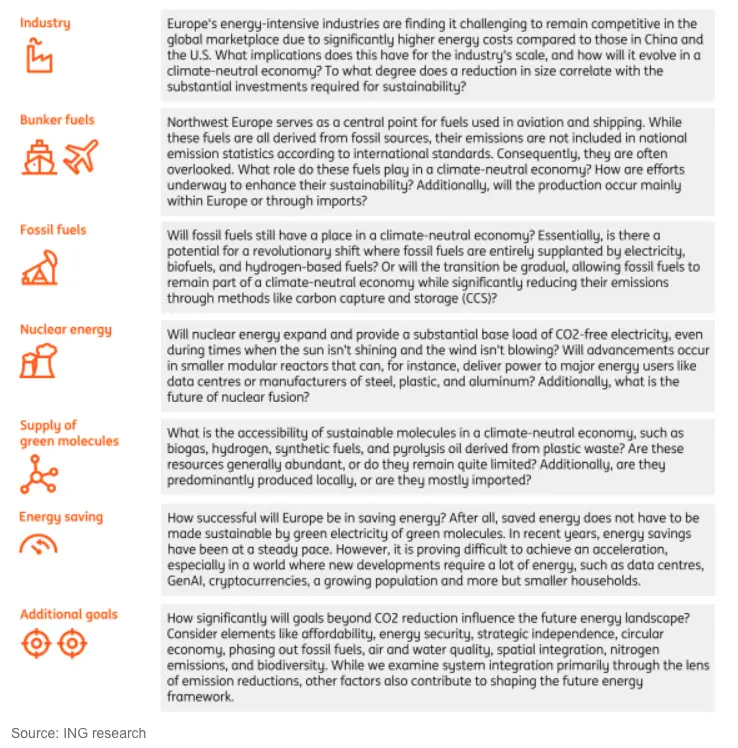
There are many uncertainties that affect the energy system of the future. This also makes the many options for smart integration of different energy carriers and infrastructure uncertain. Two factors stand out for countries with large industrial clusters, ports and airports like the Netherlands, Germany, Belgium and the UK. First, the scale and pace of the transition in the energy-intensive industry (chemicals, plastics, steel and cement production). Second, the scale and pace of the transition of fuels for aviation and shipping – the so-called bunker fuels.
Uncertainties in the pathways to climate neutrality
Key uncertainties for the future energy system from expert interviews
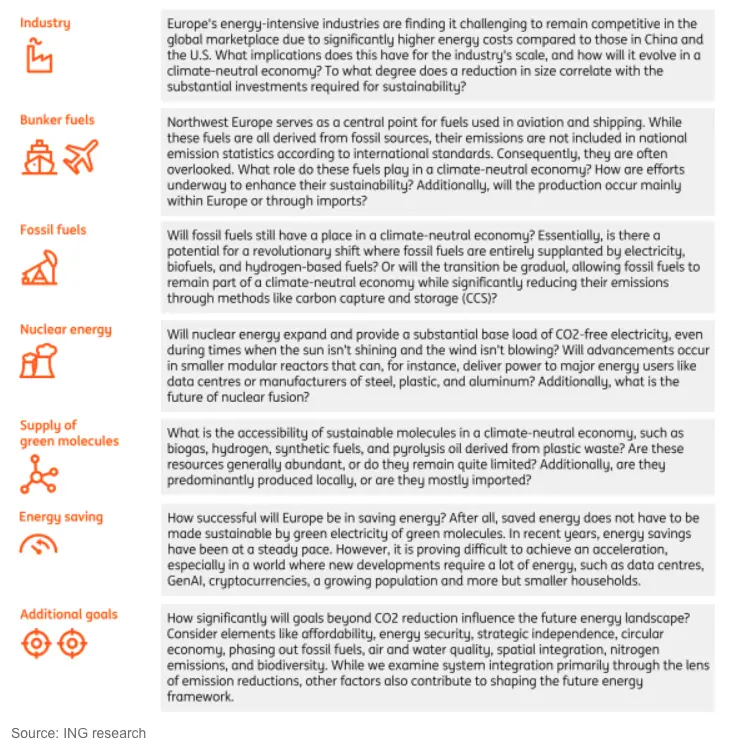
In scenario analyses for the future energy system, there are various ways to deal with these uncertainties about the future of industry and bunker fuels.
- Green current activities in their current size. This was common practice in the years before the energy crisis, but is no longer realistic now that Northwestern Europe is at a structural disadvantage due to high energy prices.
- Green current activities while they are reduced in size. More recent scenarios therefore reduce the future size of energy-intensive industries and bunker fuels.
- Towards new sustainable production chains. The question is whether these sectors can simply be made more sustainable if they are smaller in size. Europe’s structural competitive disadvantage due to high energy costs may require more drastic changes in the value chain. Steel companies, for example, can have their most energy-intensive activities take place where energy is cheapest (think of Scandinavia, Southern Europe, or elsewhere in the world). They can then import raw steel and locally finish it into high-quality steel. The same applies to plastic producers. In the chemical industry, the refining of raw materials such as naphtha and ethylene can take place in low energy cost regions in or outside Europe, while the processing into plastic happens locally via the import of raw materials or locally sourced recyclate.
Develop a vision for energy-intensive industries and bunker fuels
Reorganising production chains can have a significant impact, as it involves process steps that account for up to 80% of the energy demand of the activity, such as in the production of steel or plastic. Despite this, the consequences of reorganising production chains are still insufficiently known. This applies both to the impact on the energy system (demand and supply of energy) and the availability of sustainable raw materials (green hydrogen and sustainable carbon as feedstock for sustainable products). This complicates the design of energy infrastructure and the system integration between sustainable electrons and molecules. More vision and policy need to be developed on this.
In the absence of this, it is difficult for politicians to implement strong guiding policies, and uncertainty remains high for businesses when allocating their investment space, especially in energy-intensive industries struggling with a loss of competitiveness and an uncertain investment climate. Such a vision can also incorporate non-energy considerations, such as strategic autonomy regarding crucial energy carriers and (intermediate) products.
Do not overestimate the potential for demand-side flexibility
Although there is limited out-of-the-box thinking on the supply side, this type of thinking is occurring regarding the flexibilisation of electricity demand. In the future energy system, it is assumed that major energy consumers will adjust their electricity needs according to the weather-dependent supply of renewable electricity. While this has been stressed in recent years, many experts indicate that little progress has been made in practice. Of course there are a few exceptions, but in general, energy-intensive companies are reluctant to flexibilise their electricity demand. When it does happen, it is more of a necessary evil to obtain a grid connection than a desired option. Companies express concerns that forced flexibilisation will impair their competitiveness. Moreover, households without an electric car, a hybrid heat pump or a home battery have few devices to make a real difference in shifting electricity demand throughout the day. On the demand side, it is therefore wise not to expect miracles from flexibility options. The potential is probably greater on the supply side, for example, through flexible production of sustainable molecules at times when renewables are abundant and power prices are low.
Enhance the public sector’s role in scaling up infrastructure
The renewable energy market sees a stark contrast between electrons and molecules. While the electricity grid struggles to keep up with green electrons' supply and demand, the molecules market faces a chicken-and-egg problem: limited infrastructure exists because demand is low, and demand is low due to limited infrastructure. Economically, this is a coordination issue where leadership is needed to break the cycle.
Market coordination, for instance through CO2 pricing or subsidies, is the preferred solution for many experts. However, they note that pricing alone may not suffice. For individual companies, the costs of organising new infrastructure or system integration often outweigh the benefits (better energy efficiency and/or lower emission costs), particularly for international companies competing in global markets where they cannot pass on extra costs. They stress that the government can enforce coordination in several ways.
Blend mandates help solve the chicken-and-egg problem by simultaneously stimulating supply and demand. They also make price premiums for sustainable molecules manageable; mixing 5% spreads the significant cost difference over the other 95%.
However, economic issues are not fully resolved. Green molecule producers need 10 to 15-year supply contracts to recoup investments, but buyers are reluctant to commit for more than a few years due to the high current costs and the potential for future price drops from scaling up. Even with existing infrastructure, producers and buyers hesitate to make Final Investment Decisions due to misaligned risk profiles.
The public sector can bridge this gap. For example, by bundling demand for green molecules from multiple buyers or guaranteeing demand over a longer period (acting as a ‘market maker and aggregator’), or by ensuring purchase if market players cannot (buyer of last resort). This reduces the risk profile of the business case, aligning it with the risk profiles of suppliers and buyers. Germany’s system already supports green hydrogen investments. Such a role need not be permanent, but should cover the transitional period of say 15 to 20 years until solutions are scaled up and risks are manageable for market parties.
Companies and policymakers: take advantage of the benefits of system integration
Smart integration of electrons and molecules has many benefits.
- Sustainability: Smart system integration allows us to make optimal use of the immense potential of cheap renewable energy from wind turbines and solar panels. Literature research by Frontier Economics shows that offshore wind capacity in the North Sea can increase by 88-121 GW if hydrogen production takes place at sea and wind farms, electrolysers, and grid infrastructure are clustered. Hydrogen production prevents wind farms from being shut down when too much electricity is generated (curtailment). System integration can, therefore, make a significant contribution to achieving the joint goal of the North Sea countries to realise an offshore wind energy capacity of 300 GW by 2050.
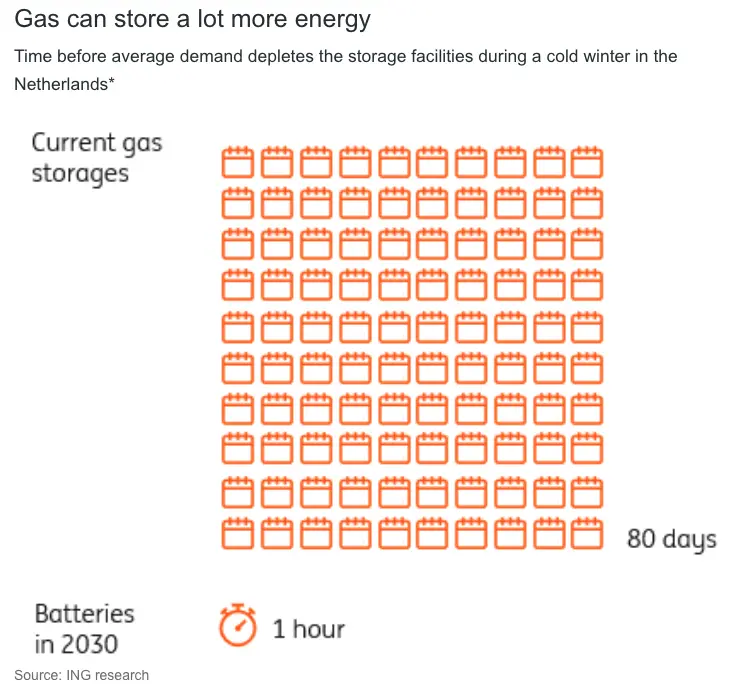
- Reliability: Integration of molecules in a future energy system dominated by electricity can provide backup capacity when sun and wind are not available for long periods. Additionally, it can meet the peak demand for energy which is impossible to fully electrify.
- Affordability: An integrated approach reduces the costs of the transition to a climate-neutral economy. The aforementioned literature shows that offshore hydrogen production saves €5-11bn per year until 2050, compared to an electricity configuration that transports power directly to the coast from wind farms. International interconnection of offshore wind farms provides additional annual cost savings of €1-4bn. These savings result from lower transport costs, operational and economic flexibility (choice between electricity or hydrogen production based on market prices), sales to markets where prices are highest, optimal energy storage, and less import of electricity and hydrogen. Another example is district heating networks. Numerous studies have shown that district heating networks are, for society as a whole, a good option for making densely built-up areas near heat sources more sustainable. These district heating networks utilise heat that would otherwise be wasted and can be made sustainable in the long run through green electrons and molecules (geothermal energy, electric boilers, industrial heat pumps, biogas, blue and green hydrogen). System integration, therefore, contributes to an affordable transition.
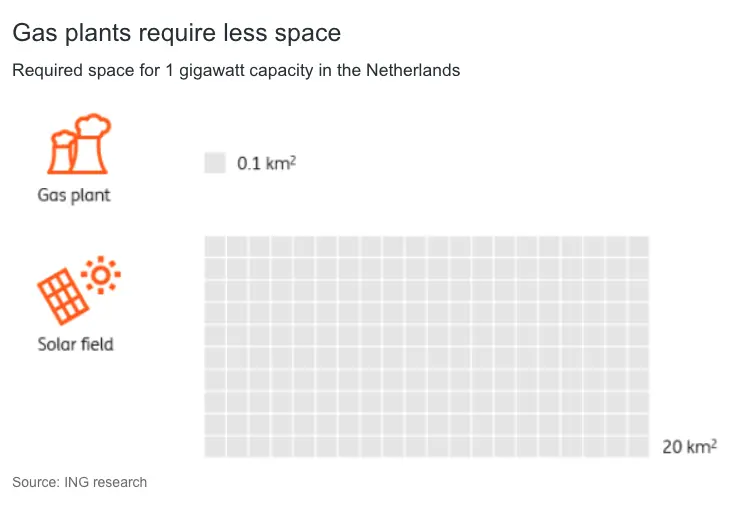
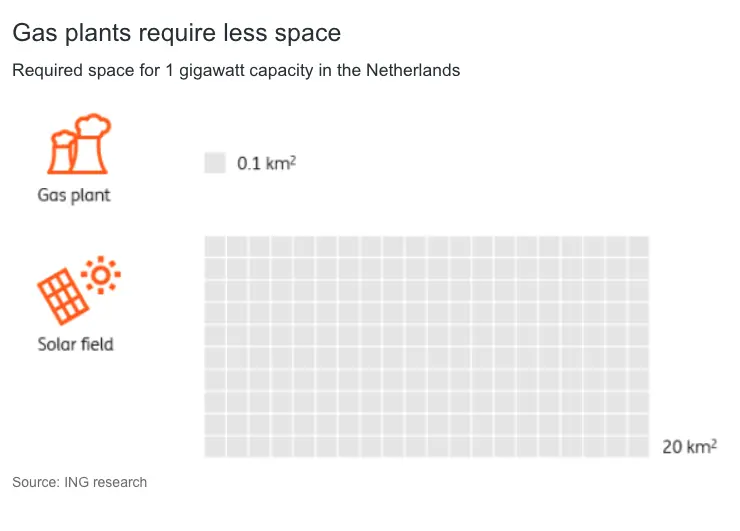
- Space: An energy system in which electricity is the primary form of energy requires significantly more space than an integrated energy system. For example, solar farms need two hundred times as much space for the same amount of capacity as a gas-fired power plant, which can run on bio-gas or low-carbon hydrogen in the future. When considering the actual electricity generation, a solar farm requires approximately 800 times more space. This is because solar panels do not generate power at night, and output in winter is only a fraction of summer output. By using more molecules in addition to dual space usage (solar panels on rooftops), you reduce the extra space demand of the future energy system. By placing generation and consumption as close together as possible, the need for energy infrastructure is reduced. Moreover, pipelines for molecules can be more easily laid underground, making the infrastructure less visible. System integration, therefore, can provide spatial benefits, which is not to be underestimated in densely populated areas where many functions compete for scarce space.
It is imperative for companies and policymakers to seize the myriad benefits offered by smart integration of green electrons and molecules. Embracing this integrated approach will not only drive sustainability but also ensure affordability, reliability, and spatial efficiency in our energy systems.
Appendix: Key differences between electrons and molecules
The extremes of electricity and gas (molecules of natural gas, biogas, and synthetic gas) are depicted. Based on chemical properties, hydrogen occupies an intermediate position.