Core inflation remains well above 3%, raising odds of BoJ action
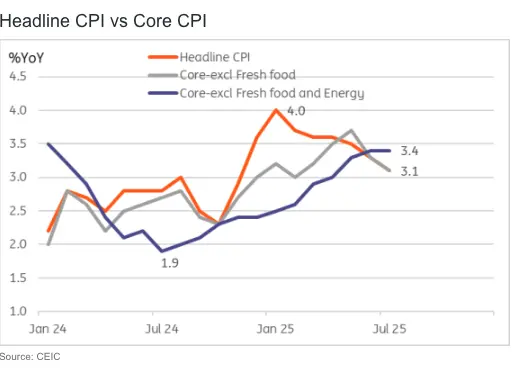
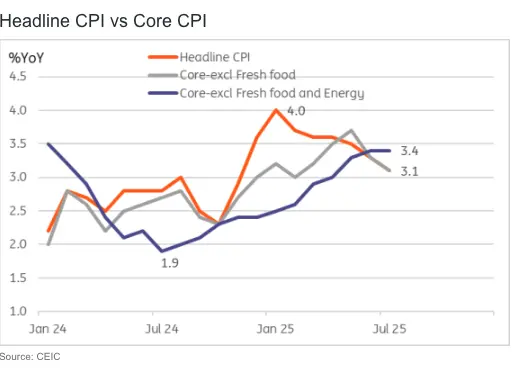
Japanese headline inflation eased to 3.1% year-on-year in July (versus 3.3% in June and a market consensus of 3.1%). Falling energy prices and government subsidies on utilities (-0.2%) and education fees (-5.6%) were the main reasons for the deceleration. Food prices accelerated to 7.6% from the previous month’s 7.2%. Overall price pressures have clearly slowed this year, with headline inflation decelerating since peaking at 4% in January. However, we should note that core inflation, excluding fresh food and energy, has actually been rising to 3.4% in July from 1.9% in July 2024. This suggests underlying price pressures are building up steadily. Rents have been rising steadily. Soaring rice prices have also been pushing up manufactured food and eating-out prices.
BoJ watch : October hike is likely
Going forward, core inflation is likely to remain above 3% for an extended period, even though headline inflation may fall to a level of 2%. This will support the Bank of Japan’s policy of normalisation. We expect the BoJ to raise its policy rate in October. The surprisingly robust second-quarter GDP figures demonstrate the economy's resilience despite the headwinds of US tariffs. While there’s still much uncertainty surrounding the tariffs, the BoJ should welcome the 15% tariff deal for now. Even so, the BoJ will need a couple of months to assess its impact. October is usually a month when companies raise their prices for the second half of their financial year. Thus, the BoJ would like to confirm whether the tariffs are affecting businesses' pricing behaviour before taking action.