The Swiss property market is truly exceptional. Not only are flats and houses extremely expensive, but securing a property in a desirable location can be close to impossible. This, however, does not deter investors, including those from Poland, from placing their savings in Switzerland. What lies behind this phenomenon?
In Switzerland, only around 30% of residents own their homes, while nearly 70% rent the properties they live in. One of the main reasons for this is the sheer cost of purchasing real estate.
“On the secondary market, prices start at CHF 4,000 per square metre, while new developments begin at around CHF 6,000. In major cities, however, prices are significantly higher, ranging between CHF 10,000 and CHF 15,000 per square metre,”
explains Matt Morawski, a Swiss real estate expert and co-owner of Home in Switzerland.
High prices fail to deter buyers
Despite the very high cost of purchasing property in Switzerland, demand continues to far exceed supply. The country is widely regarded as a safe and stable haven, which has encouraged a growing number of foreign buyers, particularly against the backdrop of war in Europe, to relocate to Switzerland or at least invest their capital there, including in real estate.
“Only about 7.5% of Switzerland’s territory is designated for residential properties. That is very little, especially given that the country is experiencing population growth. As a result, demand for houses and flats has increased even further,” notes Michał Sadowski, another Swiss property expert and co-owner of Home in Switzerland.
It is also important to consider who is allowed to purchase property in Switzerland. There are no restrictions for Swiss citizens or residents. According to experts at Home in Switzerland, EU citizens may also buy holiday homes, but only in designated locations and within specific size limits. Non-EU nationals, if they are non-residents, may purchase property only in certain municipalities and must obtain special permits. In most cases, such properties cannot be used as profit-generating investments, as the law imposes strict limitations.
“A foreign buyer who is a non-resident and purchases a holiday apartment in Switzerland may rent it out for a maximum of 90 days per year. The exception is the Italian-speaking canton, where in some municipalities such properties may be rented for up to 11 months, although this is still treated as short-term letting. The Swiss authorities take the view that if you buy property in Switzerland, you do so for personal use, not for business purposes,” explains Matt Morawski.

Key differences between the Swiss and Polish property markets
Switzerland lies more than 1,000 kilometres from Poland, which translates into a 10–16 hour drive, depending on the starting point. While the distance may not seem great, the differences in construction standards between the two countries are significant.
“Switzerland is one of the safest and most well-prepared countries in the world. Almost every building has a shelter. In addition to private shelters, there are also many communal ones. This means that in the event of a threat, every resident of Switzerland has access to protection,” emphasises Matt Morawski.
This is not the only difference.
“Another notable distinction is that every multi-family building has a laundry room. This is a shared facility available only to residents,” adds Michał Sadowski.
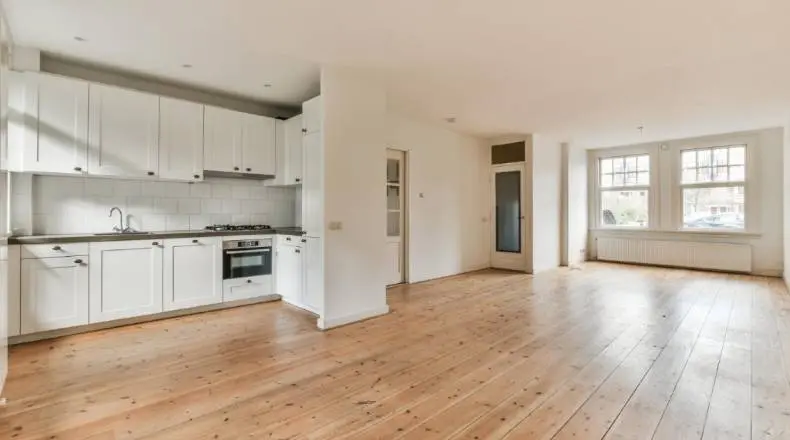
He also points out that new-build apartments in Switzerland are always handed over fully finished, though without movable furniture. Bathrooms are complete, kitchens are fully fitted, and floors and walls are ready for use.
“Of course, buyers usually have full freedom when it comes to selecting the materials,” he adds.
Buildings are getting taller
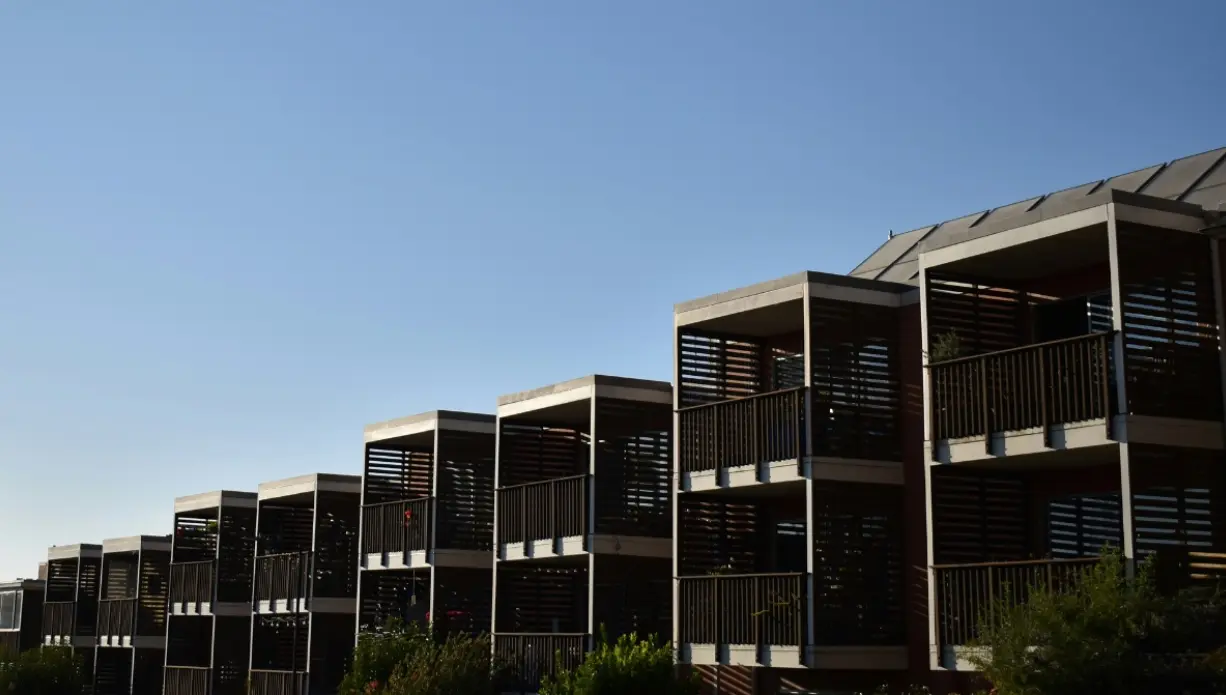
Switzerland’s territory is only slightly larger than Poland’s Mazowieckie region, and just 7.5% of the country is designated for residential development. As a result, the amount of available land is shrinking year by year, which is one of the main reasons why residential buildings are becoming taller.
“Statistics show that over the past 20 years, fewer houses and more apartments have been built. This trend is likely to continue, as access to both owner-occupied and rental housing is becoming increasingly difficult. Switzerland has no choice but to build upwards although not to the extreme heights seen in cities such as Dubai or Hong Kong,” notes Matt Morawski.
A ‘casting call’ for buyers
The shortage of housing and overwhelming demand mean that buying a home in Switzerland is far from straightforward. According to experts at Home in Switzerland, finding the right property can take several months and in some municipalities, even several years. The greatest difficulties arise in large cities and tourist destinations, where truly unusual situations occur.
“Interest is extremely high, especially in major cities such as Zurich, Geneva and Lausanne. In some cases, there is effectively a ‘casting call’ for buyers. In prime locations, a single property may attract several dozen, or even 50 to 80 potential buyers. Ultimately, it is the seller who decides who gets the property — and at what price,” explains Michał Sadowski.
New and resale properties equally valuable
Experts at Home in Switzerland point out that prices on the secondary market can sometimes exceed those of new developments, depending on location and condition. Most resale properties are very well maintained.
Purchasing a new-build apartment also differs significantly from what buyers are used to in Poland. Prospective owners do not always have the option to modify layouts or internal walls during construction, a common practice in Poland, but far less so in Switzerland.
“Much depends on the structure of the purchase. One option is to buy a share in the land on which the building will be developed. In that case, the buyer has influence over the construction process and participates in the investment from start to finish. The alternative is paying a 20% deposit and the remaining 80% upon handover of the keys. In this scenario, ownership is transferred only after full payment, and the buyer has no say in the development process,” explains Matt Morawski.
Swiss buyers rely on mortgages
Given the high property prices and relatively low mortgage interest rates, typically between 1% and 2%, most Swiss buyers choose to finance their purchases with loans.
“To buy property in Switzerland, you need strong creditworthiness and a substantial down payment of 20–30%. For a property worth CHF 1 million, that means at least CHF 200,000, plus an additional 2–5% of the purchase price for notary and transaction fees,” notes Michał Sadowski.
Interestingly, property in Switzerland is taxed at every stage: purchase, ownership and sale.
“This tax is not calculated on the full value of the property, but typically on 60–70% of it. During ownership, it amounts to between 0.1% and 0.3% annually. At purchase, buyers pay between 2% and 5%, depending on the canton. When selling, capital gains tax depends on how long the property has been held,” explains Matt Morawski.
“One particularly interesting and relatively rare feature of the Swiss market is property refinancing, the ability to leverage an increase in a property’s value or the repaid portion of a mortgage to obtain additional capital, without having to sell the property,” adds Michał Sadowski.