








Ask any Bank of England official, and they’ll tell you that sticky wage growth has been one of the central reasons it’s been cautious about cutting rates over the past couple of years. But that is changing – and rapidly.
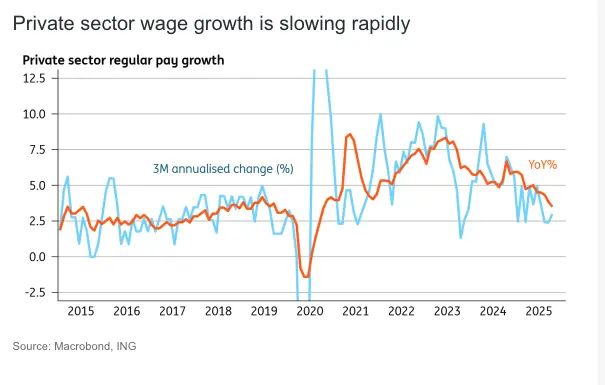
Having started the year close to 6%, private sector pay is now rising by 3.9% in annual terms. In fact, wages are rising by just 3% in three-month annualised growth terms, which gives a clear sense of just how much momentum has slowed through the summer. Those annual growth rates should steadily move lower over the coming months.
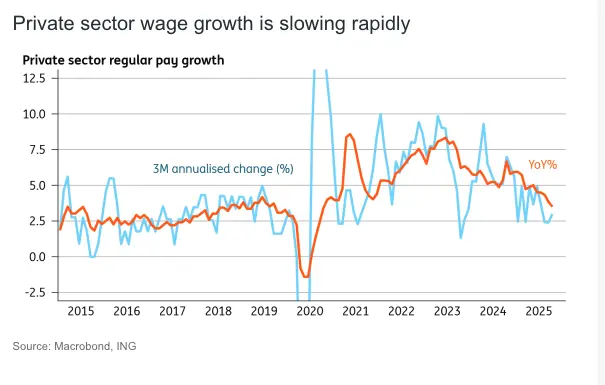
Admittedly, that is baked into the Bank of England’s most recent forecasts. But remember the Bank is extremely divided on the question of inflation persistence – and the hawks have been sceptical that wage growth would in fact move lower, after so many forecast misses over the past couple of years.
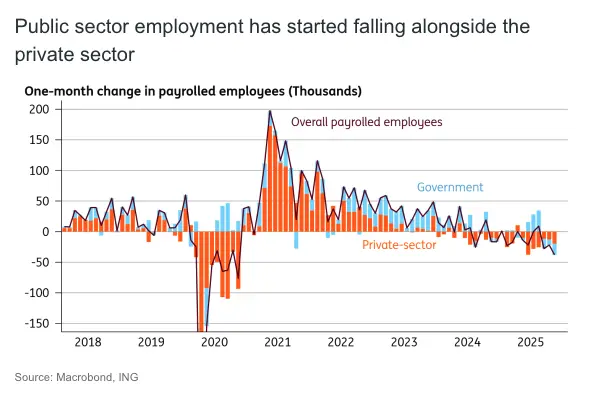
All of this comes amid further signs of cooling in the UK jobs market. The number of employees on company payrolls is down 0.5% this year so far, and more significantly so in the private sector. Companies – especially in retail and hospitality – have been shedding workers this year, partly because of earlier tax and minimum wage hikes. Hiring surveys remain weak.
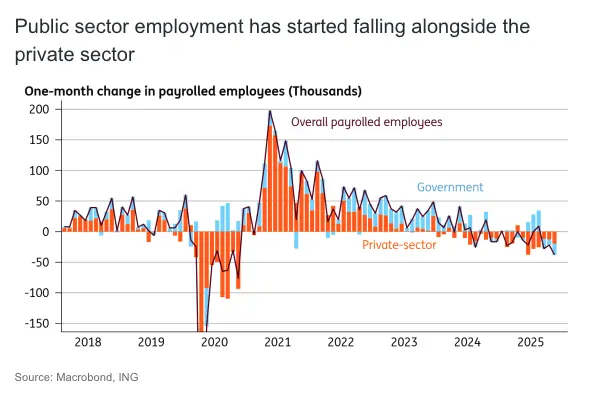
Until recently, that was helpfully offset by resilience in government hiring, but that appears to be changing. Public sector employment has also now fallen for three consecutive months, judging by those payroll numbers
This epitomises one of our key calls for 2026, which is that the government is going to be less of a tailwind for growth than it has been in 2025. Where real departmental spending has grown by close to 4% in both the previous and current fiscal year, it will rise by less than 2% in FY2026. This comes as the deficit is projected to drop by a full percentage point to 3.5%, owing to the ongoing freeze in income tax brackets.
Altogether, slowing wage growth combined with further signs of cooling in the wider jobs market hints at the UK becoming less of an outlier on inflation. A rate cut on Thursday is highly likely, and we expect two further moves in the first half of 2026
This publication has been prepared by ING solely for information purposes irrespective of a particular user's means, financial situation or investment objectives. The information does not constitute investment recommendation, and nor is it investment, legal or tax advice or an offer or solicitation to purchase or sell any financial instrument. Read more (link to: https://think.ing.com/about/content-disclaimer/)